
10 Curtains With Blinds Ideas

Layering curtains with blinds is a highly sophisticated interior design method that optimizes window aesthetics while providing superior light control and thermal insulation. This layout technique, frequently featured in modern home decor curation, involves mounting soft fabric drapery panels over rigid window blinds. By pairing these two distinct window treatments systematically, homeowners can create a multi-dimensional, finished presentation that elevates the visual depth of any residential room. This informative article offers complete, step-by-step guidance on implementing ten unique design concepts that perfectly balance structural blinds with elegant curtain strands. Readers will learn how to select compatible textile mediums, coordinate color palettes, anchor mounting hardware securely, and calculate precise fabric measurements. This structural approach is exceptionally useful for improving household energy efficiency, protecting interior furnishings from ultraviolet sun damage, and ensuring total domestic privacy. Designing your own layered window layouts independently allows you to customize your living room, bedroom, or dining area to suit your precise everyday functional needs. This comprehensive tutorial covers everything from basic double-bracket installations to advanced material pairings, delivering clear strategies for achieving highly realistic, professional results in any modern residential layout.
Why This Idea Is Trending or Useful
The integration of structured window blinds with flowing fabric drapery has captured massive interest across modern design platforms because it offers high practical value and exceptional aesthetic appeal. Modern Pinterest ideas frequently highlight layered window treatments as a simple yet impactful way to make spaces feel taller, cozier, and more polished. The practical value of this approach lies in its versatility, allowing inhabitants to block harsh daytime glare with the blinds while keeping the soft curtains drawn open for natural side lighting. These creative ideas possess an extensive DIY appeal, encouraging homeowners to customize their window trims using accessible, budget-friendly hardware without paying premium fees to professional installation companies. This entire design framework is exceptionally beginner friendly, ensuring that even novices can achieve successful spatial transformations with basic hand tools. By matching minimalist style wooden, metal, or fabric blinds with complementary drapery panels, creators can introduce rich textures into otherwise flat room spaces. Ultimately, planning a highly organized, layered window treatment guarantees that your installations serve a distinct architectural purpose, producing a beautifully balanced home environment.
Materials and Preparation
Achieving a highly stable, functional, and visually balanced layered window treatment requires detailed material curation and careful spatial preparation before starting physical assembly. The primary structural components for these setups include durable single or double curtain rods, wall-mounting brackets, wooden or metal blinds, curtain panels, drywall anchors, and heavy-duty wood screws. Ensuring optimal visual harmony requires choosing high-quality fabrics like linen, velvet, or cotton, and selecting sturdy blinds made of faux wood, bamboo, or aluminum. Essential tools for these undertakings include a cordless drill, bubble level, measuring tape, pencil, stud finder, and a handheld fabric steamer.
Preparation steps begin with measuring the exact width and height of your window frame to determine the ideal scale for both the blinds and the curtain rods. Clear the workspace entirely of nearby furniture and lay down a drop cloth to protect your floors from drywall dust or plaster chips during drilling. Prior to mounting any brackets, use a stud finder to locate the underlying wooden studs, ensuring your hardware is anchored securely to support the combined weight of heavy blinds and drapes. Planning considerations must also factor in window depth, as this dictates whether your blinds should be mounted inside or outside the window casing.
The Floating Linen and Woven Bamboo Harmony
Setup Method
The floating linen and woven bamboo harmony design combines the earthy, rigid texture of woven wood shades with the airy, soft drape of natural linen panels. This concept utilizes organic, sustainable materials to introduce a relaxed, nature-inspired feel to bedrooms, sunrooms, or cozy living spaces. The natural variation in the bamboo slats creates a beautiful play of light and shadow, while the translucent linen filters the incoming sun rays gently into a warm, soft glow. This combination represents an exceptional, beginner friendly project that adds immediate warmth and high-end texture to flat plaster walls.
To execute this easy project, start by mounting a high-quality, woven bamboo roman blind inside the window frame casing using the included metal installation brackets. Ensure the blind operates smoothly, pulling up and down without rubbing against the wooden frame of the window. Next, install a sleek, black iron curtain rod four inches above the window frame, extending the rod six inches past the outer edges of the casing. Thread neutral, unbleached cream linen curtain panels onto the rod, allowing the fabric to pool slightly on the floor. Draw the linen drapes open to frame the sides of the window, leaving the textured bamboo blind visible in the center.

Classic Velvet and White Wood Contrast
Step-by-Step Guide
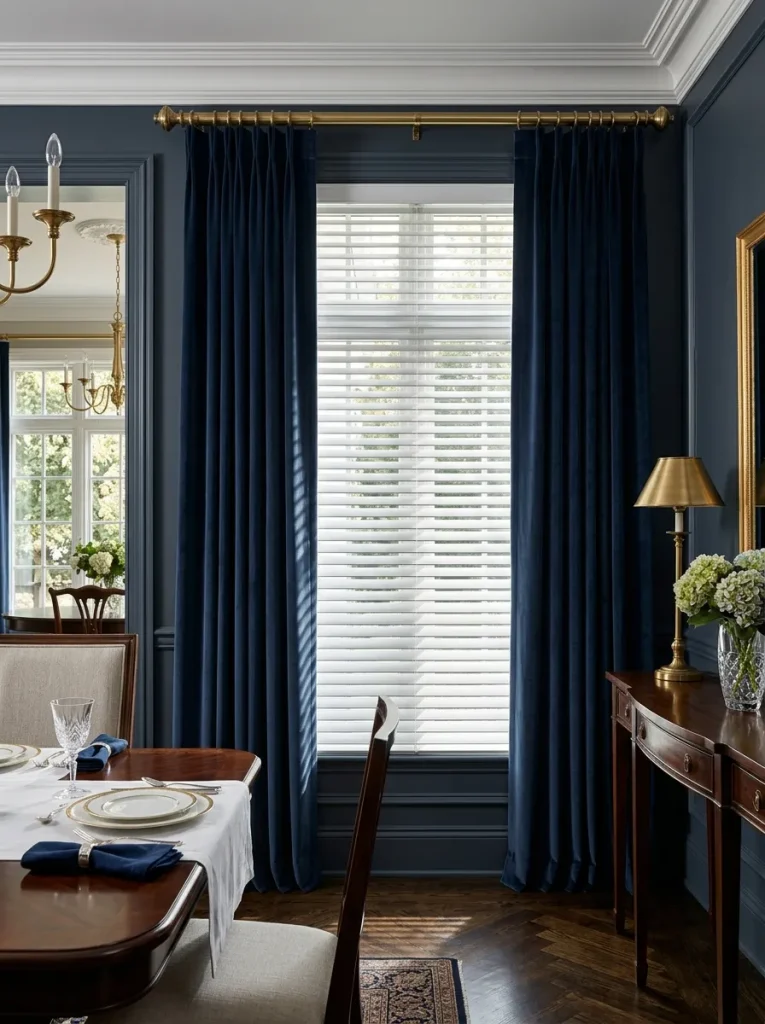
The classic velvet and white wood contrast layout pairs heavy, light-absorbing velvet drapery panels with crisp, clean white horizontal wooden blinds. This design approach is highly effective for formal dining rooms, master bedrooms, or home theaters where total light blockage and a sophisticated, polished look are required. The thick velvet fabric blocks incoming cold drafts and external street noises, while the adjustable wooden slats allow you to control the exact angle of natural light. The stark contrast between the soft, luxurious fabric and the clean, rigid white lines creates an impressive visual depth.
Start by measuring the interior width of your window casing, purchasing a two-inch white faux-wood blind that fits the dimensions precisely. Secure the mounting brackets inside the upper corners of the window frame, sliding the blind unit into place and locking the decorative valance over the front. Mount a heavy-duty, double-thickness brushed brass curtain rod six inches above the window casing, using deep wall anchors to handle the heavy fabric weight. Thread rich, deep-toned velvet curtain panels in navy blue, forest green, or charcoal gray onto the brass rod. Position the drapes on both sides of the frame, allowing them to hang completely straight to frame the white wooden blinds beautifully.
The Modern Minimalist Roller and Sheer Pair
Execution Process
The modern minimalist roller and sheer layout combines a sleek, solid-colored fabric roller shade with delicate, translucent sheer curtain panels. This configuration is designed to achieve a clean, uncluttered aesthetic that aligns perfectly with contemporary minimalist style homes. The solid roller shade rolls up completely flat into a compact headrail, while the sheer curtains drape softly over the window corners to soften the room’s geometry. This setup is highly functional for open-concept living spaces, home offices, or compact apartments where maintaining a bright, open feeling is prioritized.
Begin your planning by selecting a solid, charcoal gray or off-white blackout fabric roller shade equipped with a modern, cordless spring roller mechanism. Install the roller shade brackets inside the window frame, checking with a bubble level to guarantee the rolling tube sits perfectly horizontal. Next, mount a thin, minimalist matte-white steel curtain rod directly above the window casing, keeping the brackets tight to the wall. Slide ultra-lightweight, white polyester or linen-blend sheer drapes onto the rod, choosing a length that barely kisses the floor surface. This allows you to roll down the solid shade for complete privacy while keeping the airy sheers closed to filter daytime light.

Industrial Roman Shades with Grommet Canvas drapes
Step-by-Step Guide
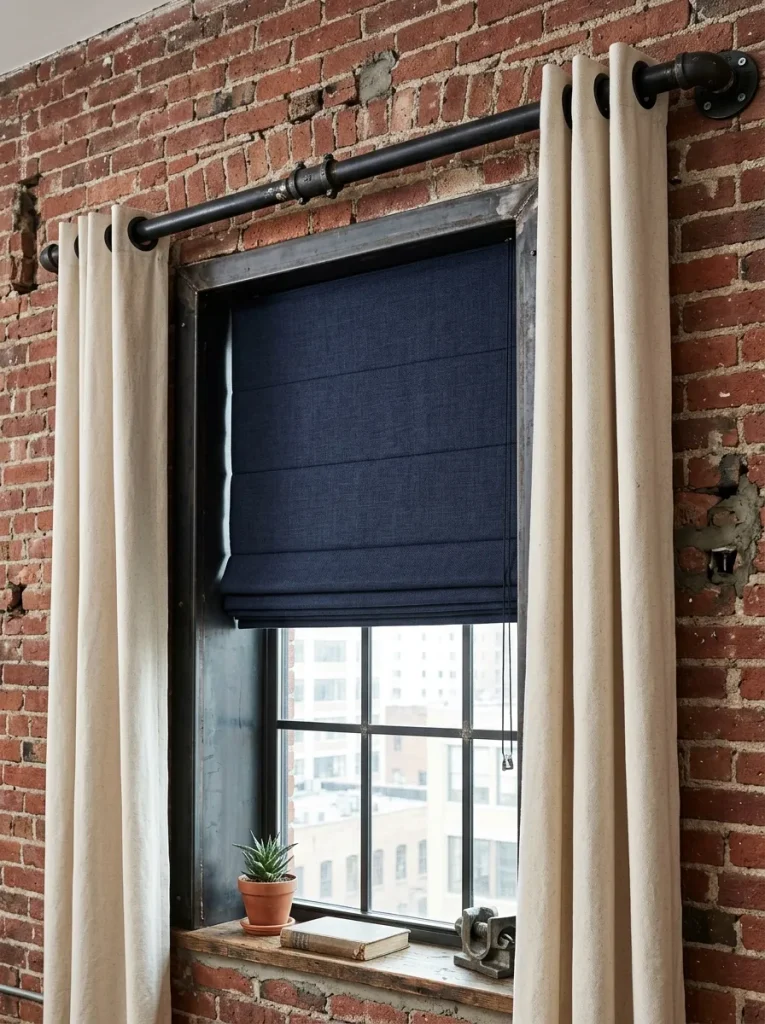
The industrial roman shades with grommet drapes concept utilizes structured, dark-toned fabric roman blinds paired with heavy canvas curtain panels hung on a thick industrial pipe rod. This bold design highlights structural elements, clean metal lines, and durable, utilitarian fabrics, making it an excellent match for urban lofts or modern bedrooms. The easy-sliding grommet curtains are highly functional, allowing you to pull the drapes shut rapidly without any catching or pulling along the rod. The layered combination adds immediate architectural weight to simple window openings.
Measure and install a dark gray or navy blue fabric roman blind inside the window frame, ensuring the fabric folds stack neatly when raised. Purchase a three-quarter-inch black steel industrial pipe curtain rod, mounting the circular flange brackets firmly into wall studs six inches above the window. Thread heavy, natural cotton canvas curtain panels featuring matte-black metal grommets onto the steel pipe rod, ensuring the fabric folds evenly. Adjust the width of the drapes so they rest at the outer edges of the window casing when open, framing the roman shade. This setup provides exceptional insulation, keeping rooms warm in the winter while looking highly structured and modern.
Vertical Fabric Blinds with Double Rod Panels
Setup Method
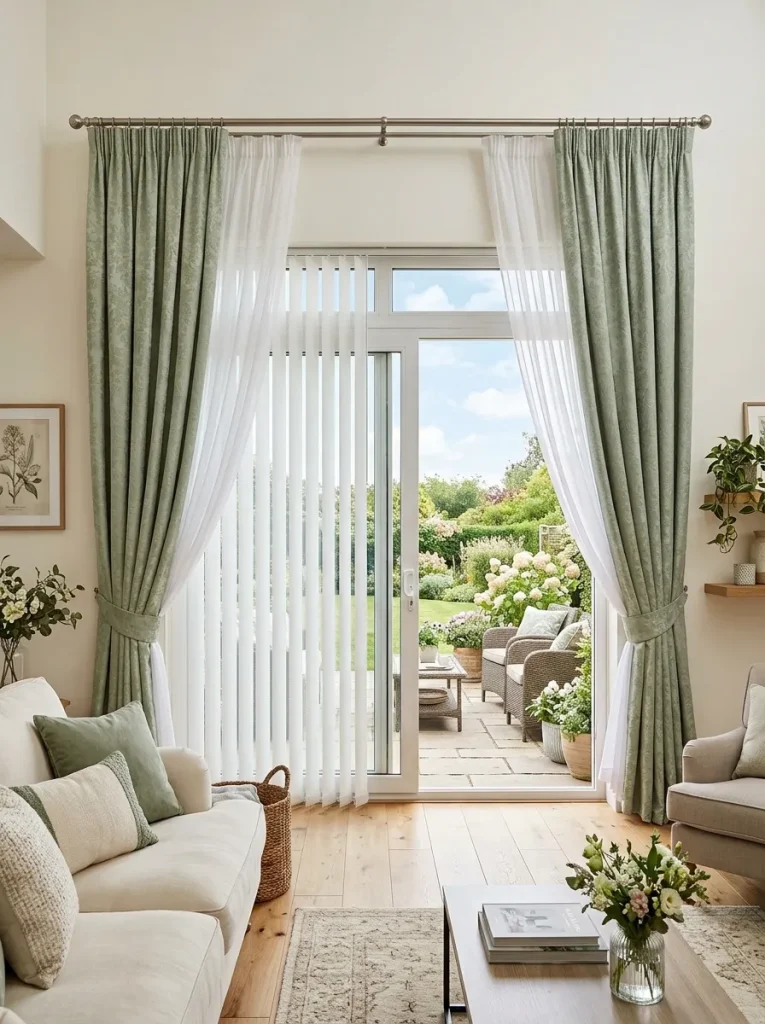
Vertical fabric blinds with double rod panels utilize a sophisticated layering system to transform wide sliding glass doors or large picture windows into stunning focal points. This design matches soft vertical fabric louvers with a double-rod curtain installation that holds both light sheers and heavy decorative drapery. The vertical lines of both treatments work together to visually heighten the room, making standard ceilings appear significantly taller. It represents an excellent organization solution for patio doors, allowing you to manage daily foot traffic easily while maintaining a beautiful display.
Erect a heavy-duty vertical fabric blind track inside the upper casing of your sliding glass patio door, clipping the fabric louvers into place systematically. Mount a double curtain rod bracket set three inches above the door frame, ensuring the brackets extend far enough to clear the vertical blind mechanism. Slide delicate white sheer drapes onto the inner rod, and place heavy, patterned jacquard or linen-blend panels on the outer rod. Pull the outer drapes to the far sides of the sliding door, using the inner sheers to soften the vertical slats when the blinds are closed.
Earthy Jute Roman and Cotton Canvas Layout
How to Make
The earthy jute roman and cotton canvas layout brings an organic, textured warmth to family rooms, kitchens, or casual dining areas. This design pairs rough, fibrous jute woven shades with smooth, durable cotton canvas curtains to create a rich, tactile experience. The natural golden-brown tones of the jute contrast cleanly with solid, light-colored cotton fabrics, enhancing the natural design elements of the room. It is a highly practical and budget-friendly project that utilizes common, easily sourced materials to achieve a high-end designer appearance.
Source a natural, tightly woven jute or sisal roman shade, mounting it directly inside the window casing to showcase the raw organic fibers. Sand any rough edges on the window trim, ensuring the jute shade raises and lowers smoothly without snagging on the wood. Mount a natural finished wooden curtain rod four inches above the window casing, securing the brackets firmly with wood screws. Thread solid off-white, olive green, or terracotta-colored cotton canvas drapes onto the wooden rod, utilizing simple hidden back tabs for a clean drape. This configuration filters incoming sunlight into soft, warm earthy tones, making the room feel incredibly cozy.

Glamorous Metallic Blinds with Pleated Silk Drapes
Execution Process
Glamorous metallic blinds with pleated drapes combine sleek, light-reflective aluminum horizontal blinds with elegant, pinch-pleated silk or satin curtain panels. This high-contrast layout replicates high-end metropolitan apartments, bringing a touch of luxury and sophisticated sparkle to formal living rooms or master suites. The metallic surfaces of the blinds bounce light dynamically across the room, while the deep, structured folds of the pleated drapes ground the window display. This approach is highly effective for enhancing smaller windows, making them look significantly larger and more grand.
Select a sleek, one-inch aluminum horizontal blind in a metallic silver, champagne gold, or warm copper finish, mounting it inside the window. Mount a heavy-duty brass curtain track or rod six inches above the window frame, ensuring the brackets are perfectly level. Attach drapery hooks to the back of your pinch-pleated silk or high-quality faux-silk satin curtains, hooking them into the sliding rings on the rod. Adjust the drapes so they hang just a half-inch above the floor, creating a crisp, tailored line that highlights the elegant pleats. This layout looks highly sophisticated when illuminated by warm evening lamps and soft candlelight.

Rustic Wood Blinds with Patterned Geometrics
Step-by-Step Guide
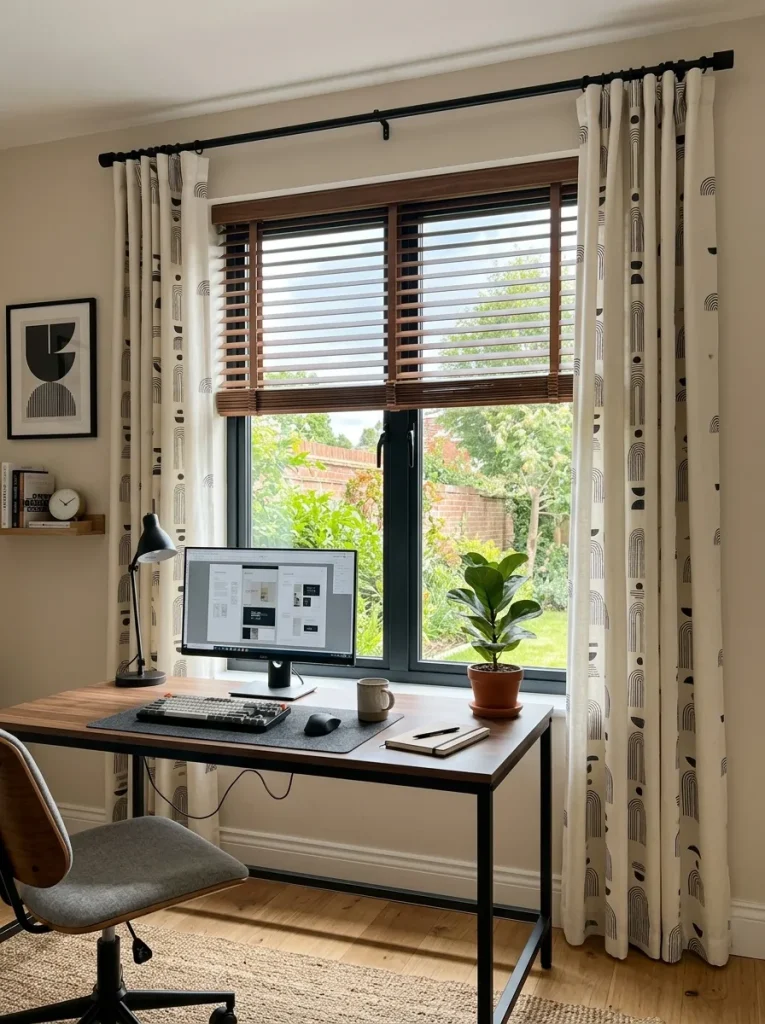
Rustic wood blinds paired with patterned geometric curtains introduce a playful, modern energy into cozy home offices, nurseries, or entryways. This layout utilizes the rich, warm wood grain of two-inch horizontal blinds as a natural anchor, while the geometric drapery brings visual movement and color. By choosing a simple two-tone geometric pattern, you can introduce modern design interest without overwhelming the room’s existing furniture and home decor. This combination is highly effective for creating a stylish, focused workspace that feels organized and visually engaging.
Acquire a rich, walnut-stained or natural oak two-inch wood blind, installing the mounting brackets firmly inside the upper window casing. Mount a simple matte-black iron curtain rod three inches above the window, extending the rod slightly wider than the frame width. Thread durable cotton-blend drapes featuring a clean geometric pattern, such as mid-century arches or minimalist lines, onto the iron rod. Position the patterned drapes so they frame the rich wood blinds, allowing the natural grain of the timber slats to remain the central focus. This setup brings a perfect balance of organic warmth and modern artistic styling to residential spaces.
Cellular Shades with Lightweight Cotton Panels
Setup Method
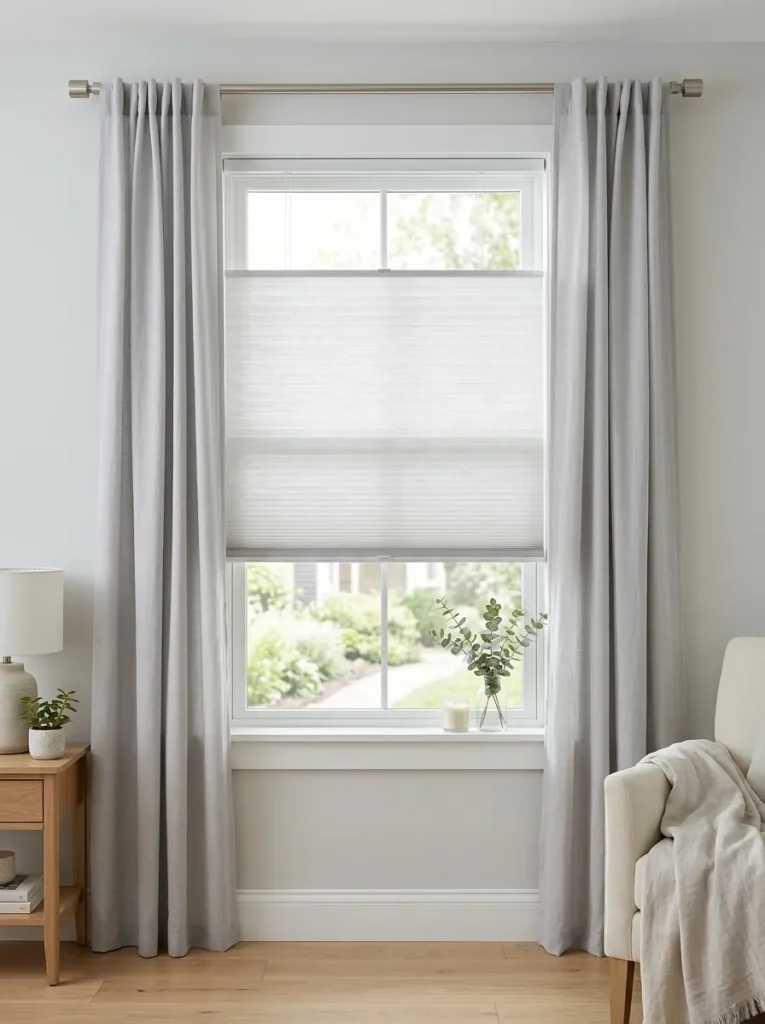
Cellular shades with lightweight cotton panels represent the ultimate energy-efficient window treatment, combining high-tech insulation with soft, classic styling. This layout uses double-cell honeycomb shades inside the window frame, which trap air to reduce utility heating and cooling costs significantly. Layering simple, lightweight cotton curtains over the cellular shades hides the utilitarian look of the honeycomb paper, bringing a soft, cozy feel. This project is highly recommended for cold northern climates or sunny south-facing windows that experience extreme temperature changes.
Install a cordless, top-down bottom-up cellular shade inside the window casing, choosing a neutral white or cream color to maximize light reflection. This specialized shade style allows you to lower the top section to let in sky views while keeping the bottom closed for absolute privacy. Mount a lightweight, brushed nickel curtain rod four inches above the window frame using standard mounting hardware. Thread simple, unlined white or pale gray cotton curtain panels onto the rod, allowing them to hang loosely down to the baseboards. This dual-layer setup provides exceptional thermal protection while keeping the window looking light, fresh, and modern.
Venetian Blinds with Deep Pinch-Pleated Linen
How to Make
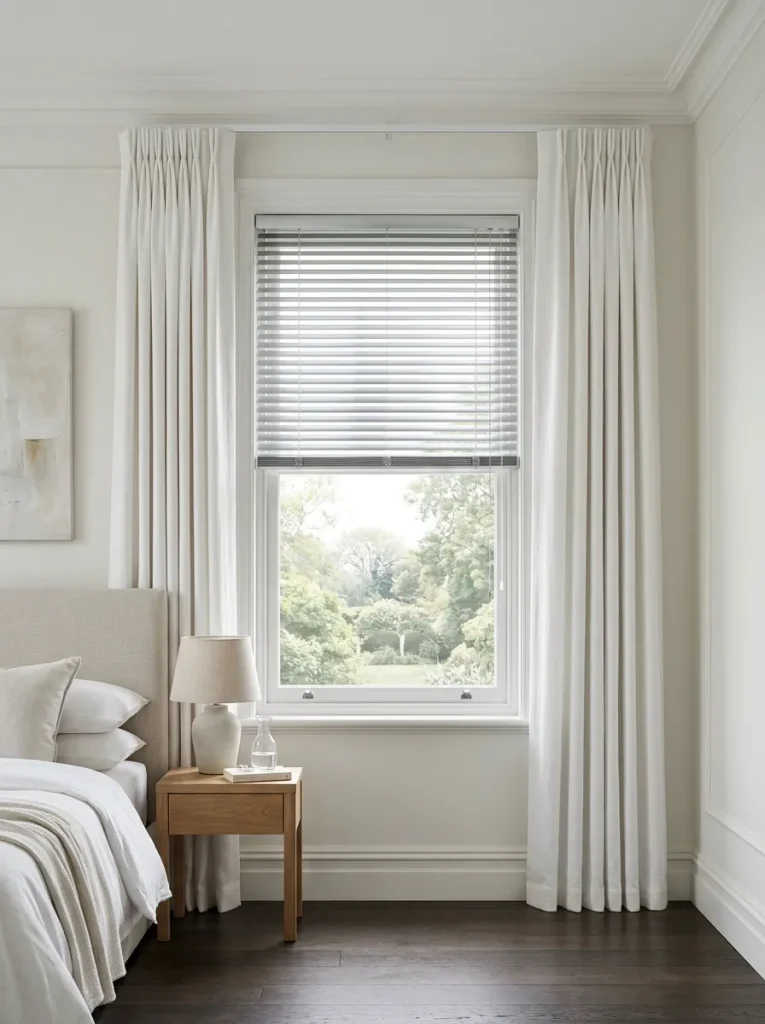
Venetian blinds with deep pinch-pleated linen panels combine the classic functionality of aluminum blinds with the elegant drape of high-end tailored linen. This design uses thin aluminum venetian slats to control light entry precisely, while the deeply pleated linen panels add sophisticated vertical lines. The airy texture of the linen softens the industrial feel of the metal slats, creating a beautifully balanced look that fits dining rooms or bedrooms. It represents an exceptional, durable project that is easy to clean and maintain over decades of daily use.
Mount a classic, one-inch silver or white aluminum venetian blind inside your window casing, ensuring the tilt wand operates smoothly. Install a high-quality, ceiling-mount curtain track directly above the window frame, allowing the drapes to hang from the highest possible point. Attach metal drapery hooks to the headers of deep, pinch-pleated linen curtain panels, sliding them into the track carriers. Pull the linen panels to the outer edges of the window, choosing a length that touches the floor perfectly without bunching. This installation visually elongates the window, making the room feel exceptionally grand, bright, and organized.
Common Beginner Mistakes and How to Avoid Them
One of the most frequent errors made when layering curtains over blinds is selecting incorrect mounting brackets that do not provide enough clearance for the drapes. If your curtain rod brackets are too short, the curtain panels will press tightly against the blinds, causing the fabric to bunch awkwardly and preventing the blinds from operating. To completely avoid this issue, always purchase adjustable curtain rod brackets that project at least four to five inches from the wall, leaving a clear two-inch gap behind the fabric. Another common mistake is failing to locate solid wooden studs when mounting heavy wood blinds and velvet drapery. Over time, the continuous pulling of cords and fabrics will cause loose drywall anchors to sag or pull completely out of the wall. Always locate the center of wall studs using an electronic stud finder, or use heavy-duty toggle bolts when mounting to hollow drywall.
Additionally, beginners often miscalculate the required curtain width, purchasing panels that look thin and skimpy when drawn open. Always ensure the combined width of your curtain panels is at least double the width of the window frame to guarantee rich, luxurious fabric folds. Finally, ignoring the moisture levels of the room can lead to mold issues on natural wood or jute blinds in high-humidity areas like bathrooms or kitchens. Always opt for moisture-resistant faux-wood or aluminum blinds in these wet zones, saving natural timber and delicate silk drapery for dry bedrooms and living rooms.
Practical Tips for Better Results
To achieve professional, showroom-grade results with your layered window treatments, materials and tools should be managed systematically. Utilizing a handheld fabric steamer to remove deep wrinkles from newly unpacked curtain panels is essential for a polished, high-end look. Grouping your window hardware by room before starting installation prevents confusing different screw lengths and ensures a smooth, highly efficient DIY workflow. When mounting horizontal blinds, always install the center support bracket included in the package if your window width exceeds thirty-six inches. This simple step prevents the headrail from sagging in the middle over time, protecting the internal gear mechanism from premature wear.
Additionally, choosing a curtain rod color that matches the metal finishes of your room’s light fixtures, cabinet knobs, or door handles unifies the interior design beautifully, making your handmade project look completely integrated. When using tab-top or back-tab curtains, sliding a small plastic straw section over the rod between each tab helps maintain perfect, uniform fabric folds when the drapes are opened. Finally, applying a light coat of clear silicone lubricant spray to the inner tracks of your blinds once a year keeps the adjustment cords gliding smoothly and prevents fraying.
Styling, Presentation, or Organization Ideas
Integrating layered window treatments seamlessly into your home decor requires careful attention to color palettes, spatial heights, and visual proportions. To make small windows look dramatically larger, mount your curtain rod as close to the ceiling as possible, extending the rod ten to twelve inches wider than the window frame. This clever styling trick allows you to draw the curtain panels completely open, exposing the entire glass pane while making the room feel significantly taller. Choose a drapery color that matches your wall paint for a clean, minimalist style, or select a bold accent tone to create a stunning visual focal point.
Consider the visual height of your furniture when arranging your window treatments; ensure your drapes do not get caught behind low sofas or heavy desks. Using simple, matching fabric tiebacks or polished brass drapery hooks allows you to hold your curtains open in an elegant sweep, showcasing the textured blinds behind them. If your room features multiple windows side-by-side, installing a single, continuous curtain rod across all of them creates a unified, spacious look that visually expands the room. Placing a tall potted houseplant, like a fiddle-leaf fig or a trailing fern, next to your layered window completes the fresh, organic design aesthetic.
Budget or Time Planning
Executing a custom window design project successfully requires a structured understanding of financial outlays and realistic time management. By prioritizing budget ideas like buying ready-made curtain panels, utilizing faux-wood instead of real timber, and sourcing hardware in bulk, you can save significant amounts compared to custom design shops. Dividing your installation steps into clear chronological phases ensures that you complete every window comfortably without experiencing physical fatigue or creative burnout. Sourcing raw materials like wood screws, wall anchors, and basic aluminum blinds from local commercial building supply warehouses is significantly more economical than buying premium branded hardware.
Splitting your installation tasks across a structured weekend ensures that all drywall anchors and adhesives cure completely before your new window treatments are subjected to daily use. If you are on a tight budget, focus your resources on high-quality curtain rods and brackets, as cheap hardware is highly prone to bending and sagging. You can easily upgrade basic, inexpensive drapes by sewing a wide, decorative trim ribbon along the inner borders, creating a high-end customized look for a fraction of the cost.
Creative Expansion and Advanced Inspiration
Once you have mastered the fundamental mounting and fabric-matching methods detailed in this tutorial, you can explore advanced variations that introduce unique luxury elements to your windows. Consider installing smart, motorized roller shades inside the window casing, allowing you to raise and lower the blinds via a smartphone app or a voice assistant. Another advanced concept involves layering customized drapery panels that incorporate a thin, hidden layer of thermal fleece inside the lining to maximize energy efficiency in extreme climates.
You can also explore complex hardware setups, such as using custom-bent curtain rods to wrap layered drapes seamlessly around deep bay windows or corner glass installations. For spacious master suites, try expanding the layered concept by adding a third layer of lightweight sheer panels directly between the blinds and the heavy drapes, creating a luxurious hotel-like window display. By continuously mixing different textures, high-quality hardware components, and smart home technology integrations, you can elevate simple window coverings into stunning architectural features that redefine interior comfort.