Designing a dedicated reading space is one of the most rewarding home decor projects you can undertake. A cozy book nook provides a functional sanctuary that encourages mindfulness, relaxation, and a deeper engagement with literature. On platforms like Pinterest, these micro-spaces have captured the imagination of interior enthusiasts who want to maximize their living environments. This comprehensive tutorial will guide you step by step through the process of selecting, building, and styling a personalized reading corner. You will learn how to evaluate your current floor plan, choose appropriate furnishings, optimize lighting conditions, and curate decorative elements that reflect your personal aesthetic. Whether you live in a spacious suburban house or a compact urban apartment, establishing a designated area for reading is an accessible and highly practical way to elevate your everyday lifestyle. By focusing on ergonomic comfort and visual harmony, you can convert any underutilized square footage into an inviting literary retreat that serves as a peaceful escape from the demands of modern life.
Why Intimate Reading Spaces Are Shifting Interior Design Trends
The surge in popularity of small-scale home organization and specialized comfort zones reflects a broader shift toward intentional interior design. Modern lifestyle trends heavily emphasize creating spaces that support mental well-being and slow living, making the reading alcove a staple of contemporary inspiration. These projects offer immense practical value because they require minimal square footage while yielding a significant impact on the overall atmosphere of a home. The DIY appeal is particularly strong, as a reading space allows individuals to express their creativity without committing to a full-room renovation. Beginners can easily manage these projects because they can be scaled up or down depending on available resources and spatial constraints. Furthermore, the aesthetic versatility of a reading corner means it can adapt to various design movements, from a sleek minimalist style to a layered, maximalist look. By prioritizing personal comfort and functional beauty, this design concept proves that thoughtful curation matters far more than expansive square footage.
Materials, Essential Tools, and Initial Planning Considerations
Meticulous planning and proper material selection are foundational to executing a successful home decor project. Before purchasing any items, you must carefully measure your selected area, noting the placement of electrical outlets, windows, and structural walkways. The primary materials required for a standard setup include comfortable seating options, such as an armchair, a floor cushion, or a built-in bench, along with functional shelving units or floating ledges for book display. Essential tools typically involve basic hardware like a spirit level, a measuring tape, wall anchors, a power drill, and sturdy brackets for secure shelf installation. Additionally, you will need to consider ambient and task lighting fixtures, such as adjustable floor lamps or wall-mounted sconces that prevent eye strain. Preparation also involves evaluating the existing color palette of your room to ensure your new additions create a cohesive visual flow. By gathering all necessary supplies beforehand and mapping out your layout on graph paper, you can streamline the assembly process and avoid common structural mistakes.
Idea 1: The Classic Wingback Chair Sanctuary
How to Create
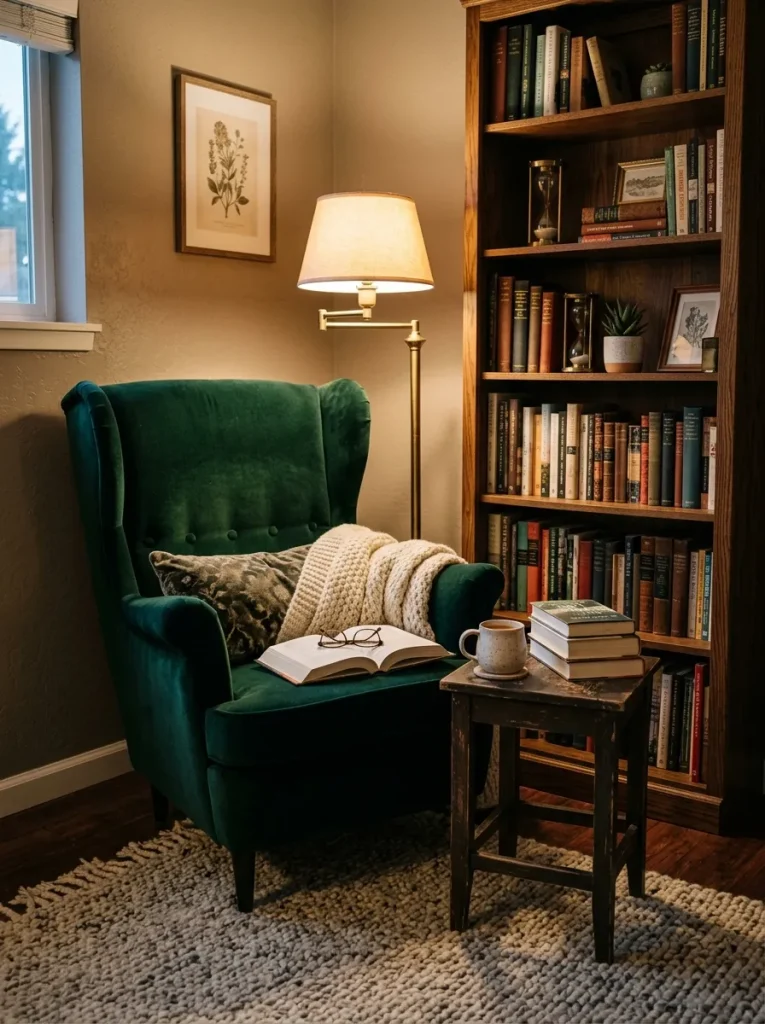
The classic wingback chair sanctuary relies on timeless furniture design to establish an immediate sense of privacy and physical comfort. This concept utilizes the high back and supportive side panels of a traditional wingback chair to create a protective barrier against household distractions. The design philosophy centers on grounding the corner with a substantial piece of furniture that anchors the gaze and defines the purpose of the space. Positioned alongside a dedicated bookshelf, this arrangement evokes the sophisticated atmosphere of a traditional private library while remaining entirely adaptable to modern design sensibilities. The high backrest provides excellent ergonomic support for extended reading sessions, while the enclosed sides block out peripheral movement, allowing for total immersion in a novel.
To execute this setup, start by clearing a quiet corner, ideally near a natural light source like a window. Position the wingback chair at a slight angle facing into the room to maintain an inviting open layout while preserving a sense of enclosure. Install a vertical bookcase or a set of floating wooden shelves directly adjacent to the chair, ensuring the titles are within arm’s reach. Place a small, sturdy end table on the opposite side of the shelving to hold your beverages, reading glasses, and bookmarks. For task lighting, position an adjustable brass floor lamp directly behind the shoulder of the chair so the light shines over your book without creating a glare on your face. Finish the space by layering a soft wool throw blanket over the armrest and placing a small woven rug underneath the chair base to define the physical boundaries of your new reading zone.