Integrating miniature architectural models into bookshelves represents a highly popular trend across interior design networks, transforming standard libraries into interactive works of visual art. This informative tutorial explores ten distinct book nook ideas craft concepts, providing actionable insights into spatial design, lighting integration, and material assembly. Readers will learn the precise technical skills required to construct realistic miniature environments, scale down structural components accurately, and incorporate hidden electrical elements safely. Understanding the mechanical and structural layout of these compact diorama boxes is incredibly useful because it allows creators to maximize visual depth within highly restricted dimensional parameters. A standard bookshelf provides the ideal framework for these projects, protecting the delicate handmade components from environmental dust while enhancing the surrounding home decor. This comprehensive guide details each methodology with absolute certainty, ensuring that beginners can confidently approach their first miniature build with predictable results. By mastering these core structural concepts, anyone can convert a standard wooden storage shelf into an engaging artistic display that captures the imagination.
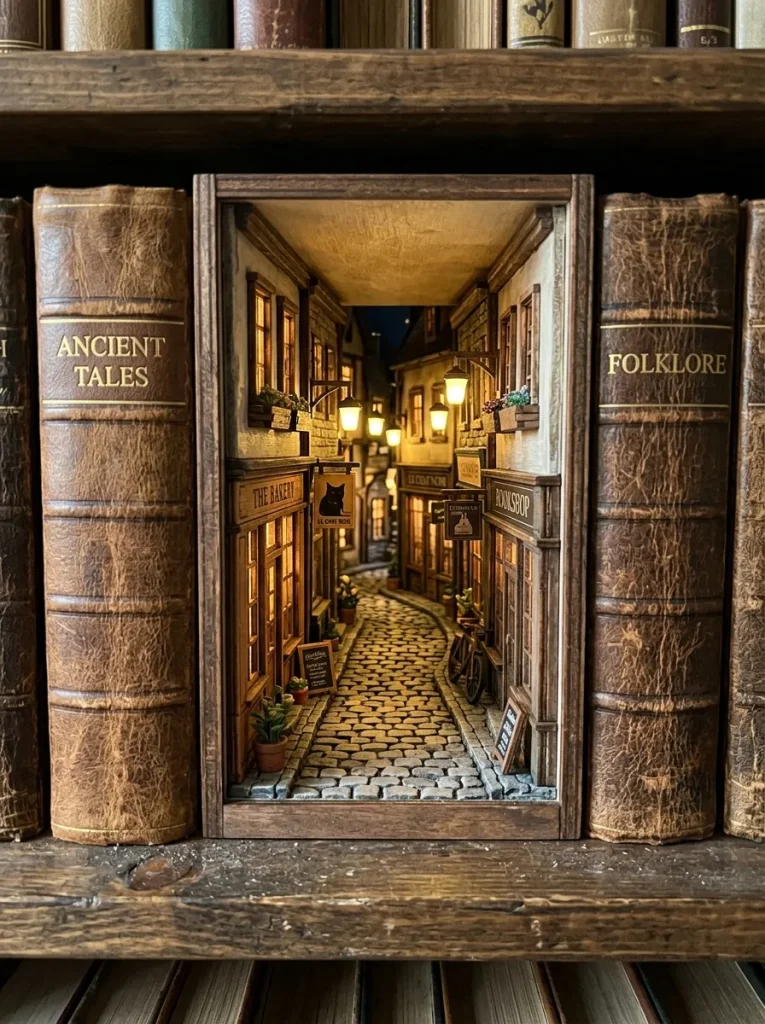
Why Miniature Diorama Crafts Pop on Modern Mood Boards
The massive popularity of custom shelf inserts across modern curation platforms stems from their remarkable practical value and distinct spatial design relevance. On platforms like Pinterest, these miniature worlds trend consistently because they merge literary inspiration with fine architectural modeling, offering a deeply customized form of indoor decoration. The DIY appeal of building a miniature shelf insert is exceptionally strong, as it allows individuals to repurpose scrap materials, small plastic components, and discarded cardboard into intricate visual stories. This structural accessibility makes it an excellent choice for an easy project, enabling beginner friendly entry into the rewarding world of miniature modeling without requiring expensive workshop equipment. Furthermore, minimalist style principles often leverage these hidden inserts to add unexpected points of visual interest within clean, organized furniture arrangements. The enclosed nature of a wooden insert box ensures that the delicate scenes remain protected over time, providing a highly durable piece of art that upgrades a room’s aesthetic layout safely.
Materials Assembly and Technical Layout Planning
Achieving structural precision in a miniature shelf insert requires systematic planning and the careful accumulation of raw materials before construction begins. Essential items for this creative project include sturdy five-millimeter foam board or medium-density fiberboard for the outer structural box, clear acrylic sheets for protective glazing, and variable wood glues. Precision tools are vital, including a heavy-duty utility knife with replaceable blades, a metal drafting ruler, non-magnetic tweezers for handling microscopic items, and low-voltage LED lighting kits. Planning considerations must begin by measuring the exact depth, height, and width of your target bookshelf space to ensure the completed box slides in effortlessly. Sectioning your interior layout using a pencil and grid paper helps establish accurate forced perspective, which makes the small space look significantly deeper than its physical dimensions. Protecting your main working surface with a self-healing cutting mat prevents blade damage, while organizing small components into labeled plastic trays streamlines the final assembly process.
Idea 1: The Hidden Cobblestone Alleyway
How to Create
The hidden cobblestone alleyway concept creates the visual illusion of a narrow, winding historical street tucked directly between your favorite novels. This structural design relies heavily on forced perspective, where the walls angle inward and the floor rises slightly toward the back of the box to simulate distant depth. The aesthetic properties of this layout mimic old European architecture, utilizing textured stone finishes, tiny wooden storefronts, and overhead lantern fixtures to build a moody atmosphere. For a successful outcome, the chosen color palette should focus on earthy grays, deep browns, and warm golden lighting to enhance the historic feel. This timeless option remains a favorite among model makers because it fits perfectly into any classical library collection.
To build this alleyway, cut two matching side walls from your foam board, angling them inward by five degrees from front to back before gluing them to the base. Texture the floor piece by pressing a ball of crumpled aluminum foil firmly into air-dry clay to create realistic, uneven cobblestone patterns. Construct miniature building facades from thin balsa wood, cutting out small window frames and gluing clear plastic packaging behind them to simulate glass. Install tiny warm-white LED bulbs behind the window openings and inside miniature streetlamps, routing the thin copper wires through the back panel to a battery pack. Assemble the outer box pieces using strong wood glue, slide the completed street scene inside, and add miniature moss along the wall seams.