Short curly hair provides a unique canvas for color, offering texture and depth that straight styles often lack. For those with a shorter, curly crop, color serves as an excellent tool to define individual ringlets, enhance natural volume, and add a layer of sophistication to everyday grooming. This guide explores creative and practical coloring concepts specifically tailored for short, curly hair, ensuring that every transformation maintains hair health while achieving a distinct aesthetic. Readers will learn about various color techniques—from subtle highlights to bold, high-contrast applications—that suit a modern, masculine style. Understanding the interplay between curl pattern and light reflection is crucial, as color placement can dramatically alter how hair volume and texture are perceived by others. Whether seeking a professional-looking refresh or a bold, avant-garde statement, this article provides the necessary information to navigate color selection, application, and maintenance. By focusing on professional techniques and accessible methods, you will be equipped to select the right approach for your specific hair type and personal style. These insights ensure that your next salon visit or at-home project results in a polished, intentional look that elevates your natural curl structure and modern haircut.
Why Bold Color Choices for Short Curls Are Trending
The movement toward personalized grooming has turned short, curly hair into a focal point for modern design. As Pinterest ideas continue to shift toward high-contrast and textured looks, curly hair offers a dynamic opportunity to showcase color in ways that static, straight hair cannot. This trend is highly practical for those who want to express creativity without the long-term commitment of maintaining lengthy, color-treated hair. The aesthetic appeal lies in how color catches the light within tight coils, creating a multi-dimensional effect that looks intentional and refined. Furthermore, short hairstyles are inherently lower maintenance, making them ideal for experimenting with vibrant dyes or intricate highlighting patterns. From a design perspective, curly hair acts like a sculpture, and color becomes the medium that defines its shape and movement. This accessibility ensures that beginners can participate in professional-level grooming trends with minimal risk, as shorter hair is easier to manage and color-correct if needed. By integrating color into a routine, individuals can easily refresh their image, stay aligned with current fashion trends, and highlight the technical precision of their short, curly haircut through deliberate and artistic color placement.
Preparing Your Curls for Color Application
Successful hair coloring begins long before the dye touches the strands. Preparation is the most critical step to ensure even saturation and minimal damage. Begin by assessing the current health of your hair, as dry or brittle curls may not hold pigment uniformly. About two weeks prior to any chemical treatment, incorporate deep conditioning masks into your routine to build moisture, which helps the hair cuticle handle the dye process effectively. When choosing materials, opt for products specifically formulated for curly hair, as these are generally more hydrating and less harsh than standard commercial dyes. Before beginning, gather your essential tools: a plastic mixing bowl, a professional-grade tinting brush, gloves, and protective cream for your hairline to prevent skin staining. Planning is essential; map out your desired color placement by considering how your curls naturally fall. If you are doing this as a diy project, ensure you have a mirror setup that allows for a clear view of the back of your head. Following these preparation steps ensures that the color adheres correctly, lasts longer, and keeps your curls bouncy, healthy, and vibrant throughout the entire duration of the new style.
Idea 1: Honey Gold Coiled Accents
The Concept of Highlighted Curls
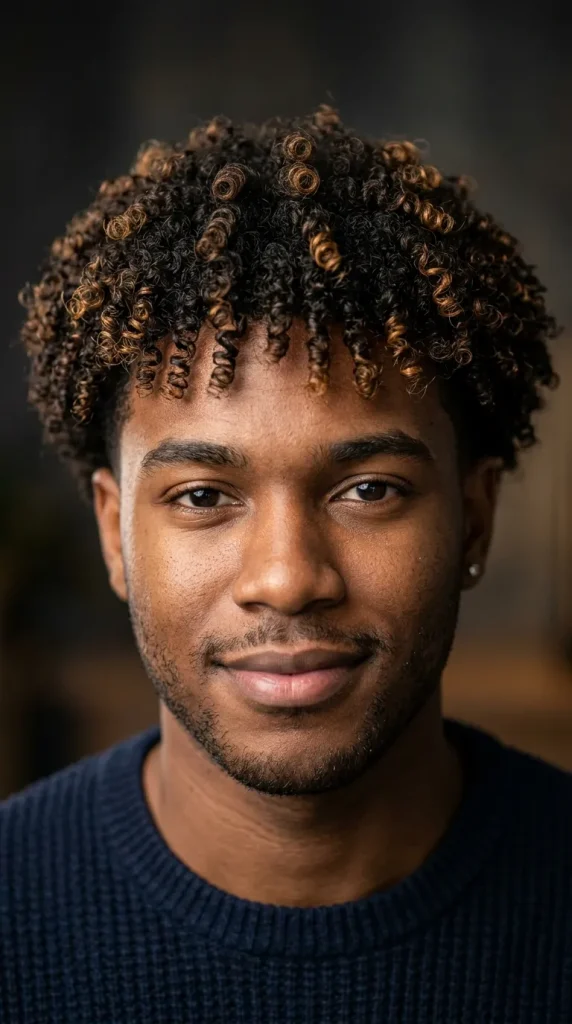
Honey gold accents represent a sophisticated way to introduce warmth into naturally dark, short, curly hair. This technique focuses on hand-painting small sections of curls, specifically those near the crown, to simulate the way sunlight naturally interacts with textured hair. By choosing a golden hue that sits within two shades of your natural base, the transition remains soft and elegant. This method is incredibly versatile, working well for professional environments while still offering a distinct, modern look. The goal is to define the individual coils rather than saturating the entire head in one flat color. When done correctly, the lighter ends of the curls create a visual contrast against the deeper roots, giving the hair an illusion of increased density and bounce. This approach is perfect for those who want a subtle change that prioritizes hair health and a natural, sun-kissed aesthetic. The result is a clean, intentional look that enhances your existing haircut, making it ideal for anyone looking for a low-maintenance, high-impact style.
Execution Process for Golden Highlights
To achieve this look, you must use a balayage technique, painting the honey-toned lightener onto the outer surface of selected curls. Start by sectioning the hair into small, manageable groups, focusing on the top and front areas where light naturally hits. Use a small applicator brush to apply the lightener, being careful to avoid the roots to ensure a seamless grow-out. Once the desired level of lift is achieved, wash the hair thoroughly and apply a honey-gold toner to neutralize any brassy undertones. After the toner has processed, rinse with cold water to seal the hair cuticle, which is vital for maintaining curl definition. Follow up with a sulfate-free shampoo and a rich, protein-based conditioner to restore moisture. Throughout this step-by-step process, keep a close watch on the hair texture; if the hair feels overly dry, shorten the processing time. The key to this easy project is precision and patience. By focusing on individual curls, you create a custom, handmade appearance that elevates your natural curl pattern without the need for frequent touch-ups or harsh, full-head chemical processing.