How to Create
The pressed botanical herbarium centerpiece uses translucent botanical preservation and clean glass geometry to create an educational, minimalist display. In this design, flat-sided mason jars function as curved herbarium specimen cases, showcasing delicate pressed ferns, field grasses, or autumn leaves secured directly against the glass wall. Illuminating the specimen from within reveals the fine venation, cellular structure, and natural translucency of the preserved leaf tissues. This concept avoids visual clutter by prioritizing negative space, botanical precision, and quiet organic tones, fitting naturally into natural history, Scandinavian, or botanical garden-themed table layouts. The simplicity of the pressed green leaf against clean transparent glass provides a calm, refined decorative note that feels intentional and curated. It offers an easy project for nature lovers who want to showcase seasonal foliage collected from their immediate environment within a structured, disciplined decorative format.
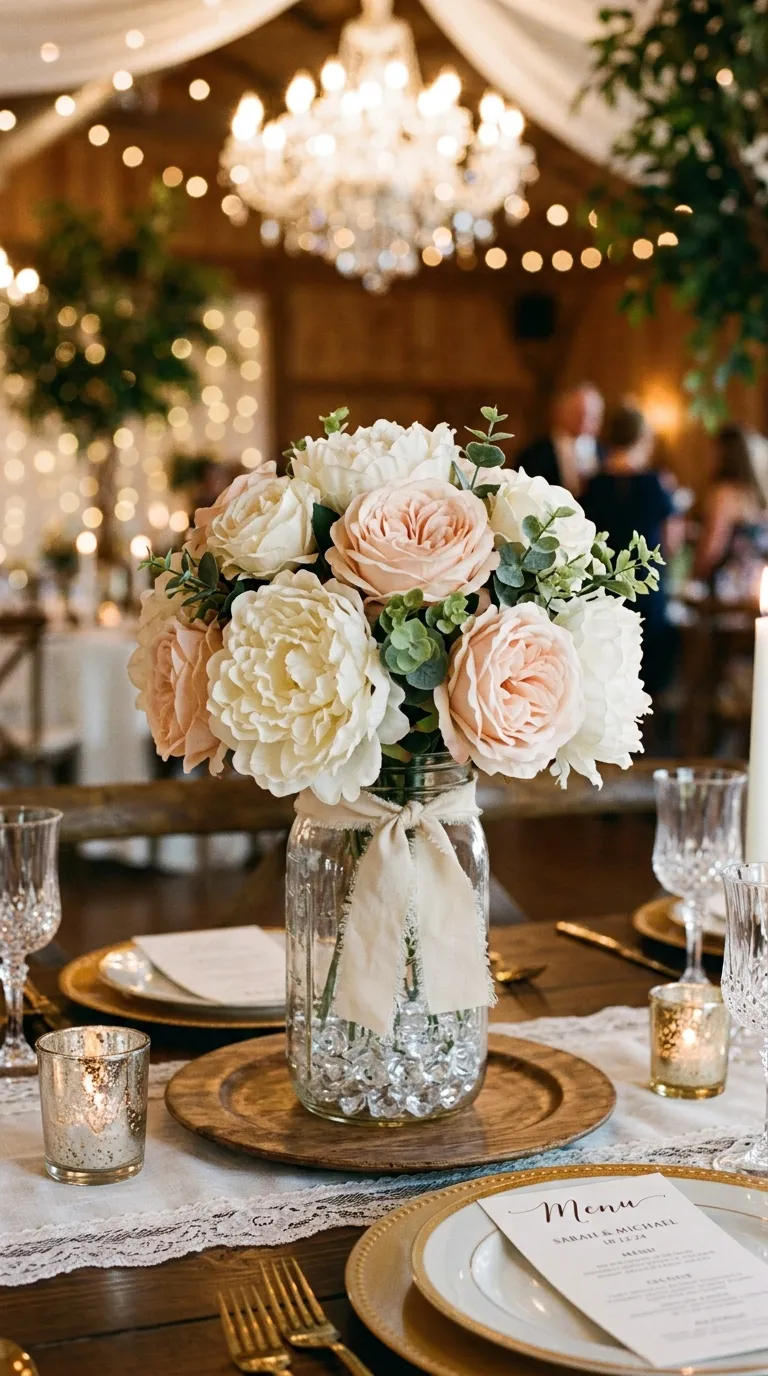
Collect flat botanical specimens—such as maidenhair fern fronds, Japanese maple leaves, or pressed wild violets—and dry them between heavy book pages for five days until completely flat and dehydrated. Clean the inside of a smooth, flat-sided pint mason jar thoroughly with glass cleaner. Using a small foam brush, apply an ultra-thin, uniform layer of clear-drying decoupage medium directly onto the flat internal face of the glass jar. Carefully lower your pressed botanical specimen inside using tweezers, pressing the face of the leaf firmly against the glued glass to eliminate air bubbles and ensure full contact. Allow the adhesive to dry clear for four hours until the botanical is securely bonded and the milky medium turns completely transparent. Pour one inch of fine white silica sand into the bottom of the jar to anchor the base visually, then insert a slender battery-powered LED pillar candle into the center, positioned directly behind the pressed botanical specimen.