Integrating living botanicals into residential sleeping quarters is an established interior design strategy that improves indoor environmental quality, enhances spatial aesthetics, and creates a tranquil atmosphere conducive to restful sleep. Among various houseplant species, Sansevieria, commonly known as the snake plant, stands out as an exceptional candidate for bedroom decoration due to its remarkable adaptability, striking vertical geometry, and low-maintenance biological requirements. This comprehensive guide details ten distinct methods for incorporating snake plants into bedroom interiors, balancing horticultural care with contemporary aesthetic principles. Readers will learn how to select ideal specimen varieties, evaluate natural light conditions, match decorative planters with existing furniture finishes, and arrange plants to maximize visual impact without cluttering living areas. Whether your goal is to soften an underutilized corner, create a vibrant bedside focal point, or establish an architectural botanical divider, these structured strategies offer actionable design solutions. Understanding the core principles of planter drainage, soil composition, spatial scaling, and lighting alignment guarantees that your greenery thrives while elevating your interior decor. By following these clear, practical steps, anyone can transform a plain sleeping environment into a sophisticated, natural sanctuary.
The widespread popularity of snake plant bedroom decor across modern digital inspiration boards stems from a growing appreciation for biophilic design, intentional living, and accessible home styling. As people seek to build calm, health-focused home environments, incorporating resilient indoor plants has become one of the most trending ideas in residential decorating. Snake plants hold immense practical value because they perform CAM photosynthesis, absorbing carbon dioxide and releasing oxygen throughout the night, which supports optimal sleeping conditions. From a design perspective, their structural, sword-like foliage introduces architectural interest, crisp vertical lines, and rich green tones that complement various decor themes, ranging from sleek minimalist style to cozy bohemian layouts. The DIY appeal is particularly strong for plant enthusiasts and home decorators who enjoy customizing planters, assembling plant stands, or crafting macrame hangers. Furthermore, the extreme hardiness of the snake plant makes it an exceptionally beginner friendly option, requiring minimal watering and surviving easily in low-light conditions. This high accessibility allows anyone to execute a successful botanical creative project on a modest budget.
Achieving a professional, long-lasting botanical display requires careful material selection and systematic preparation before introducing plants into the bedroom. You must begin by assessing the environmental conditions of your room, noting the distance from windows, ambient humidity levels, and available floor or surface space. The primary materials required include healthy snake plant specimens, well-draining terracotta or ceramic planters equipped with drainage holes, high-porosity cactus or succulent soil mix, and coarse perlite or pumice to enhance aeration. Essential tools include a watering can with a narrow spout, gardening shears, a moisture meter, protective gardening gloves, and a soft microfiber cloth for cleaning leaves. Planning considerations must prioritize plant health alongside aesthetic goals, ensuring that chosen display spots receive appropriate indirect light while remaining away from direct heat sources or drafty air conditioning vents. Assembling all materials beforehand and repotting plants into properly sized containers with fresh substrate prevents root rot, eliminates mess, and sets the foundation for an enduring decorative feature.
Idea 1: Architectural Corner Display in a Tall Ceramic Cylinder
Step-by-Step Guide
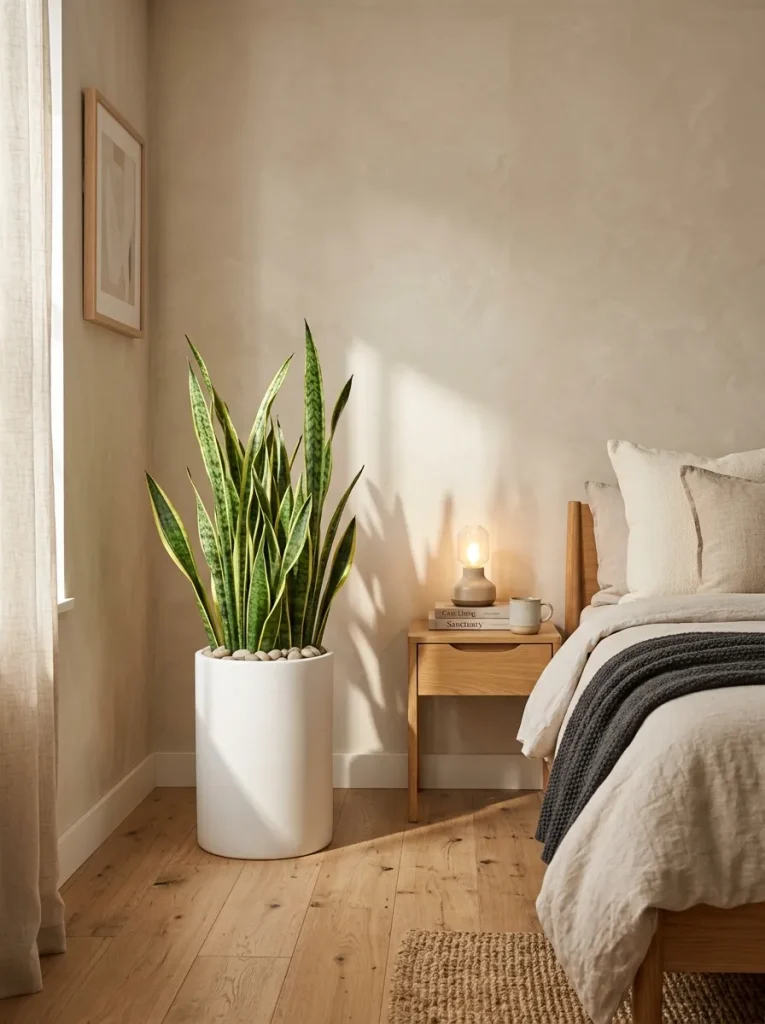
Utilizing an unused bedroom corner for a large snake plant housed in a sleek, tall ceramic cylinder creates a striking vertical anchor that draws the eye upward and expands the perceived height of the room. This concept relies on pairing a mature Sansevieria trifasciata or Zeylanica variety, characterized by tall, broad, variegated leaves, with an unadorned cylindrical planter to achieve a clean modern design. The neutral ceramic vessel acts as a quiet backdrop, allowing the rich green hues and yellow margins of the foliage to stand out as a primary visual element. Placing the tall planter in a corner softens hard architectural junctions where two walls meet, transforming an empty, forgotten space into an intentional design feature.
To build this corner display, select a cylindrical planter that is at least twelve to fourteen inches in diameter, ensuring it features a built-in drainage saucer to protect your bedroom flooring from water damage. Line the bottom of the pot with a two-inch layer of expanded clay pebbles or coarse lava rock to promote rapid water runoff, then fill the vessel halfway with a sandy succulent soil blend. Gently remove the mature snake plant from its nursery pot, loosen the root ball carefully to encourage outward growth, and center the plant within the new ceramic container. Fill the remaining space with fresh soil, pressing down lightly around the base to secure the vertical leaves, and finish the surface with a decorative layer of smooth white river stones to maintain a pristine aesthetic.