Transitioning a child from a nursery into a dedicated toddler room is a significant milestone for parents and kids alike. Creating a space that balances safety, playfulness, and rest requires careful thought, but looking for modern Pinterest ideas can streamline the process. A well-designed toddler boy bedroom serves multiple purposes throughout the day, functioning as a calm sleep environment at night and an interactive playroom during daytime hours. In this article, you will learn how to design a balanced room that nurtures independence while remaining visually appealing and highly practical. This comprehensive guide covers everything from theme selection and functional layouts to accessible storage solutions that encourage early organization habits. Transforming a bedroom is a highly useful creative project because it allows you to customize the living space to suit your child’s emerging personality and physical needs. By focusing on smart design choices, you can create a safe environment where your child feels comfortable exploring, resting, and playing independently every day.
Why Modern Toddler Bedroom Concepts Are Gaining Popularity
Captivating children’s bedroom designs are currently trending online because parents increasingly prefer spaces that blend seamlessly with the rest of their contemporary home decor. Traditional children’s rooms often relied on loud colors and plastic furnishings, but modern trending ideas emphasize a harmonious balance of aesthetic appeal and functional utility. This shift toward a more curated, minimalist style values longevity, meaning the space can adapt easily as your toddler grows into an older child. These design approaches hold immense practical value because they incorporate durable, natural materials and smart layout configurations that maximize available play space. The strong DIY appeal encourages parents to build custom elements or paint accent features themselves, making the transformation an affordable and rewarding weekend endeavor. Beginners can easily approach these room makeovers by taking small, manageable steps rather than attempting an overwhelming overnight renovation. By implementing accessible design concepts, you ensure the bedroom remains peaceful, tidy, and highly functional for daily routines.
Materials and Preparation Strategies for Success
A successful bedroom transformation requires careful planning and strategic preparation before you buy furniture or open paint cans. Begin by accurately measuring the room’s square footage, noting the positions of windows, outlets, and doorways to avoid layout mistakes later. Gathering high-quality materials early ensures your easy project runs smoothly without unnecessary interruptions or delays during the build process. Focus on selecting low-VOC or zero-VOC paints to guarantee clean air quality in your child’s sleeping area for health reasons. For construction projects, choose sturdy, solid woods or premium plywood instead of flimsy particle boards that warp easily under pressure. Essential tools for most room updates include high-quality painter’s tape, micro-fiber rollers, levels, anchors for heavy furniture, and basic hand tools. Additionally, invest in durable storage options like canvas bins and wooden crates to keep toys organized right from the start. Taking the time to properly clean, prime, and prep your surfaces will yield a professional finish that lasts for years.
Idea 1: The Woodland Adventure Cabin
How to Create
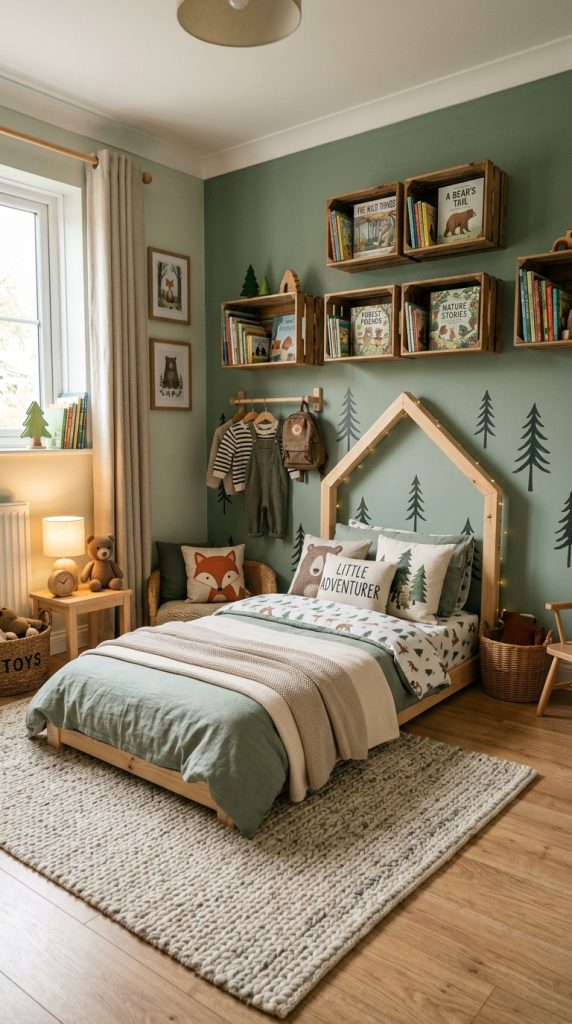
The woodland adventure theme brings the serenity of the great outdoors into a cozy, indoor space perfect for active boys. This design approach uses natural wood textures, deep forest greens, soft earth tones, and warm neutrals to establish a grounded, calming atmosphere. Incorporating elements like tree silhouettes, plush woodland animal figures, and rustic wooden textures gives the room an adventurous spirit without feeling chaotic. A low floor bed shaped like a simple cabin frame or a classic tent frame serves as the central focal point of this layout. This configuration ensures safety while allowing your toddler to climb in and out of bed without parental assistance. Surrounding the bed with natural textiles, such as cotton sheets and woven wool rugs, enhances the comforting tactile experience of the space.
To execute this woodland design, start by painting a feature wall using a rich sage green or a muted pine hue as your backdrop. You can use stencils or high-quality removable wall decals to add simple pine tree shapes across the accent wall for depth. For the bed frame, construct or purchase a simple wooden house frame that sits directly on the floor over a supportive mattress. Utilize reclaimed wooden crates as floating wall bookshelves to display adventure-themed bedtime stories within your child’s arm reach. Complete the look by adding a soft, textured area rug that mimics the forest floor and organizing toys in woven storage baskets.