Creating a specialized reading corner provides a quiet sanctuary within a busy home environment while significantly maximizing underutilized floor plans. This comprehensive guide outlines practical methods for transforming small alcoves, empty corners, and closet spaces into highly functional literary retreats. Readers will learn the essential principles of spatial arrangement, lighting integration, and comforting textiles necessary to construct an optimal reading zone from scratch. This tutorial provides systematic instructions to help homeowners establish a dedicated, cozy space that encourages a daily reading habit. Understanding the structural and visual elements of a small space installation allows anyone to build a well-planned zone without professional construction assistance. This easy project focuses on balancing physical comfort with smart organization, ensuring that books remain highly accessible and beautifully displayed simultaneously. By exploring these structured approaches, individuals can enhance their living environment while supporting their personal well-being through intentional, creative architecture. Implementing these tailored adjustments turns plain, empty areas into active, engaging focal points that add long-term utility and functional beauty to any modern household.
Why This Idea Is Trending or Useful
Small reading retreats have gained immense traction across interior styling platforms due to a growing focus on mindfulness and slow living within fast-paced lifestyles. Utilizing empty floor space for specialized activities is an effective organization strategy that preserves room flow while satisfying the biological drive for quiet personal zones. This design movement merges literary utility with contemporary home decor, proving that personal book collections do not have to remain hidden away in standard bookcases. Budget ideas focused on handmade alterations appeal directly to DIY enthusiasts looking for cost-effective alternatives to buying expensive, oversized reading furniture. The inherent flexibility of modular corner arrangements makes this a highly accessible beginner friendly endeavor, allowing individuals to start small and expand their setups gradually over time. These trending ideas provide crucial sensory decompression, preventing burnout and promoting mental clarity through dedicated screen-free environments that encourage regular cognitive rest. Ultimately, creating these compact spaces allows homeowners to celebrate their personal interests while establishing a visually balanced room feature.
Materials and Preparation
Thorough planning and precise material collection form the foundation of a structurally sound personal reading corner that safely supports seating and heavy book storage. Essential materials typically include high-quality supportive floor cushions, durable floating wooden shelves, appropriate mounting hardware, energy-efficient LED light fixtures, and soft ambient textiles. Necessary tools for this creative project encompass a standard power drill, a reliable stud finder, a spirit level to ensure perfect horizontal shelf alignment, a measuring tape, and strong drywall anchors. Before purchasing any furniture pieces, it is imperative to map out the floor layout by calculating the exact dimensions of the chosen corner or alcove zone. Planning the physical gaps between seating units and book displays prevents crowded walkways and ensures the final configuration remains accessible for long periods of relaxation. Cleaning the chosen space and pre-assembling any modular shelving units according to calculated manufacturer specifications streamlines the installation process, ensuring an efficient construction workflow.
Idea 1: Pastel Canopy Floor Cushion Retreat
Step-by-Step Guide
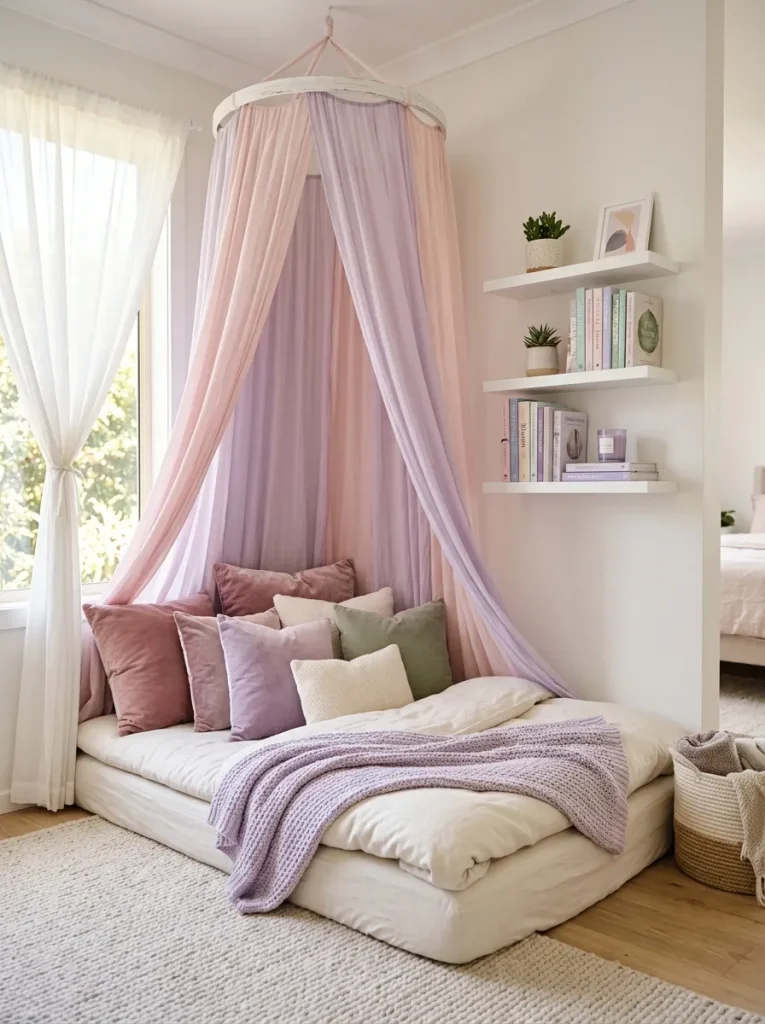
The pastel canopy floor cushion retreat relies on soft vertical drapery to isolate a corner zone from the rest of the bedroom space. This concept utilizes a lightweight ceiling hoop coupled with sheer fabric panels to create a soft, semi-enclosed reading pavilion that minimizes visual distractions. The configuration uses a heavy, high-density foam base cushion on the floor, providing a low-profile seating layout that maximizes vertical headroom. By incorporating soft pastel color palettes, creators establish a soothing visual environment that promotes calm focus and fits seamlessly into airy, minimalist interior themes. The drapery provides an immediate sense of privacy without blocking natural airflow, making the area feel spacious yet comforting.
To build this structure, install a heavy-duty metal ceiling hook into a structural ceiling joist using an electronic stud finder to guarantee weight security. Suspend a lightweight wooden or plastic hoop wrapped in sheer pastel fabric from the ceiling hook using strong nylon cording at an appropriate height. Place a thick, non-slip floor mattress or a cluster of oversized cotton cushions directly beneath the suspended canopy ring on a clean floor surface. Arrange low-profile floating ledge shelves on the adjacent wall surfaces using a spirit level and drywall anchors to hold active reading materials. Position a plug-in LED reading light near the cushion base, ensuring the cord is secured away from major walking pathways.