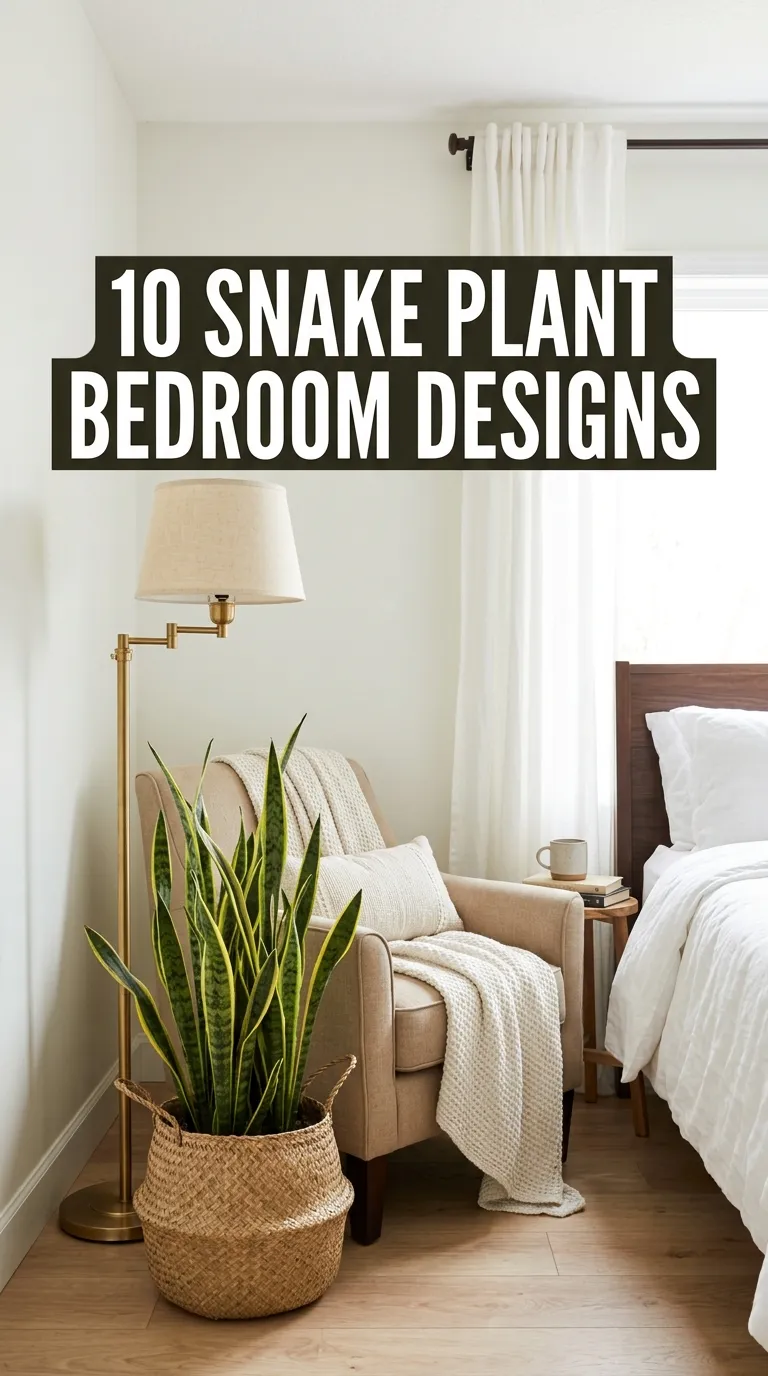
10 Snake Plant Decor Ideas Bedroom
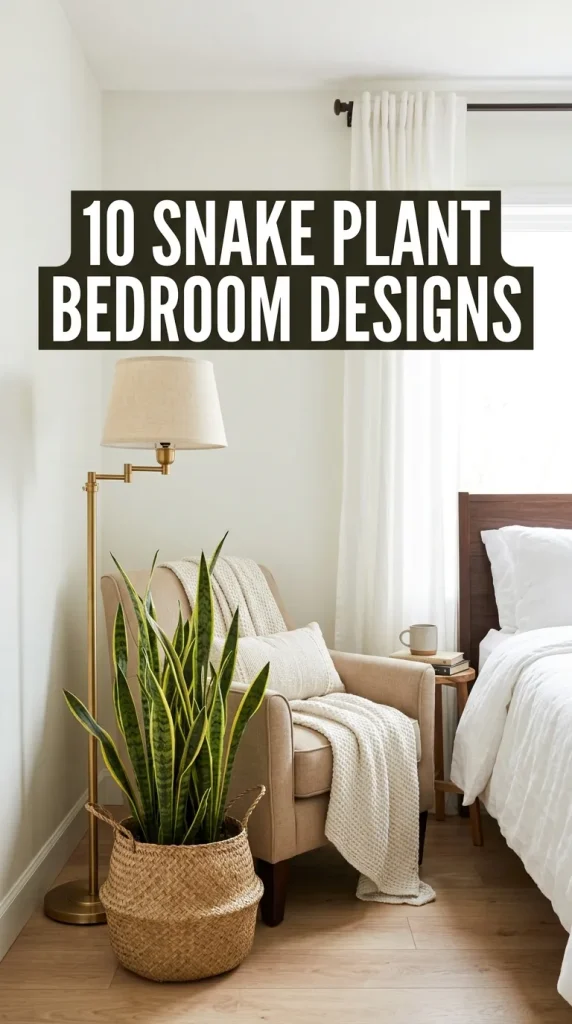
Integrating living botanicals into residential sleeping quarters is an established interior design strategy that improves indoor environmental quality, enhances spatial aesthetics, and creates a tranquil atmosphere conducive to restful sleep. Among various houseplant species, Sansevieria, commonly known as the snake plant, stands out as an exceptional candidate for bedroom decoration due to its remarkable adaptability, striking vertical geometry, and low-maintenance biological requirements. This comprehensive guide details ten distinct methods for incorporating snake plants into bedroom interiors, balancing horticultural care with contemporary aesthetic principles. Readers will learn how to select ideal specimen varieties, evaluate natural light conditions, match decorative planters with existing furniture finishes, and arrange plants to maximize visual impact without cluttering living areas. Whether your goal is to soften an underutilized corner, create a vibrant bedside focal point, or establish an architectural botanical divider, these structured strategies offer actionable design solutions. Understanding the core principles of planter drainage, soil composition, spatial scaling, and lighting alignment guarantees that your greenery thrives while elevating your interior decor. By following these clear, practical steps, anyone can transform a plain sleeping environment into a sophisticated, natural sanctuary.
The widespread popularity of snake plant bedroom decor across modern digital inspiration boards stems from a growing appreciation for biophilic design, intentional living, and accessible home styling. As people seek to build calm, health-focused home environments, incorporating resilient indoor plants has become one of the most trending ideas in residential decorating. Snake plants hold immense practical value because they perform CAM photosynthesis, absorbing carbon dioxide and releasing oxygen throughout the night, which supports optimal sleeping conditions. From a design perspective, their structural, sword-like foliage introduces architectural interest, crisp vertical lines, and rich green tones that complement various decor themes, ranging from sleek minimalist style to cozy bohemian layouts. The DIY appeal is particularly strong for plant enthusiasts and home decorators who enjoy customizing planters, assembling plant stands, or crafting macrame hangers. Furthermore, the extreme hardiness of the snake plant makes it an exceptionally beginner friendly option, requiring minimal watering and surviving easily in low-light conditions. This high accessibility allows anyone to execute a successful botanical creative project on a modest budget.
Achieving a professional, long-lasting botanical display requires careful material selection and systematic preparation before introducing plants into the bedroom. You must begin by assessing the environmental conditions of your room, noting the distance from windows, ambient humidity levels, and available floor or surface space. The primary materials required include healthy snake plant specimens, well-draining terracotta or ceramic planters equipped with drainage holes, high-porosity cactus or succulent soil mix, and coarse perlite or pumice to enhance aeration. Essential tools include a watering can with a narrow spout, gardening shears, a moisture meter, protective gardening gloves, and a soft microfiber cloth for cleaning leaves. Planning considerations must prioritize plant health alongside aesthetic goals, ensuring that chosen display spots receive appropriate indirect light while remaining away from direct heat sources or drafty air conditioning vents. Assembling all materials beforehand and repotting plants into properly sized containers with fresh substrate prevents root rot, eliminates mess, and sets the foundation for an enduring decorative feature.
Idea 1: Architectural Corner Display in a Tall Ceramic Cylinder
Step-by-Step Guide
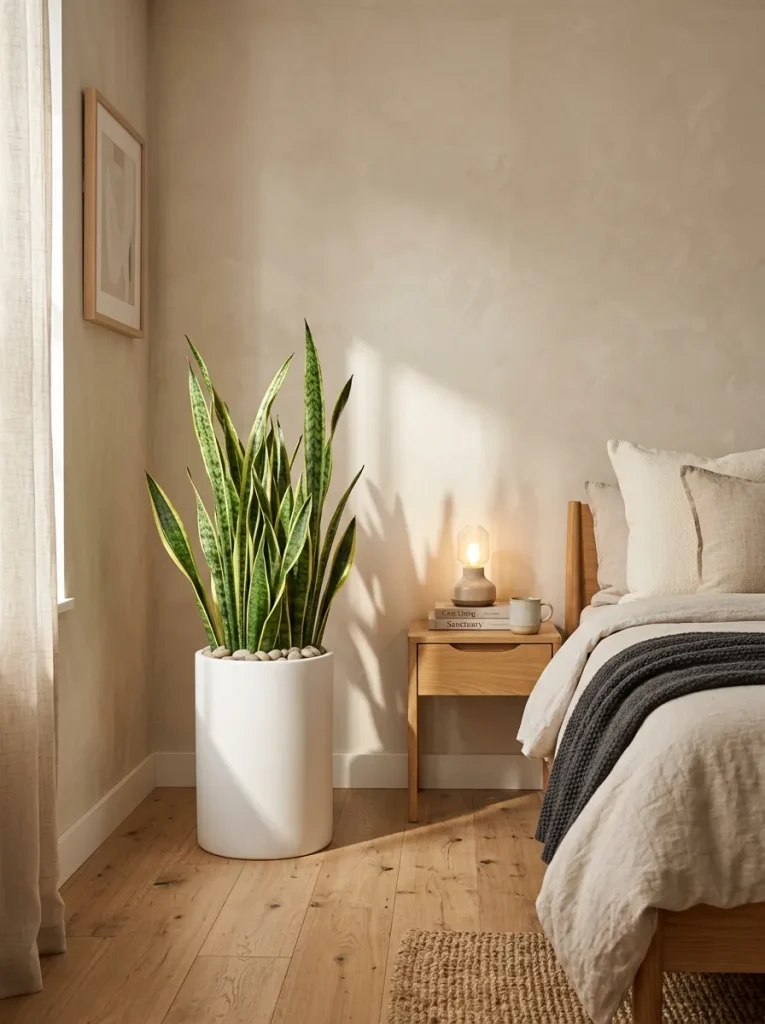
Utilizing an unused bedroom corner for a large snake plant housed in a sleek, tall ceramic cylinder creates a striking vertical anchor that draws the eye upward and expands the perceived height of the room. This concept relies on pairing a mature Sansevieria trifasciata or Zeylanica variety, characterized by tall, broad, variegated leaves, with an unadorned cylindrical planter to achieve a clean modern design. The neutral ceramic vessel acts as a quiet backdrop, allowing the rich green hues and yellow margins of the foliage to stand out as a primary visual element. Placing the tall planter in a corner softens hard architectural junctions where two walls meet, transforming an empty, forgotten space into an intentional design feature.
To build this corner display, select a cylindrical planter that is at least twelve to fourteen inches in diameter, ensuring it features a built-in drainage saucer to protect your bedroom flooring from water damage. Line the bottom of the pot with a two-inch layer of expanded clay pebbles or coarse lava rock to promote rapid water runoff, then fill the vessel halfway with a sandy succulent soil blend. Gently remove the mature snake plant from its nursery pot, loosen the root ball carefully to encourage outward growth, and center the plant within the new ceramic container. Fill the remaining space with fresh soil, pressing down lightly around the base to secure the vertical leaves, and finish the surface with a decorative layer of smooth white river stones to maintain a pristine aesthetic.
Idea 2: Bedside Table Accent in a Matte Terracotta Pot
Execution Process
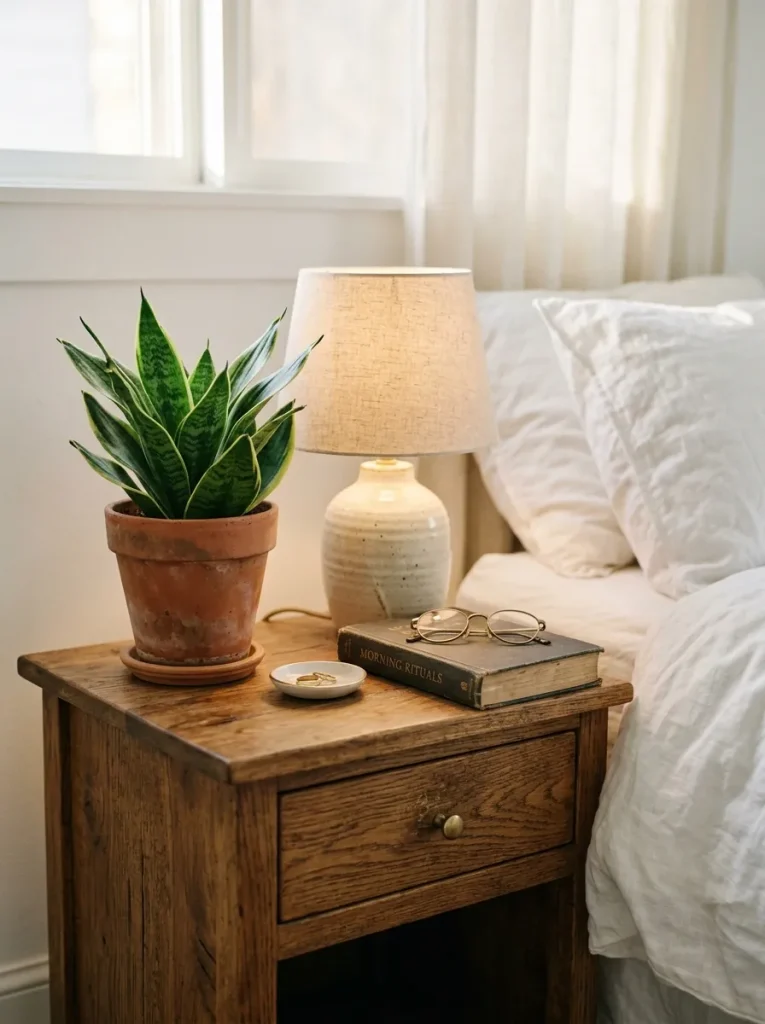
Positioning a compact snake plant variety, such as Sansevieria hahnii or Futura Superba, directly on a nightstand introduces a refreshing, natural element to your immediate sleeping environment. This concept focuses on scale and texture, using a smaller botanical specimen to complement bedside essentials like reading lamps, books, and alarm clocks without overwhelming the tabletop surface. The use of a matte terracotta pot adds warm, earthy tones and a rustic tactile contrast to smooth wooden or painted nightstand finishes. Because terracotta is naturally porous, it pulls excess moisture away from the soil, creating an ideal microclimate for compact snake plant varieties while enhancing the organic, cozy feel of the room.
The setup process begins by choosing a healthy, low-growing bird’s nest snake plant that measures under ten inches in total height, keeping its footprint proportional to your nightstand. Select an six-inch matte terracotta pot with a matching saucer, ensuring the container has been thoroughly cleaned and soaked in water briefly to prevent it from leaching moisture from fresh potting soil. Add a thin layer of fine mesh over the drainage hole to keep soil from spilling out, then add two inches of a well-draining soil mixture composed of potting loam, coarse sand, and perlite. Center the compact plant inside the pot, fill the sides with soil, and tamp it down gently before placing the finished planter on a cork coaster on your bedside table to protect the wooden surface from condensation.
Idea 3: Raised Wooden Plant Stand for Layered Height
Setup Method
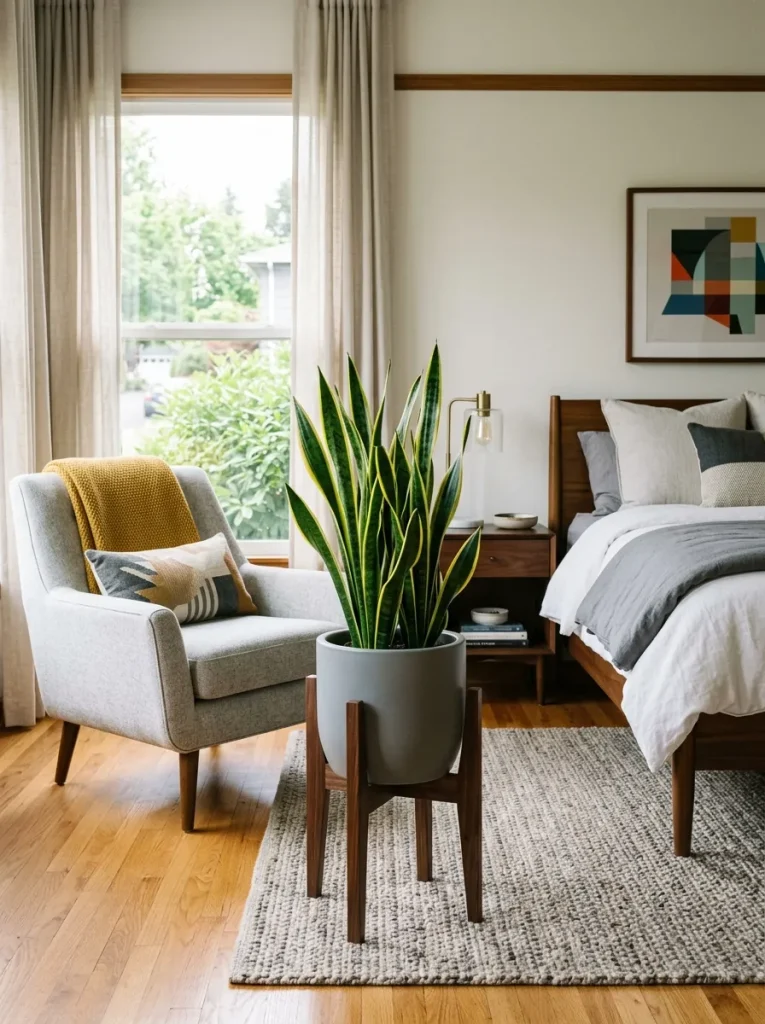
Elevating a mid-sized snake plant on a mid-century modern wooden plant stand creates a dynamic layered effect that fills vertical wall space without consuming valuable floor area. This design concept relies on lifting the plant off the floor, bringing its striking foliage closer to eye level and allowing natural light from nearby windows to illuminate the intricate leaf patterns. The combination of warm, stained wood legs and a structured ceramic planter introduces rich material contrast, making it a versatile addition to both contemporary and traditional bedroom layouts. Raising the plant also creates a light, airy aesthetic, keeping the floor perimeter open and making small or narrow bedrooms feel significantly larger.
To construct this elevated display, purchase or assemble a sturdy four-legged wooden plant stand crafted from solid hardwood such as walnut, oak, or teak, ensuring its internal ring matches the diameter of your chosen planter. Select a smooth, white or charcoal grey ceramic pot that fits snugly within the wooden frame, verifying that a removable drainage tray is positioned underneath to collect excess water during routine maintenance. Fill the pot with a light, airy soil mix formulated specifically for Sansevieria species, and plant a healthy Laurentii or Black Coral specimen with upright, sturdy leaves. Insert the potted plant securely into the wooden stand, positioning the completed unit adjacent to a dresser, armchair, or bedroom window where its elevated profile can serve as a focal point.
Idea 4: Floating Wall Shelf Greenery Display
How to Make
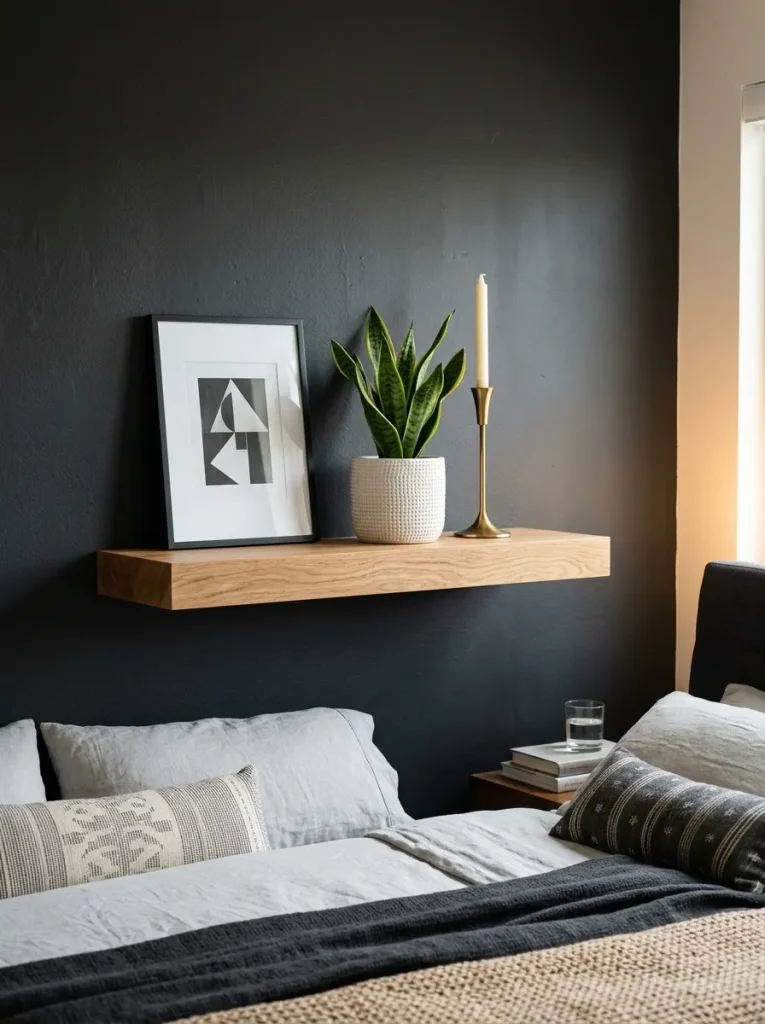
Mounting a small snake plant on a floating wooden wall shelf converts blank bedroom wall space into a vertical garden display, freeing up floor and furniture surfaces while adding texture to your room decor. This concept works exceptionally well above a desk, dresser, or bed headboard, where the architectural, sword-like leaves break up flat wall expanses and frame decorative wall art. Using lightweight, dwarf Sansevieria varieties ensures that the structural weight remains within the safe load limits of wall-mounted shelving systems. By pairing the plant with minimalist pottery, framed photos, or scented candles, you can curate a balanced, aesthetic vignette that enhances the overall character of your bedroom.
Begin by installing a sturdy floating wooden shelf onto your bedroom wall, using an electronic stud finder and spirit level to ensure the bracket is anchored securely into wall studs and sits perfectly horizontal. Select a lightweight, six-inch ceramic or fiber-cement planter in a shade that complements your wall paint, ensuring it includes an integrated saucer to catch stray water droplets. Plant a small, slow-growing snake plant variety using a lightweight blend of coconut coir, pumice, and potting soil to keep the overall container weight low. Place the potted plant onto the floating shelf alongside neutral decorative objects, arranging the items using the rule of thirds to create an artistic, visually balanced shelf styling layout.
Idea 5: Mid-Century Brass Planter Focal Point
Execution Process
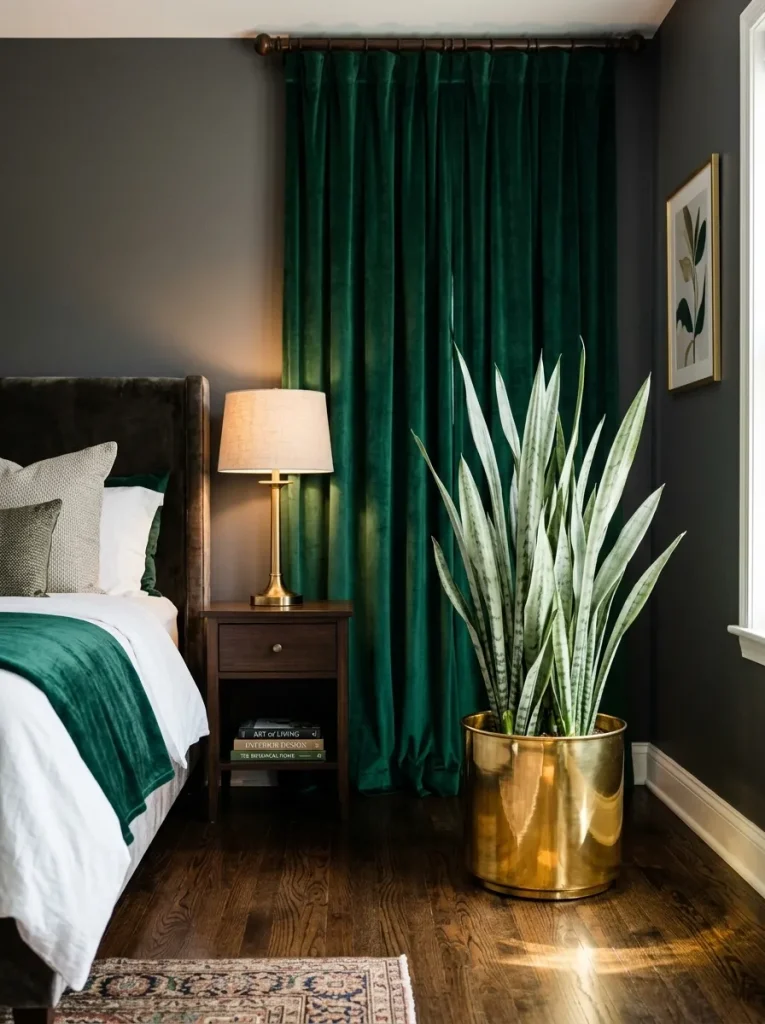
Integrating a glossy or brushed brass planter into a bedroom setting introduces a touch of vintage luxury and metallic warmth that pairs beautifully with the deep green hues of snake plant foliage. This design concept utilizes the reflective quality of metallic surfaces to catch natural ambient light, brightening dark corners and adding a refined accent to modern interior spaces. A tall Sansevieria metallica or Sayuri variety, featuring silver-green leaves, creates an extraordinary monochromatic harmony when set inside a warm brass container. This approach is particularly effective in bedrooms with mid-century modern furniture, velvet textiles, or dark accent walls, serving as a sophisticated centerpiece.
Start by acquiring a high-quality brushed or polished brass container, taking care to use it as a decorative cachepot rather than planting directly into the metal, which can corrode over time and harm plant roots. Plant your chosen snake plant specimen into a standard plastic nursery pot with ample bottom drainage, using a porous potting mix that prevents water accumulation. Place a shallow plastic drip tray inside the bottom of the brass vessel to collect runoff, then lower the potted nursery container directly into the metallic planter. Fill any remaining gap between the inner plastic rim and the outer brass edge with preserved forest moss, creating a polished, professional finish that hides the utility pot while keeping the decorative metal exterior pristine.
Idea 6: Symmetrical Dual Nightstand Arrangements
Setup Method
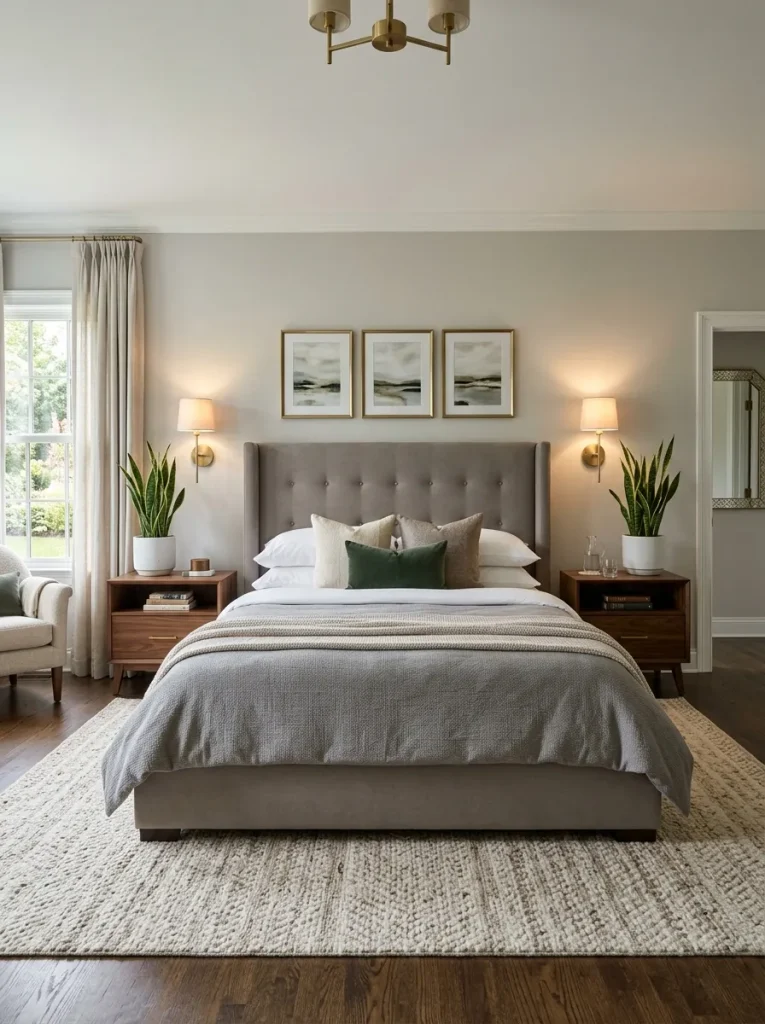
Establishing symmetry in bedroom decor instills a sense of balance, order, and visual harmony, which contributes directly to a peaceful, restful room atmosphere. This concept involves placing two identical snake plants in matching containers on either side of the bed, framing the headboard area with structured, living greenery. By utilizing medium-sized Sansevieria varieties with uniform foliage height, you create a cohesive visual anchor that unifies nightstands, lighting fixtures, and wall art into a single layout. Symmetrical plant placement works exceptionally well in master bedrooms, providing an elegant, balanced aesthetic that feels intentional, clean, and well-organized.
Execute this design by purchasing two identical snake plants of the same variety and size, inspecting the foliage carefully to ensure both specimens possess matching leaf density and height. Select two identical ceramic or concrete planters equipped with matching saucers, choosing a color that pairs seamlessly with your headboard or bed linen palette. Pot both plants simultaneously using an identical ratio of well-draining potting soil and perlite, ensuring the base of each plant sits at the exact same level within its container. Place one finished planter on the far corner of each nightstand, adjusting their positions so they mirror one another precisely relative to the bed frame and wall lighting.
Idea 7: Low-Profile Bench Accent at the Foot of the Bed
Step-by-Step Guide
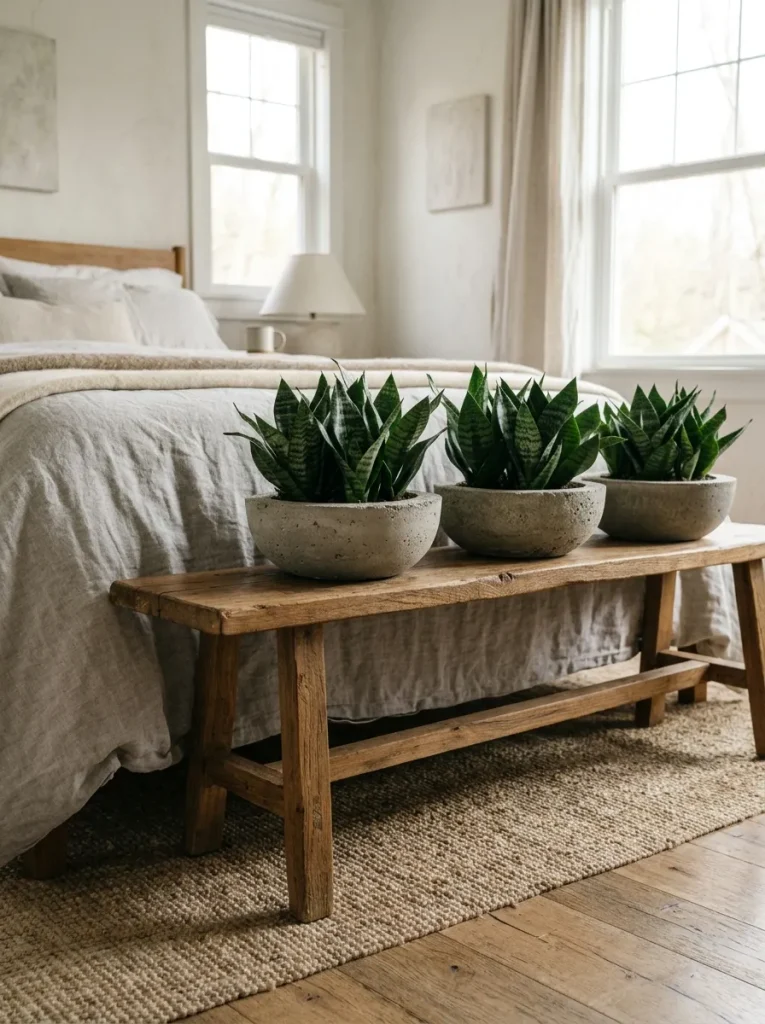
Placing a cluster of low-profile snake plants on a wooden or upholstered bench at the foot of the bed introduces a lush botanical border that defines the sleeping zone without obstructing views across the room. This concept relies on arranging two or three short, wide Sansevieria varieties, such as Sansevieria Whitney or Hahnii, in low, wide bowl-style planters along the bench surface. The horizontal layout breaks up the hard edge of the mattress frame, adding natural texture, color, and depth to the lower plane of the bedroom. This approach is ideal for spacious bedrooms, transforming a simple seating bench into a multifunctional decorative feature.
To create this bench arrangement, select a sturdy wooden, leather, or woven bench that spans at least two-thirds the total width of your bed frame, placing it flush against the footboard. Choose two or three low, wide shallow bowl planters made of lightweight concrete or matte ceramic, ensuring each bowl has functional bottom drainage holes and fitting saucers. Fill the planters with a high-drainage cactus potting soil, and plant multiple small snake plant offsets close together to form dense, full clusters of foliage within each bowl. Arrange the filled bowl planters evenly across the top of the bench, leaving sufficient space between them to maintain an organized, uncluttered appearance while ensuring the arrangement remains stable.
Idea 8: Woven Seagrass Basket for Coastal or Boho Vibe
How to Make
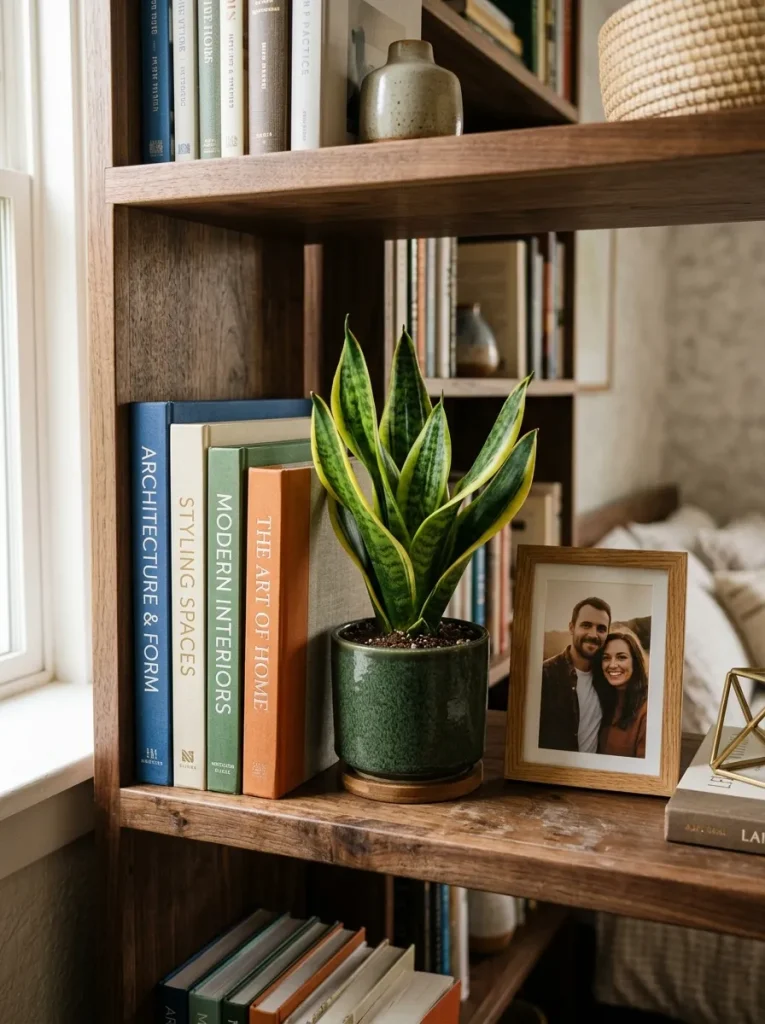
Incorporating a woven seagrass or jute basket as a planter cover brings an inviting, organic texture to bedroom interiors, making it a perfect match for bohemian, coastal, or Scandinavian decor styles. This concept uses natural woven fibers to soften the sharp, linear form of snake plant leaves, creating a relaxed, earthy contrast that enhances the cozy atmosphere of a bedroom. The neutral tan and beige tones of natural seagrass pair effortlessly with wooden furniture, woven rugs, and light linen bedding, introducing warmth without overwhelming the room’s color scheme. This setup is highly versatile, allowing you to easily move or swap plants as your decor preferences evolve.
To assemble this basket display, select a sturdy woven seagrass or jute belly basket with reinforced handles, ensuring its interior opening is slightly larger than your plant’s plastic nursery pot. Because natural woven baskets are susceptible to rot and mold from moisture, line the interior bottom with a heavy-duty plastic liner or place a thick, non-porous plastic saucer inside the base. Keep your tall, healthy snake plant securely planted inside its well-draining plastic nursery pot rather than planting directly into the basket material. Lower the nursery pot down into the lined basket, ensuring it sits flat on the internal saucer, and fluff the upper edges of the seagrass basket to completely conceal the inner plastic container.
Idea 9: Window Sill Display with Mixed Sansevieria Varieties
Step-by-Step Guide
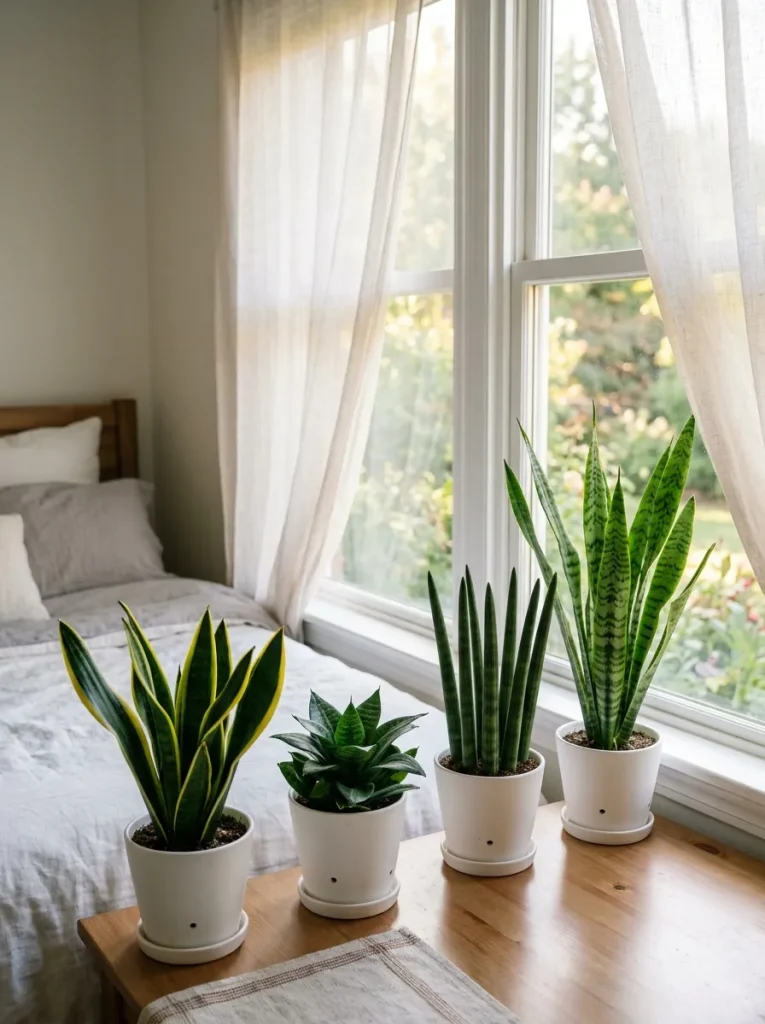
Lining a wide bedroom windowsill with a curated collection of diverse snake plant varieties creates a captivating living tapestry that thrives on abundant, indirect sunlight. This design concept relies on combining different Sansevieria leaf shapes, heights, and variegation patterns—such as the thin, cylindrical leaves of Sansevieria cylindrica alongside the flat, mottled leaves of Sansevieria Jaboa—to establish rich visual texture. Placing plants on the windowsill utilizes natural architectural ledges that might otherwise remain empty, drawing natural light into the room while creating a dense green privacy screen against the outside world. The variation in plant forms provides continuous visual interest while taking advantage of optimal growing conditions.
Begin by measuring the depth and width of your bedroom windowsill, ensuring the ledge is wide enough to hold small planters safely without risking accidental falls when operating window blinds or curtains. Select three to five small, narrow planters made of matching materials, such as white porcelain or gray terracotta, to maintain stylistic unity across the diverse plant collection. Pot individual specimens of contrasting Sansevieria varieties—such as cylindrica, trifasciata, and hahnii—into the containers using a fast-draining potting substrate formulated for succulents. Arrange the potted plants along the windowsill in an alternating pattern of tall and short foliage, keeping them set back two inches from the glass pane to prevent cold damage during winter months.
Idea 10: Integrated Bookshelf Greenery Accents
Setup Method
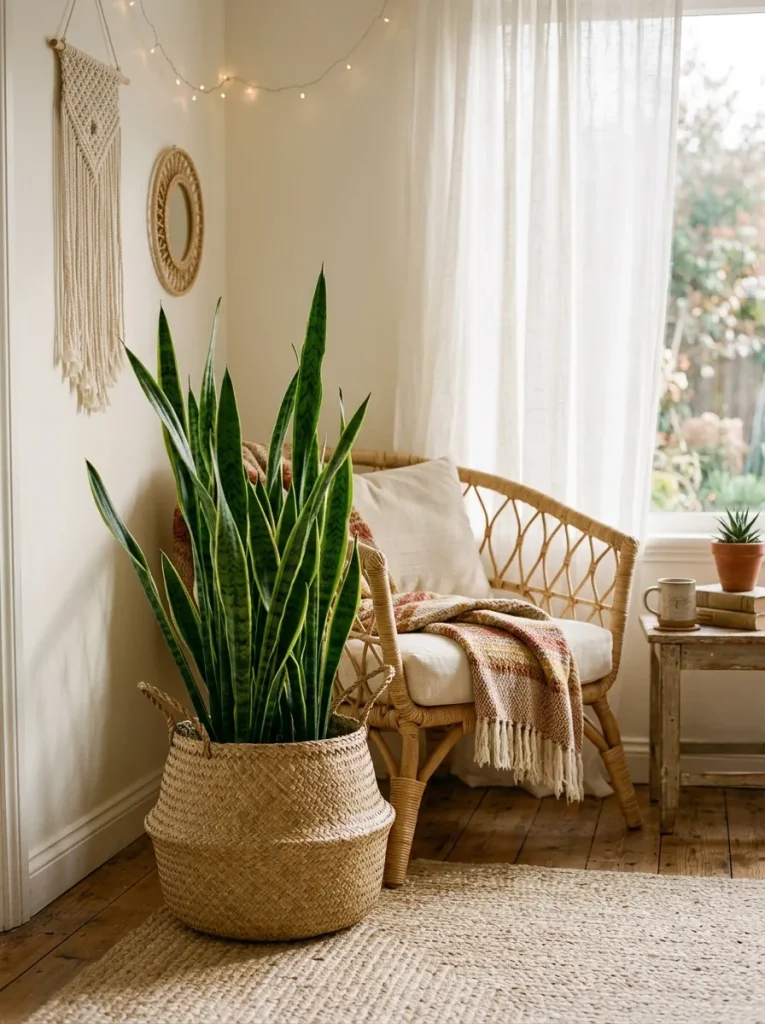
Weaving small snake plants into bedroom bookshelf or shelving unit displays breaks up rigid rows of books, adding vibrant color and organic shapes to structured storage furniture. This concept treats living plants as decorative art pieces, positioning compact Sansevieria varieties alongside book stacks, framed photos, and decorative objects to create a curated, editorial aesthetic. Because snake plants tolerate low to medium indirect light exceptionally well, they are uniquely suited for interior bookshelf cubbies that receive limited natural sunlight. The vertical growth habit of the leaves creates a beautiful contrast against horizontal book spines, elevating a simple storage unit into a dynamic design feature.
Execute this shelving accent by evaluating the vertical clearance between shelf tiers, selecting compact Sansevieria varieties like Golden Hahnii or Black Star that will not outgrow the available space quickly. Choose small, decorative ceramic pots that match the overall color scheme of your bedroom decor, ensuring each pot features a watertight tray or sealed bottom to prevent water damage to wooden shelves. Plant the small snake specimens in porous, well-aerated soil mix, taking care not to overwater them since shelf cubbies often experience reduced airflow. Place the potted plants strategically across different shelf levels, positioning them next to horizontal book stacks or small framed prints to establish a balanced, visually engaging arrangement.
Common Beginner Mistakes and How to Avoid Them
The most frequent error made when decorating bedrooms with snake plants is overwatering, which leads directly to root rot, yellowing foliage, and soft, collapsing leaves. Because Sansevieria species are succulents adapted to arid environments, their thick leaves store significant amounts of water, allowing them to thrive on minimal irrigation. Beginners often water on a strict weekly schedule without checking soil moisture, causing saturated conditions around the root system. To prevent this, always allow the potting soil to dry out completely between waterings, inserting a finger or moisture meter three inches into the soil to ensure it is bone-dry before adding water. During winter months, reduce watering frequency even further, as the plant enters a dormant phase and requires minimal moisture.
Another prevalent mistake is placing snake plants in pots without drainage holes or planting directly into non-porous decorative vessels without an inner nursery container. When excess water cannot escape, it collects at the bottom of the pot, suffocating the roots and fostering anaerobic bacteria that destroy the plant from the base up. Always select planters with functional drainage holes, or utilize decorative pots as cachepots by housing the plant in a plastic nursery liner placed over a drip tray. Additionally, avoid placing snake plants in complete dark corners with zero access to natural light, or in direct, harsh midday sunlight behind uncurtained windows, which can scorch the leaves and cause permanent brown scarring.
Practical Tips for Better Results
Achieving healthy growth and a pristine visual appearance on your bedroom snake plant displays requires consistent, minimal maintenance tailored to the specific needs of Sansevieria. Dust naturally accumulates on wide, vertical snake plant leaves over time, blocking stomata and reducing the plant’s ability to photosynthesize effectively while dulling its natural shine. Wipe the leaves down every few weeks using a soft, damp microfiber cloth, supporting the back of each leaf with your hand to avoid snapping the fibrous tissue. This simple routine removes dust, deters common pests like mealybugs, and keeps the variegated leaf patterns looking vibrant, glossy, and fresh against your bedroom decor.
To maintain structural elegance, rotate your plant containers a quarter-turn every month so that all sides receive equal exposure to ambient light from bedroom windows. Snake plants naturally lean toward light sources over time, and regular rotation prevents asymmetric growth, keeping the vertical foliage standing straight and balanced. When repotting, always choose a specialized cactus or succulent soil mix blended with extra perlite or pumice to ensure rapid water drainage and root zone aeration. Finally, refrain from over-potting; snake plants prefer to be slightly root-bound, so select a new pot that is only one to two inches wider than the existing root ball to encourage strong leaf growth rather than excessive root expansion.
Styling, Presentation, or Organization Ideas
Integrating snake plants into your bedroom layout effectively requires thoughtful attention to spatial proportions, color harmony, and material coordination. When styling a room, balance the vertical lines of tall Sansevieria varieties with soft textiles, such as plush linen duvets, velvet accent pillows, or woven wool area rugs, to create a comfortable, multi-textured environment. Match the color and finish of your planters to existing hardware or furniture accents in the room; for instance, pair black metal pots with industrial light fixtures, or polished ceramic white vessels with light oak wood dressers. This intentional repetition of materials creates a cohesive look that feels curated by a professional interior designer.
For small bedrooms, maximize visual space by utilizing vertical display methods, such as raised wooden stands, wall-mounted floating shelves, or hanging planters, which keep floor areas clear and easy to clean. Group plants in odd numbers—such as clusters of three different potted varieties on a bench or window ledge—to create a naturally dynamic and appealing arrangement. Use decorative top-dressings over the exposed soil surface, such as smooth river rocks, dark lava stone, or preserved forest moss, to hide bare dirt and give your planters a polished, high-end look. By treating your snake plants as both living organisms and structural decorative accessories, you create a harmonious, aesthetic sanctuary optimized for relaxation.
Budget or Time Planning
Decorating your bedroom with snake plants is a highly economical home improvement project that yields immediate aesthetic and wellness benefits with minimal ongoing time commitment. Purchasing young, healthy snake plants in standard nursery pots is very affordable, with small varieties costing minimal amounts at local nurseries or home centers. To keep your budget low, source decorative cachepots from second-hand shops, or upcycle existing ceramic containers by drilling drainage holes into the bottom using a diamond masonry drill bit. Investing in basic supplies—such as a bag of succulent soil mix, a bag of perlite, and a few stylish pots—allows you to complete multiple plant displays across your bedroom without exceeding a modest budget.
From a time management perspective, preparing and styling your bedroom snake plant displays requires only two to three hours of initial setup time over a weekend. This includes repotting the plants, assembling any stands or wall shelves, cleaning the foliage, and positioning the containers in their designated spots. Ongoing maintenance demands are exceptionally low, taking less than ten minutes per month to check soil moisture, water when dry, and wipe dust from the leaves. This low time requirement makes snake plant decor an ideal creative project for busy individuals who want to enhance their bedroom aesthetic and indoor air quality without taking on a high-maintenance gardening hobby.
Creative Expansion and Advanced Inspiration
Once you master basic snake plant styling, you can explore advanced botanical design concepts to elevate your bedroom interior even further. One creative expansion involves building an architectural plant divider using a long, rectangular trough planter filled with tall, dense Sansevieria trifasciata. Positioned between a sleeping area and an open closet or home office nook within a master bedroom, this living wall provides subtle visual separation, privacy, and noise reduction while maintaining an open, airy feel. You can integrate subtle, low-voltage LED strip lighting along the interior rim of the trough planter to highlight the vertical leaf patterns at night, casting dramatic, warm shadows across the room.
Another advanced concept is propagating your existing snake plant collection to create a custom, matching fleet of potted plants for every surface in your home. Sansevieria can be easily propagated by taking clean leaf cuttings or dividing root rhizomes during routine repotting, allowing you to grow new plants for minimal cost. You can also experiment with custom handmade planters, using air-dry clay, concrete casting, or hand-painted terracotta techniques to craft bespoke containers tailored specifically to your bedroom color palette. These advanced projects allow you to continuously refine your interior aesthetic, turning simple houseplant care into an ongoing artistic endeavor that enriches your home environment.