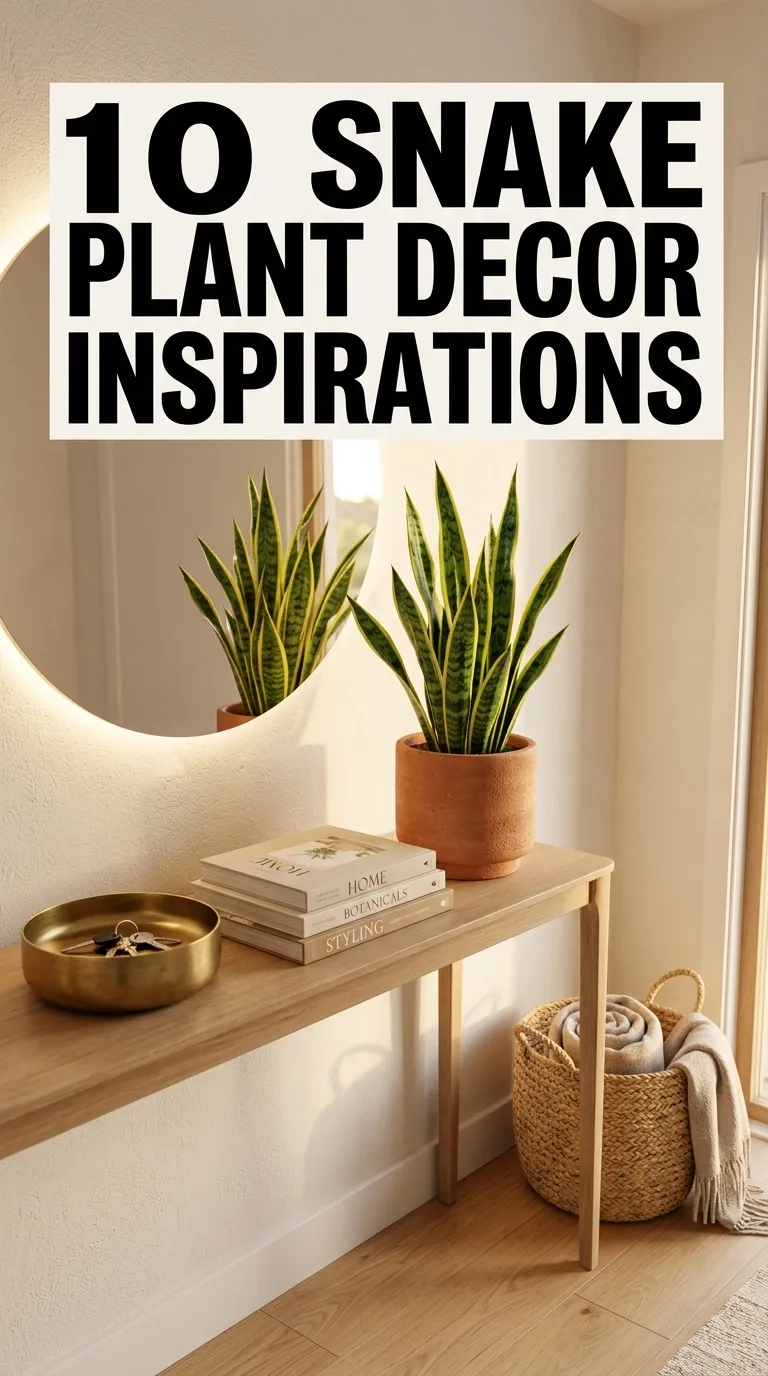
10 Snake Plant Decoration Ideas
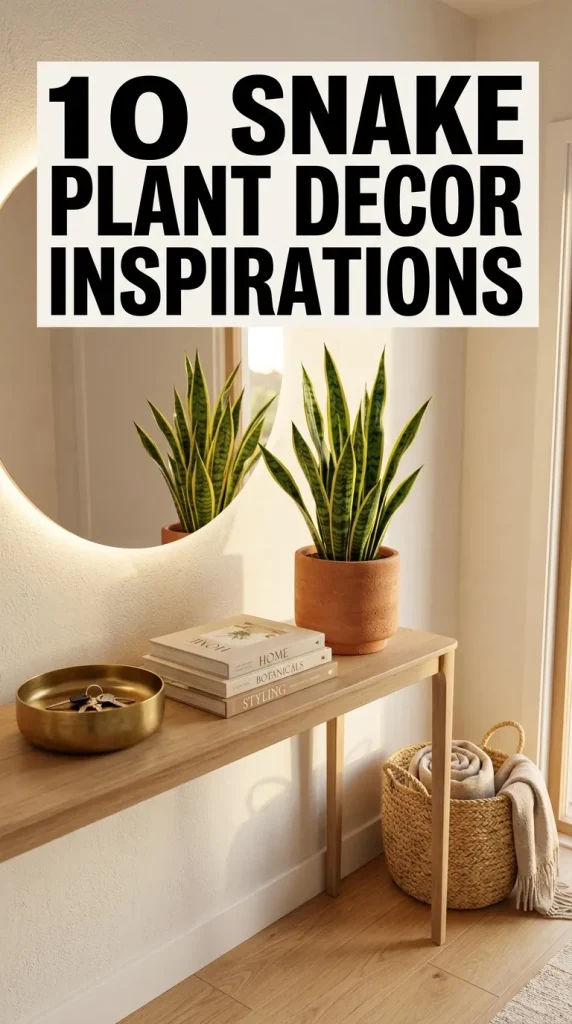
Integrating indoor botanicals into modern residential layouts is an effective strategy for establishing visual harmony, improving indoor air quality, and softening structural angles. The snake plant, botanically classified as Sansevieria or Dracaena trifasciata, serves as an exceptional design element due to its upright growth habit, distinct architectural leaves, and minimal maintenance requirements. On platforms like Pinterest, styling this durable succulent has become a central focus for interior decorators and homeowners seeking to elevate their rooms with natural textures. This comprehensive tutorial will guide you step by step through the process of selecting appropriate display containers, configuring optimal lighting conditions, and arranging vertical foliage across varied room footprints. You will learn how to utilize plant stands to add height variations, integrate botanical displays into compact wall spaces, and combine natural leaf tones with contemporary color palettes. Whether you want to revitalize a dimly lit hallway corner, organize a sleek home office desk, or introduce an organic focal point to a master bedroom, mastering these display techniques provides practical and lasting value. By applying foundational design principles such as symmetry, texture layering, and scale, you can convert basic potted plants into sophisticated home decor features that enhance your living environment.
Why Sansevieria Display Concepts Are Central to Modern Interior Styling
The ongoing popularity of snake plant styling across digital home decor communities reflects a broader cultural appreciation for biophilic interior planning and sustainable living spaces. Modern design trends prioritize clean lines, organic textures, and functional indoor greenery, making Sansevieria a foundational plant choice for contemporary residential projects. These trending ideas offer significant practical value because the plant adapts easily to wide light ranges, withstands irregular watering schedules, and maintains its structural shape over long periods. The DIY appeal of constructing custom display stands or decorating raw ceramic pots allows individuals to experience high-impact creative expression without incurring significant expenses. Beginners can comfortably execute these projects because the plant’s robust physical structure tolerates repositioning and handling better than delicate tropical foliage. Furthermore, the aesthetic flexibility of the snake plant allows it to complement multiple interior styles, including minimalist style apartments, industrial lofts, rustic farmhouses, and mid-century modern spaces. By utilizing vertical leaf structures to frame entryways or fill underutilized corners, these creative ideas prove that impactful green styling relies on intentional arrangement and thoughtful vessel selection.
Sourcing Quality Materials, Tool Selection, and Preparatory Setup
Executing a successful botanical home decor project requires thorough groundwork, proper potting preparation, and deliberate material selection to ensure both aesthetic appeal and long-term plant health. Before arranging your botanical displays, you must select structural containers equipped with functional drainage holes to prevent root saturation and soil compaction. The primary materials required for these display ideas include well-draining cactus soil mixes, terracotta or ceramic planters, natural drainage pebbles, coarse river sand, and sturdy display stands made from wood or iron. Essential tools for this creative project include a trowel, protective gardening gloves, a moisture meter, a digital tape measure, and soft microfiber cleaning cloths to remove dust from leaf blades. Preparatory steps involve assessing the light levels of your target room zones, ensuring the locations receive adequate ambient daylight while remaining clear of direct, harsh heat registers or air conditioning vents. Planning considerations also require checking the weight distribution of large ceramic planters, particularly when placing them on elevated wall shelves or floating wooden ledges. By gathering your materials early and preparing your potting media systematically, you establish a solid foundation for a clean, efficient assembly process.
Main Ideas for Snake Plant Decoration
Idea 1: Mid-Century Wooden Stand Elevation
How to Create
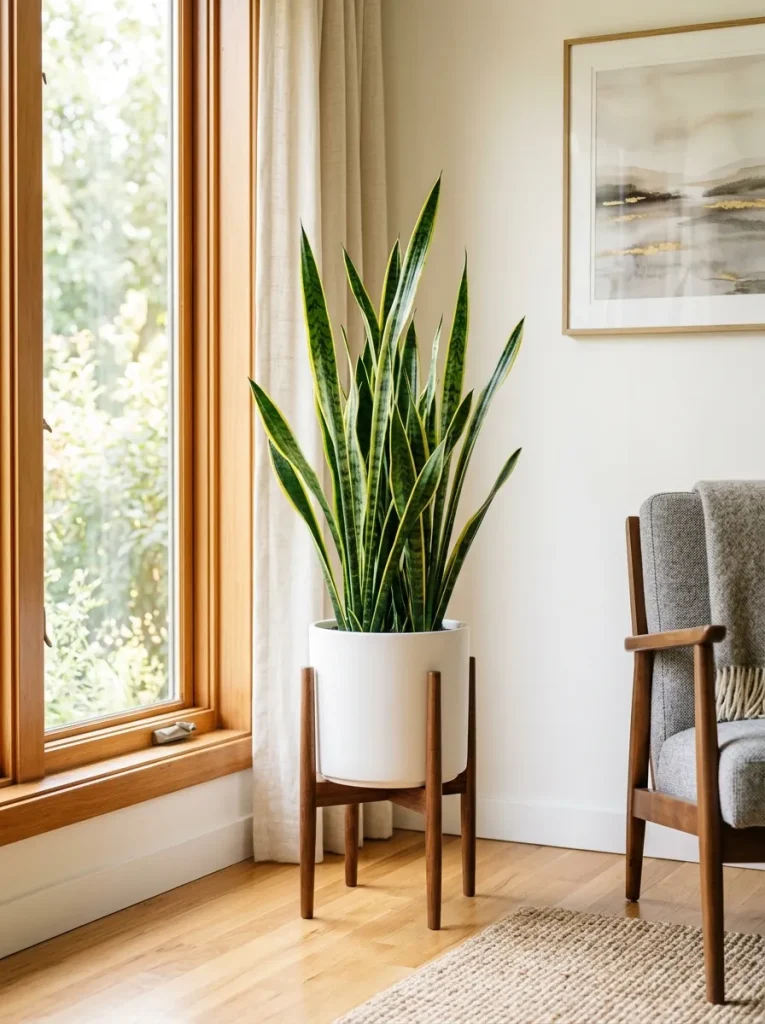
The mid-century wooden stand elevation concept utilizes raised timber frameworks to elevate potted Sansevieria off the floor, introducing structural height and architectural interest to room corners. This design style pairs the clean, vertical lines of the plant’s variegated leaves with warm, natural wood grain tones such as walnut, oak, or teak. Elevating the plant creates a clear visual gap between the pot base and the flooring, which prevents the display from looking heavy or visually dense in compact spaces. This method works exceptionally well in living rooms or reading nooks, where elevating the foliage aligns the top of the leaves with seated eye levels, creating an immediate, balanced focal point.
To set up this display, select a cylindrical ceramic planter in a neutral matte white or light gray shade, ensuring it features a bottom drainage hole and saucer. Pot your snake plant securely in the ceramic vessel using a well-draining succulent potting soil, firming the soil around the root ball to support upright leaf growth. Assemble or purchase an X-framed mid-century wooden plant stand that matches the outer diameter of your chosen ceramic pot. Place the potted plant firmly onto the cross-frame of the wooden stand, verifying that the assembly sits completely level and stable on your floor surface. Position the elevated arrangement near a natural light source, such as adjacent to a living room window or beside a sofa end table, to highlight the contrast between the green foliage and the warm timber frame.
Idea 2: Minimalist Monochromatic Ceramic Grouping
Step-by-Step Guide
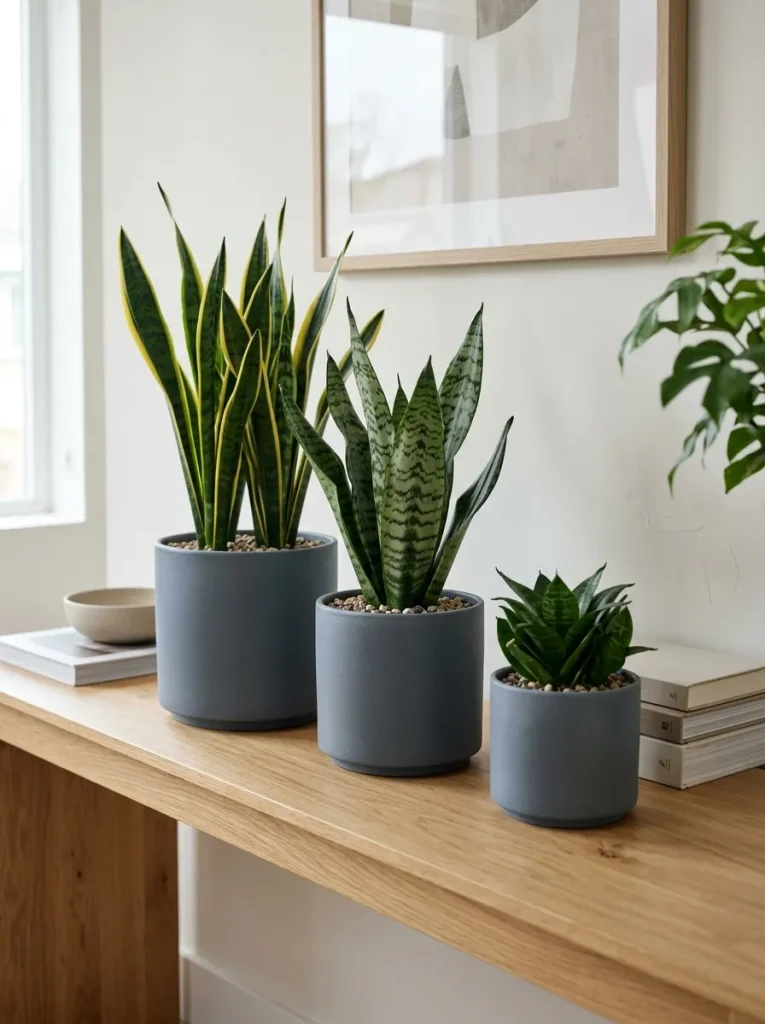
The minimalist monochromatic ceramic grouping concept focuses on grouping multiple snake plant varieties within matching matte-finished pots to create a clean, structured botanical collection. This arrangement style uses a single color palette for the containers, such as stark white, slate gray, or deep charcoal, while varying the heights and leaf patterns of the plants inside. The design philosophy centers on repetition and subtle variation, allowing the unique silver, dark green, and yellow-edged leaf patterns of different Sansevieria cultivars to stand out without visual clutter. This arrangement is ideal for wide window sills, long hallway consoles, or credenzas, where a linear layout brings calm, organized texture to the space.
Begin by selecting three ceramic pots of varying heights—such as eight, ten, and twelve inches—that share the exact same matte color finish and geometric shape. Select three distinct snake plant varieties, such as Sansevieria trifasciata Laurentii with yellow margins, Sansevieria zeylanica with silver wave patterns, and the compact Sansevieria Hahnii bird’s nest variety. Pot each selected plant variety into its designated ceramic container, ensuring the top of the soil line sits one inch below the pot rim to prevent water overflow during maintenance. Line up the potted containers along the center of a long wooden console table or sideboard, placing the tallest plant in the center or to one side to create an asymmetrical, balanced rhythm. Space the containers approximately two to three inches apart to allow light to filter between the pots, completing a sleek, modern display.
Idea 3: The Woven Basket Boho Accent
Setup Method
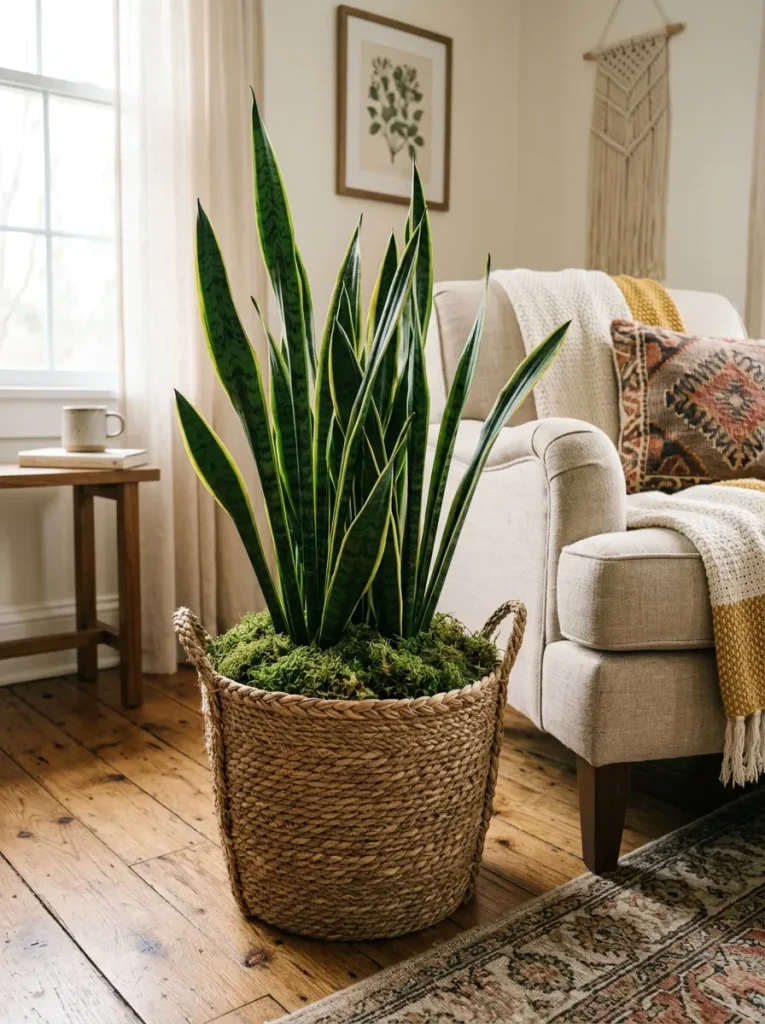
The woven basket boho accent concept introduces soft, organic texture into residential spaces by using natural plant-fiber baskets as decorative outer covers for potted plants. Materials such as seagrass, jute, rattan, or cotton rope add tactile warmth that softens the rigid, upright sword-like leaves of the Sansevieria. This display style is particularly effective in master bedrooms or sunrooms, where relaxed, natural materials contribute to a peaceful and comfortable atmosphere. Using a decorative basket cover also provides a practical benefit, as it allows you to hide utilitarian plastic nursery pots without undertaking a complete repotting process.
To set up this textured display, select a sturdy woven basket made from natural seagrass or jute, ensuring the flat bottom base sits level on the floor. Line the interior bottom of the basket with a heavy-duty, clear plastic saucer or water-drip tray to catch any excess moisture and protect the woven fibers from rotting. Place your pre-potted snake plant—kept safely inside its well-draining plastic nursery pot—directly into the center of the lined basket, resting it flat on the interior saucer. If the rim of the inner plastic pot remains visible, fill the top gap with a layer of natural preserved sheet moss or decorative coconut coir fiber to create a seamless, finished look. Position the completed basket display directly on the floor next to an armchair, a bedside nightstand, or a decorative bedroom ladder to introduce immediate organic warmth to the space.
Idea 4: Industrial Concrete and Raw Stone Contrast
Execution Process
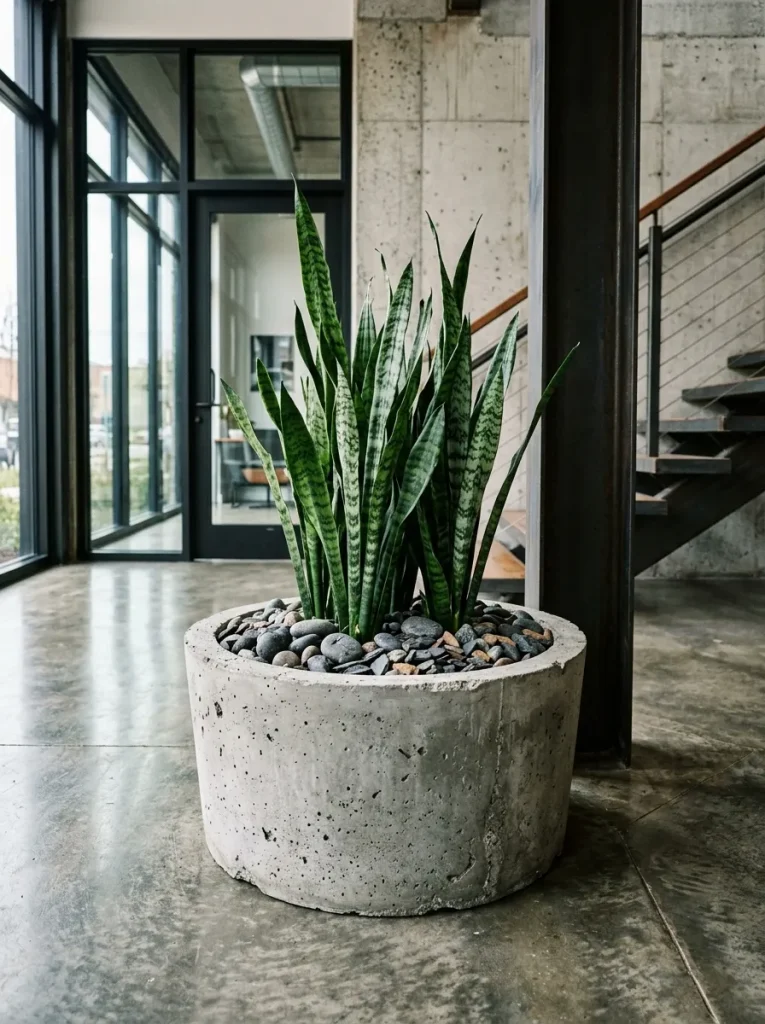
The industrial concrete and raw stone contrast method combines the heavy, tactile texture of cast concrete or stone vessels with the vibrant, upright green blades of the snake plant. This design philosophy relies on material contrast, pairing the cold, architectural feel of raw gray masonry with the living, organic patterns of the plant foliage. The substantial weight and simple geometry of concrete pots ground the display, making it an excellent choice for modern urban lofts, open-concept offices, or entryway foyers. This approach is highly practical for high-traffic household zones because heavy concrete containers are exceptionally stable and resistant to accidental tipping.
Initiate the execution process by selecting a thick-walled, heavy concrete or cement planter that has been properly sealed on the inside to prevent mineral salts from leaching into the soil. Line the interior floor of the concrete vessel with a two-inch layer of coarse lava rocks or clay pebbles to facilitate proper drainage away from the root zone. Fill the pot with a light, airy potting mix containing high proportions of perlite and pumice, and center a mature, tall Sansevieria trifasciata plant within the container. Firm the soil mix around the base of the plant leaves, ensuring the stalks stand completely upright and centered within the geometric pot opening. Top the exposed soil surface with a smooth layer of dark gray river stones or crushed slate pebbles to complete the raw, stone-inspired aesthetic. Place the heavy concrete installation on an entryway bench or directly on a polished concrete floor near a foyer light fixture.
Idea 5: Floating Wooden Wall Shelf Lineup
How to Create
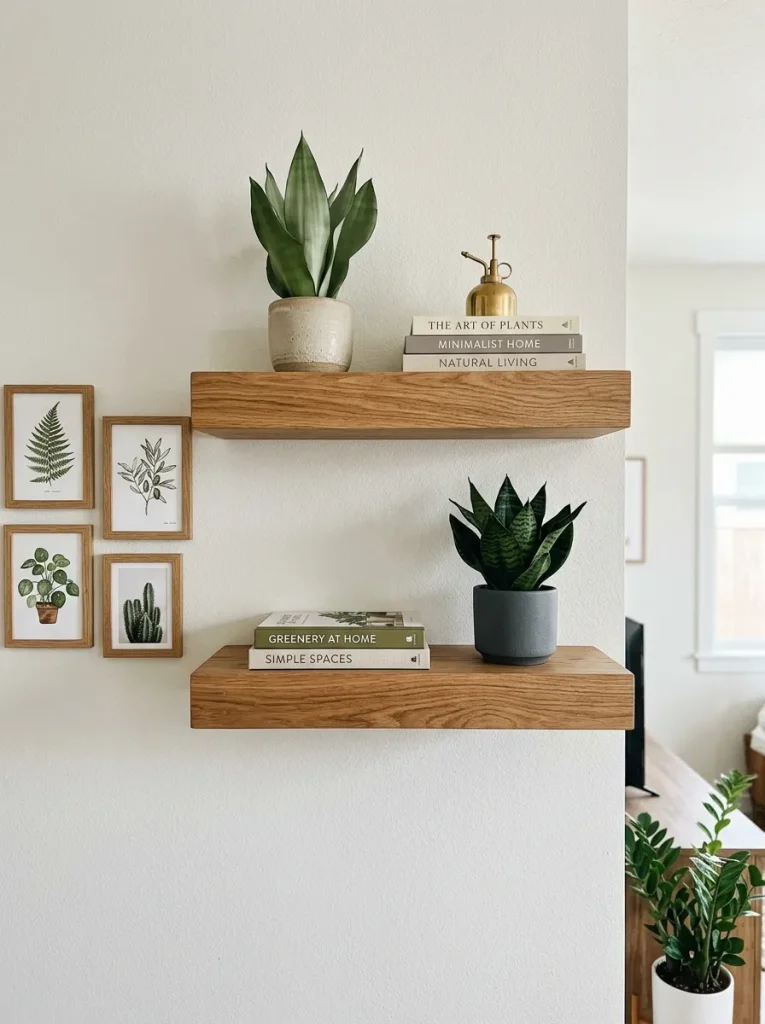
The floating wooden wall shelf lineup utilizes vertical wall space to create a dynamic green gallery feature without taking up valuable floor or tabletop real estate. This concept involves mounting solid wooden ledges onto drywall or brick, lining them with small to medium-sized potted snake plants that draw the eye upward. The design philosophy centers on vertical space optimization, making it an exceptional layout solution for small apartments, narrow hallways, or home office desk nooks. Displaying Sansevieria at eye level allows the fine patterns and subtle color variations of individual leaves to be appreciated up close as structured wall art.
To create this floating shelf display, purchase or build two thick, solid wood floating shelves cut to a length of thirty-six inches, ensuring they include sturdy internal steel mounting brackets. Use an electronic stud finder to locate the internal wall studs across your chosen display wall, and mount the steel brackets securely using heavy-duty lag screws. Slide the wooden shelf sleeves onto the mounted brackets, checking that the ledges are perfectly horizontal with a four-foot spirit level. Select four matching low-profile ceramic pots in a clean neutral shade, and pot compact Sansevieria varieties like Moonshine or Black Coral into them. Arrange two potted plants on each floating shelf, staggering their positions to maintain visual balance across the vertical plane. Add a few small decorative accents, such as hardcover books or minimalist ceramic sculptures, beside the pots to complete a curated, balanced shelf display.
Idea 6: The Terracotta Rustic Farmhouse Cluster
Step-by-Step Guide
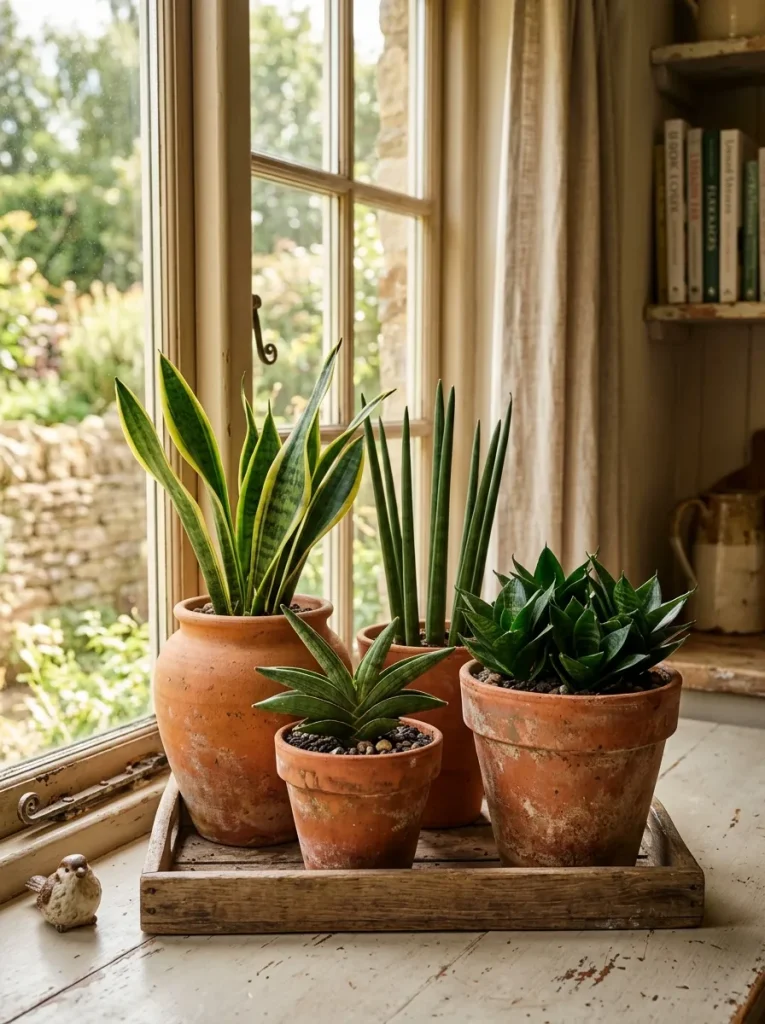
The terracotta rustic farmhouse cluster relies on the warm, earthy orange and red tones of traditional unglazed clay pots to establish a classic, cozy botanical arrangement. Terracotta is an ideal material for succulents like the snake plant because the porous clay allows air and moisture to penetrate the pot walls, preventing soil saturation and supporting healthy root systems. This design style emphasizes rustic simplicity, making it a natural fit for sunlit kitchen window sills, dining room sideboards, or covered outdoor patio tables. Combining pots of various shapes, aged patinas, and sizes introduces a charming, lived-in feel to your home decor layout.
Begin by collecting four or five unglazed terracotta pots of varying diameters, ensuring each container features an open drainage hole at the bottom. Soak new terracotta pots in water for an hour prior to potting to prevent the dry clay from wicking essential moisture away from the soil mix. Pot a variety of snake plants—ranging from tall cylindrical Sansevieria cylindrica to shorter, fan-shaped varieties—into the prepared clay vessels using a sandy succulent soil blend. Arrange the potted terracotta containers in a tight cluster on a large, shallow wooden tray or a galvanized metal serving platter placed in the center of a dining table. Stagger the heights by placing the tallest pot in the back and smaller pots toward the front to ensure all leaves receive equal ambient light. Top the tray area with scattered terracotta saucers and natural pebbles to complete the rustic, gathered look.
Idea 7: The Large-Scale Floor Planter Statement
Setup Method
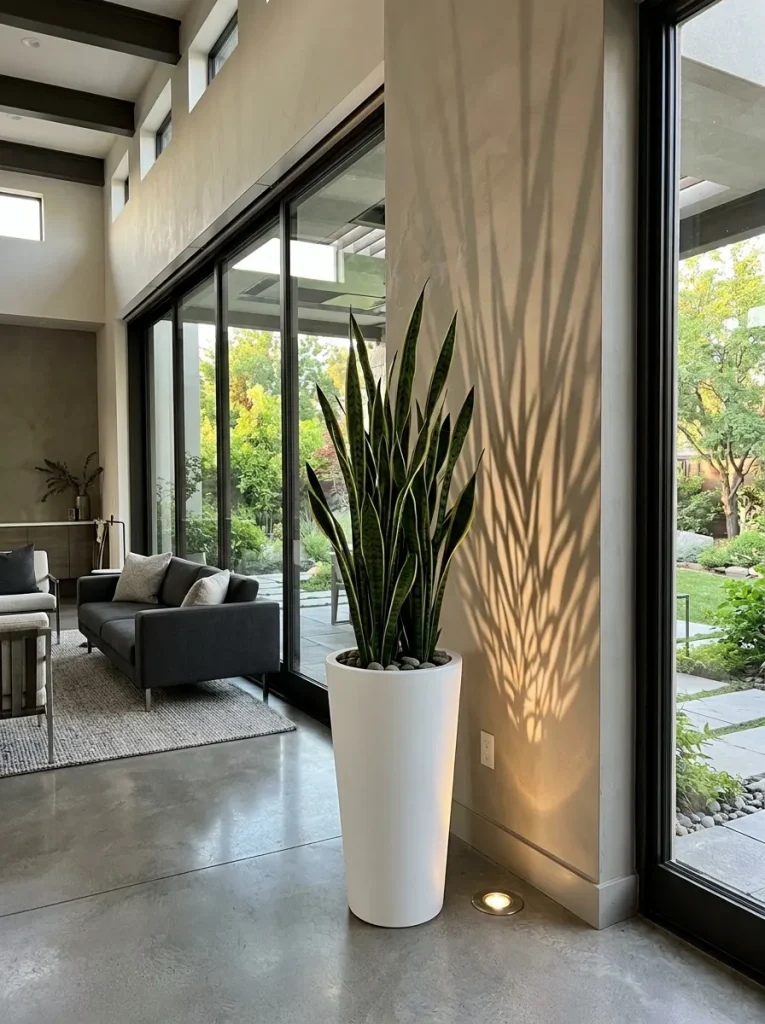
The large-scale floor planter statement uses an extra-tall, mature snake plant housed within a substantial planter to function as a primary architectural focal point in a room. This concept targets expansive, open-concept spaces such as living room seating areas, wide entry halls, or master bedroom corners where small decorative items get lost visually. The design philosophy centers on bold scale and structural clarity, leveraging the dense, towering sword-like leaves of a mature Sansevieria to anchor the room’s design layout. Using a tall, tapered floor planter elevates the top of the foliage, allowing the plant to act as a living sculpture that fills vertical space gracefully.
To set up this focal statement display, purchase a tall, tapered floor planter standing between twenty and twenty-four inches in height, crafted from lightweight fiberglass or durable resin. Ensure the deep planter includes a built-in internal shelf or insert bucket to hold the plant near the top opening without requiring the entire deep volume to be filled with heavy soil. Place a well-established, thirty-six-inch-tall Sansevieria plant into the insert bucket, securing it with a light succulent soil mix and firming the root base. Slide the insert bucket securely into the top rim of the tall floor planter, verifying that the assembly sits flush and level. Position the large planter installation directly in an underutilized corner of your living room or adjacent to a large glass patio door. Illuminate the plant from below using a low-voltage floor spotlight to cast dramatic leaf shadows upward onto the wall surface during evening hours.
Idea 8: The Tabletop Terrarium and Pebble Tray Integration
Execution Process
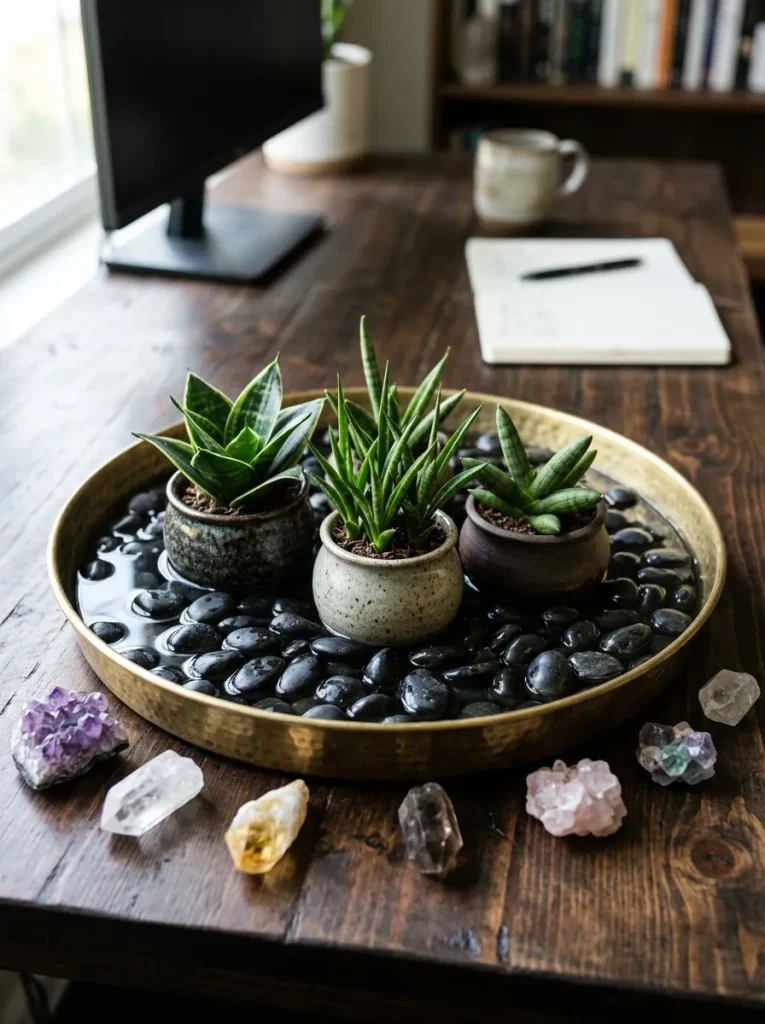
The tabletop terrarium and pebble tray integration merges humidity management, soil protection, and fine decorative detailing into a sleek desktop or coffee table display. This concept involves placing small, potted snake plants onto a shallow glass or metal tray filled with polished river stones and water, surrounded by glass accents. While Sansevieria does not require high humidity, the pebble tray provides a clean, self-contained base that catches stray drainage water while protecting delicate wooden furniture surfaces from scratches and moisture rings. The design philosophy focuses on intricate micro-landscaping, creating a refined, zen-like botanical feature suitable for compact home office desks or dining room sideboards.
Initiate the execution process by selecting a wide, shallow rectangular tray made from clear glass, brushed brass, or matte black metal, measuring roughly twelve by eighteen inches. Line the bottom floor of the tray evenly with a one-inch layer of smooth, polished black or white river pebbles. Place two or three small, low-profile ceramic pots containing compact Sansevieria varieties—such as the dwarf Sansevieria Hahnii or starfish-shaped Sansevieria–directly onto the pebble bed. Nestle the bases of the pots slightly into the stones so they sit flat, secure, and completely level within the tray borders. Fill the tray with water just below the top surface of the pebbles, ensuring the water level never touches the bottom of the plant pots directly. Complete the arrangement by placing a few raw crystal points or smooth geometric decorative objects among the pebbles beside the potted plants.
Idea 9: Multi-Tiered Plant Stand Display
How to Create
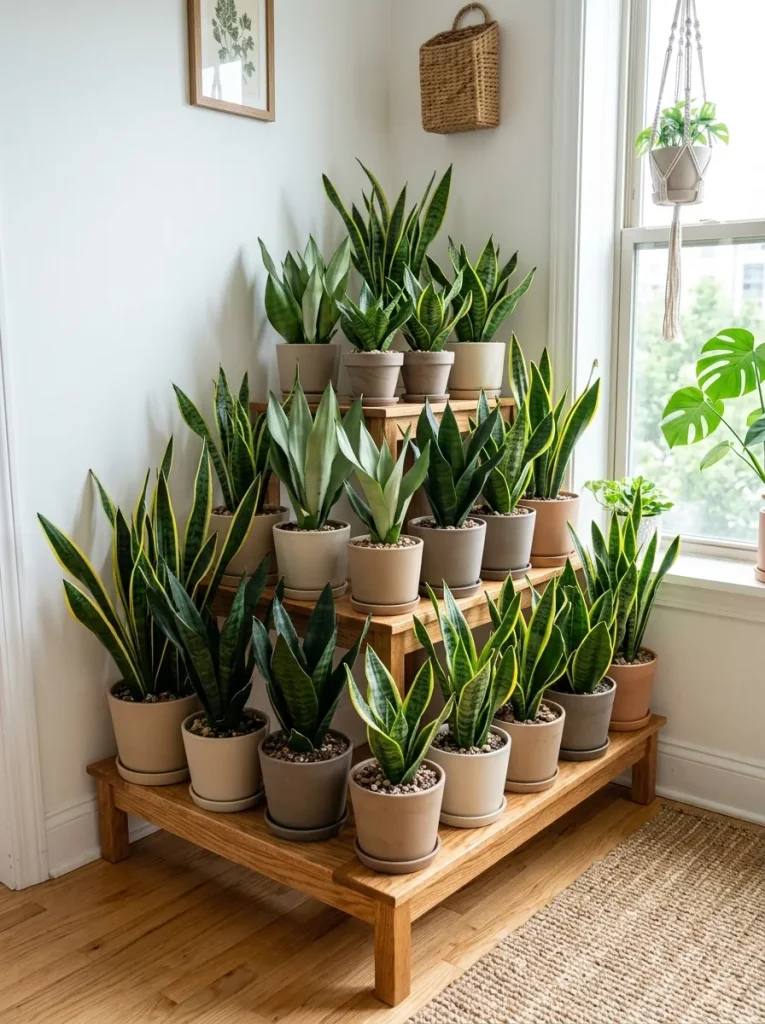
The multi-tiered plant stand display concept uses vertical stacking framework furniture to house multiple potted snake plants within a single compact footprint. This styling method relies on tiered wooden or metal shelving structures—such as three-step ladder stands or offset vertical towers—to display several plants at staggered heights. The design philosophy focuses on maximizing green density and display efficiency, turning an empty wall space into a lush, vertical botanical feature. This approach is highly practical for avid plant collectors or small apartment dwellers who wish to showcase multiple Sansevieria cultivars without cluttering flat floor space or countertops.
To create this tiered botanical feature, assemble a sturdy three-tiered wooden plant stand featuring offset shelves, ensuring all assembly hardware is tightened securely. Select a variety of small to medium-sized snake plants, choosing cultivars with contrasting leaf colors, such as light silver Moonshine, dark green Black Coral, and yellow-variegated Laurentii. Pot each plant into matching neutral-colored ceramic pots that fit comfortably within the depth dimensions of the stand’s individual shelves. Position the tallest snake plant variety on the lowest shelf of the stand to allow its long leaves room to grow upward without hitting upper ledges. Place medium and shorter dwarf varieties on the middle and top tiers, arranging them so no single plant blocks the ambient light of another. Set the completed multi-tiered stand against a well-lit living room wall or near a sunlit window to establish a structured, vertical green display.
Idea 10: Hanging Macrame and Metal Wall Cradles
Step-by-Step Guide
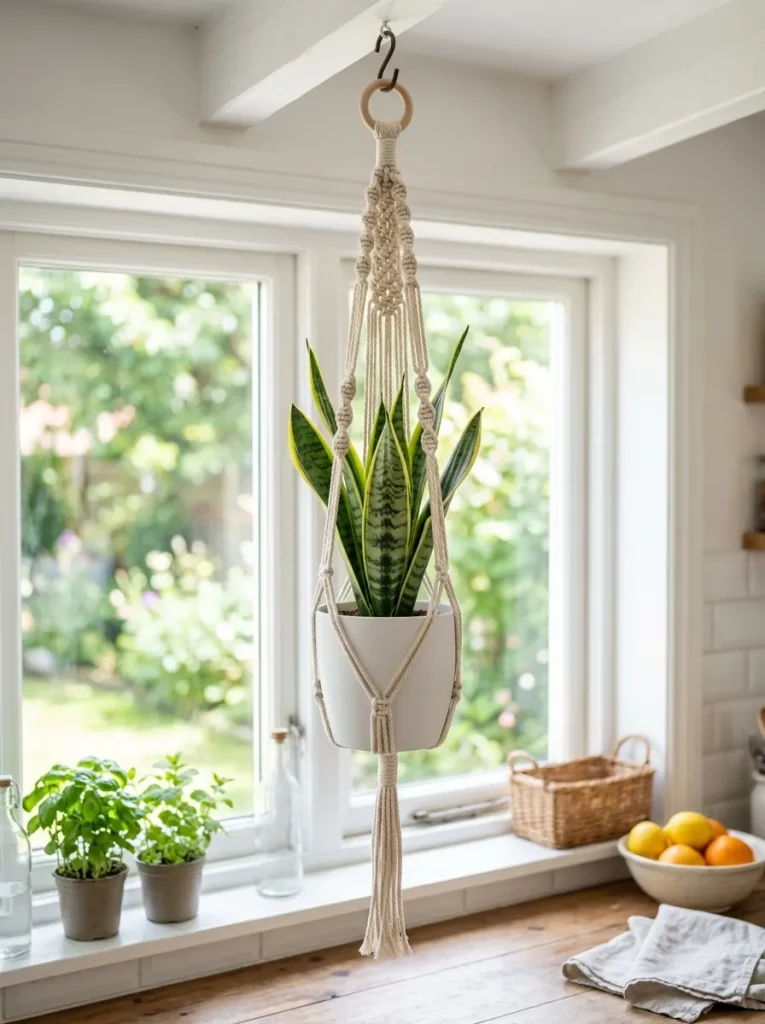
The hanging macrame and metal wall cradles concept lifts small snake plants completely off furniture surfaces, suspending them in mid-air using woven cords or geometric metal wall mounts. This display style centers on weightlessness and spatial freedom, using suspended plant geometry to fill vertical wall gaps and window frames creatively. While succulents are less commonly hung than trailing vines, the stiff, upright growth habit of small Sansevieria varieties creates a unique visual contrast when framed inside circular metal rings or soft macrame knots. This approach is exceptional for bright kitchen windows, bathroom walls, or cozy reading corners where surface area is limited.
Select a small, lightweight ceramic or plastic pot measuring four to six inches in diameter, ensuring it features a secure bottom drainage plug or saucer. Pot a small, lightweight snake plant variety—such as Sansevieria gracilis or a young Sansevieria zeylanica—into the container using a lightweight potting mix containing expanded perlite. Thread the potted plant into a hand-knotted cotton macrame plant hanger, adjusting the cord strands so the pot sits level and securely centered within the basket base. Alternatively, mount a modern circular metal wall cradle directly onto your wall using heavy-duty drywall anchors, and set the pot into the ring holder. Hang the macrame cord from a sturdy steel ceiling hook anchored into a ceiling joist, positioning it near a bright window. Ensure the suspended plant hangs at a comfortable height for routine inspection and watering, completing a light, space-saving botanical feature.
Common Beginner Mistakes and How to Avoid Them
When styling and caring for Sansevieria in home decor projects, beginners frequently encounter critical maintenance and display errors that can compromise both plant health and visual presentation. The most common technical mistake is overwatering the plant, which rapidly leads to root rot, foul odors, and collapsing, mushy leaves. To completely avoid this issue, always use containers equipped with functional drainage holes, plant in a porous cactus or succulent soil mix, and allow the soil to dry out completely between waterings. Another frequent pitfall is selecting decorative containers without drainage and planting the snake plant directly into them without a inner nursery pot. Standing water collects at the bottom of solid pots, suffocating the root system even if the top soil layer appears dry to the touch. Always use a two-pot system—placing a plastic nursery pot with drainage holes inside a decorative outer container—or drill drainage holes into ceramic and concrete vessels before planting. Additionally, beginners often place snake plants in completely dark interior corners with zero natural light exposure. While Sansevieria tolerates low-light conditions better than most house plants, prolonged darkness causes the leaves to stretch, lose their vibrant variegation, and lean unnaturally toward distant light sources. Rotate your plant displays monthly and ensure they receive at least low to moderate indirect daylight to maintain crisp, upright, and vibrant foliage.
Practical Tips for Achieving Professional Styling Results
Elevating your handmade snake plant displays to a professional, magazine-quality standard requires attention to plant cleaning, vessel selection, scale, and subtle surface details. Always wipe down the broad leaf blades of your Sansevieria monthly using a soft, damp microfiber cloth to remove accumulated dust and restore the leaves’ natural sheen and clear pattern lines. Dusty leaves not only look dull in home decor photography, but they also block sunlight, reducing the plant’s ability to photosynthesize efficiently. When selecting planters, follow the rule of proportion: the height of the container should generally equal roughly one-third to one-half of the plant’s total height above the soil line for visual balance. Incorporate high-quality top-dressings over the exposed soil surface, such as smooth river pebbles, crushed granite, or preserved sheet moss, to hide bare dirt and create a clean, finished look. Group your plant arrangements in odd numbers—such as clusters of three or five—as odd-numbered groupings naturally appear more dynamic and balanced to the human eye. Finally, consider adding subtle accent lighting, such as low-voltage warm LED spotlights positioned behind floor planters, to project dramatic leaf silhouettes onto adjacent walls during evening hours, transforming your plants into dynamic artistic installations.
Presentation Layouts and Cohesive Interior Integration
Integrating your completed Sansevieria arrangements into your broader interior design narrative involves coordinating container materials, foliage colors, and surrounding furniture elements seamlessly. Match the material of your planters to existing architectural details in the room; pair warm wooden plant stands with oak coffee tables, or match matte black ceramic pots with dark metal door hardware and light fixtures. Maintain a consistent color scheme across your botanical containers within a single room to establish a unified, intentional decor story rather than a mismatched collection. Position tall, upright snake plants adjacent to low, horizontal furniture pieces—such as long media consoles or platform beds—to break up rigid horizontal lines and introduce vertical energy to the layout. In open-concept living spaces, use groupings of large, floor-standing Sansevieria planters as natural, living room dividers to define separate functional zones like dining and lounge areas subtly. Pair your snake plants with complementary house plant species that feature contrasting leaf shapes—such as cascading pothos or broad-leafed monstera—to create rich, layered botanical displays that enhance the overall texture and depth of your living space.
Strategic Budget Tracking and Efficient Project Planning
Completing a botanical home decor update within a modest financial budget requires careful resource tracking, smart material sourcing, and structured planning. Begin by building a detailed shopping list that itemizes all required supplies—including soil mixes, pots, drainage trays, decorative stones, and wooden stands—along with estimated costs to monitor your budget effectively. To keep project expenses low, look for opportunities to source vintage ceramic pots, baskets, and wooden stands from local thrift stores or estate sales, upcycling them with a fresh coat of spray paint or wood stain. Purchase basic potting soil ingredients like perlite, coarse sand, and peat moss in bulk quantities to mix your own custom succulent soil blends at a fraction of retail prices. Manage your project execution time efficiently by scheduling tasks across a single weekend; dedicate Saturday morning to gathering materials, prepping pots, and mixing soil, leaving Saturday afternoon for potting and cleaning your plants. Use Sunday for arranging the finished containers, setting up wall shelves, adjusting accent lighting, and styling the final displays within your home, ensuring a smooth, rewarding, and organized process.
Creative Expansion and Advanced Botanical Inspiration
Once you have mastered the basics of displaying snake plants in standard floor and tabletop arrangements, you can explore advanced variations to further customize your living space. Experiment with building custom, integrated wooden planter boxes that double as room dividers or stair railing caps, filling them with dense rows of tall Sansevieria for a sleek, architectural installation. Advanced DIY enthusiasts can explore creating living green walls by combining vertical wall-mounted planter grids with integrated LED grow light strips to support dense botanical growth in windowless hallways or basements. You can also experiment with plant propagation, dividing mature snake plant rhizomes or taking leaf cuttings in water to produce dozens of new baby plants for future decor projects and gifts. Consider incorporating smart home technology into your botanical displays, such as concealed soil moisture sensors linked to your phone or automated lighting timers for accent spotlights, ensuring your plants remain healthy with minimal effort. By continually experimenting with new container materials, vertical arrangements, and lighting techniques, your botanical styling projects will evolve into unique, functional art installations that bring lasting green elegance to your home.