Integrating indoor botanicals into modern residential layouts is an effective strategy for establishing visual harmony, improving indoor air quality, and softening structural angles. The snake plant, botanically classified as Sansevieria or Dracaena trifasciata, serves as an exceptional design element due to its upright growth habit, distinct architectural leaves, and minimal maintenance requirements. On platforms like Pinterest, styling this durable succulent has become a central focus for interior decorators and homeowners seeking to elevate their rooms with natural textures. This comprehensive tutorial will guide you step by step through the process of selecting appropriate display containers, configuring optimal lighting conditions, and arranging vertical foliage across varied room footprints. You will learn how to utilize plant stands to add height variations, integrate botanical displays into compact wall spaces, and combine natural leaf tones with contemporary color palettes. Whether you want to revitalize a dimly lit hallway corner, organize a sleek home office desk, or introduce an organic focal point to a master bedroom, mastering these display techniques provides practical and lasting value. By applying foundational design principles such as symmetry, texture layering, and scale, you can convert basic potted plants into sophisticated home decor features that enhance your living environment.
Why Sansevieria Display Concepts Are Central to Modern Interior Styling
The ongoing popularity of snake plant styling across digital home decor communities reflects a broader cultural appreciation for biophilic interior planning and sustainable living spaces. Modern design trends prioritize clean lines, organic textures, and functional indoor greenery, making Sansevieria a foundational plant choice for contemporary residential projects. These trending ideas offer significant practical value because the plant adapts easily to wide light ranges, withstands irregular watering schedules, and maintains its structural shape over long periods. The DIY appeal of constructing custom display stands or decorating raw ceramic pots allows individuals to experience high-impact creative expression without incurring significant expenses. Beginners can comfortably execute these projects because the plant’s robust physical structure tolerates repositioning and handling better than delicate tropical foliage. Furthermore, the aesthetic flexibility of the snake plant allows it to complement multiple interior styles, including minimalist style apartments, industrial lofts, rustic farmhouses, and mid-century modern spaces. By utilizing vertical leaf structures to frame entryways or fill underutilized corners, these creative ideas prove that impactful green styling relies on intentional arrangement and thoughtful vessel selection.
Sourcing Quality Materials, Tool Selection, and Preparatory Setup
Executing a successful botanical home decor project requires thorough groundwork, proper potting preparation, and deliberate material selection to ensure both aesthetic appeal and long-term plant health. Before arranging your botanical displays, you must select structural containers equipped with functional drainage holes to prevent root saturation and soil compaction. The primary materials required for these display ideas include well-draining cactus soil mixes, terracotta or ceramic planters, natural drainage pebbles, coarse river sand, and sturdy display stands made from wood or iron. Essential tools for this creative project include a trowel, protective gardening gloves, a moisture meter, a digital tape measure, and soft microfiber cleaning cloths to remove dust from leaf blades. Preparatory steps involve assessing the light levels of your target room zones, ensuring the locations receive adequate ambient daylight while remaining clear of direct, harsh heat registers or air conditioning vents. Planning considerations also require checking the weight distribution of large ceramic planters, particularly when placing them on elevated wall shelves or floating wooden ledges. By gathering your materials early and preparing your potting media systematically, you establish a solid foundation for a clean, efficient assembly process.
Main Ideas for Snake Plant Decoration
Idea 1: Mid-Century Wooden Stand Elevation
How to Create
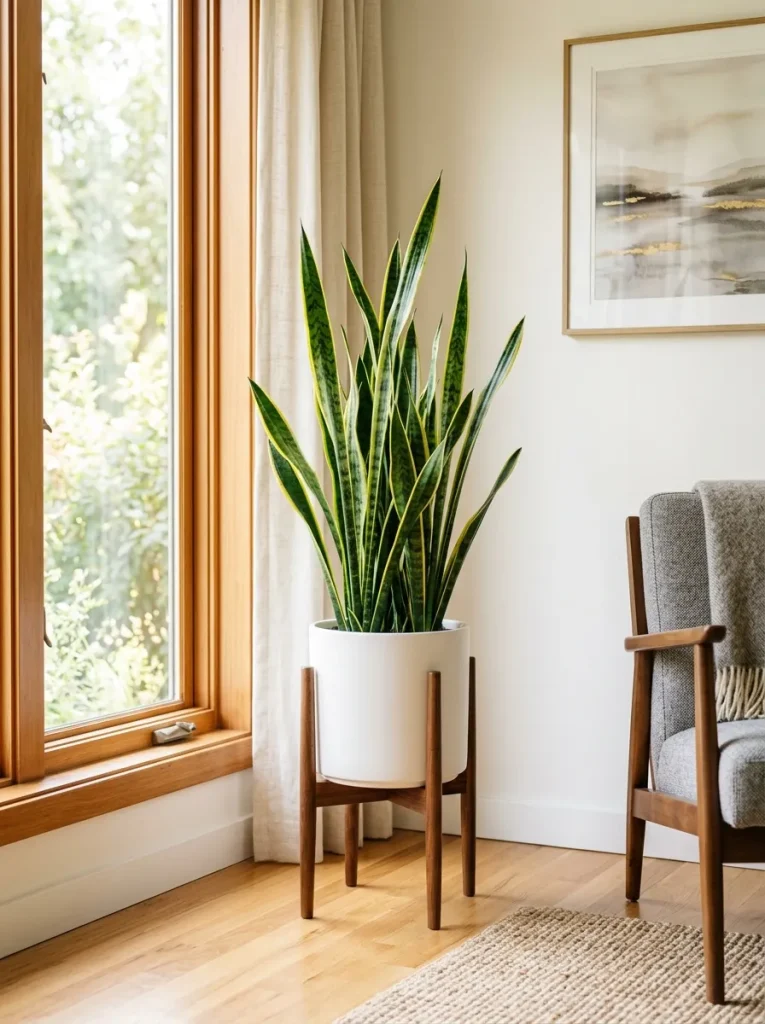
The mid-century wooden stand elevation concept utilizes raised timber frameworks to elevate potted Sansevieria off the floor, introducing structural height and architectural interest to room corners. This design style pairs the clean, vertical lines of the plant’s variegated leaves with warm, natural wood grain tones such as walnut, oak, or teak. Elevating the plant creates a clear visual gap between the pot base and the flooring, which prevents the display from looking heavy or visually dense in compact spaces. This method works exceptionally well in living rooms or reading nooks, where elevating the foliage aligns the top of the leaves with seated eye levels, creating an immediate, balanced focal point.
To set up this display, select a cylindrical ceramic planter in a neutral matte white or light gray shade, ensuring it features a bottom drainage hole and saucer. Pot your snake plant securely in the ceramic vessel using a well-draining succulent potting soil, firming the soil around the root ball to support upright leaf growth. Assemble or purchase an X-framed mid-century wooden plant stand that matches the outer diameter of your chosen ceramic pot. Place the potted plant firmly onto the cross-frame of the wooden stand, verifying that the assembly sits completely level and stable on your floor surface. Position the elevated arrangement near a natural light source, such as adjacent to a living room window or beside a sofa end table, to highlight the contrast between the green foliage and the warm timber frame.