10 Stuffed Toy Room Ideas
Stuffed toys often hold sentimental value while also serving as playful decorative elements within a room. When they are stored without a clear system, however, they can quickly create visual clutter and reduce available space. Thoughtful stuffed toy room ideas help transform collections into attractive features that contribute to both organization and home decor. Pinterest ideas frequently showcase creative ways to display plush toys while maintaining a clean and functional environment. These solutions work in children’s bedrooms, playrooms, reading corners, and shared family spaces.
This article explores practical and beginner friendly approaches for organizing and displaying stuffed toys through DIY projects, decorative arrangements, and storage solutions. Readers will learn how to plan layouts, choose suitable materials, create attractive displays, and maintain organization over time. Whether working with a large collection or a small selection of favorite plush toys, these creative ideas provide inspiration for designing an aesthetic and organized space. The concepts focus on accessibility, functionality, and modern design while remaining achievable for different budgets and room sizes.
Why This Idea Is Trending or Useful
Stuffed toy organization has become increasingly popular because many families seek practical ways to manage collections without hiding them away. Pinterest inspiration often highlights storage solutions that combine decoration and functionality, allowing toys to become part of the room’s overall design. This approach supports organization while preserving easy access for everyday use.
Another reason these ideas remain popular is their DIY appeal. Many projects use affordable materials and simple construction methods, making them suitable for beginners. Creative storage solutions can also maximize unused wall space, corners, and vertical areas. This helps improve room efficiency while reducing floor clutter.
Modern design trends emphasize purposeful organization and minimalist style. Instead of scattering stuffed animals throughout a room, carefully arranged displays create visual order and improve presentation. These projects can be adapted to different themes, color palettes, and room sizes. Their flexibility, affordability, and decorative value make them among the most searched Pinterest ideas for children’s spaces and family-friendly home decor.
Materials and Preparation
Before beginning any stuffed toy organization project, it is important to evaluate the size of the collection and determine how much space is available. Sort toys by size, frequency of use, and sentimental importance. This planning step helps identify the most appropriate storage method and prevents overcrowding.
Common materials include storage baskets, fabric bins, wooden shelves, wall hooks, rope, elastic cord, hanging organizers, labels, paint, screws, mounting hardware, and decorative accessories. Basic tools may include a measuring tape, drill, screwdriver, level, scissors, and adhesive strips. Depending on the chosen DIY tutorial, additional materials may be required.
Accurate measurements are essential before installation. Consider toy accessibility, safety, room traffic flow, and available wall space. Planning color coordination and overall aesthetic in advance can also improve final results. A well-prepared project typically requires less time, reduces mistakes, and produces a more organized and visually appealing outcome.
Idea 1: Floating Plush Display Shelves
How to Create
Floating shelves turn stuffed toys into decorative room features rather than simple storage items. This method works especially well for favorite plush animals that deserve permanent display. Shelves create visual structure while keeping toys visible and organized. By arranging toys according to size, color, or theme, the display contributes to a clean and aesthetic room design. This setup works well in modern design spaces because it combines decoration with practical organization.
Install floating shelves at different heights across a wall. Measure spacing carefully to accommodate larger toys while maintaining visual balance. Paint shelves to match the room’s color palette or use natural finishes for a minimalist style. Arrange larger stuffed animals toward the back and smaller items in front. Leave some open space between groups to avoid a crowded appearance. Periodically rotate toys to keep the display fresh and maintain accessibility.

Idea 2: Corner Toy Hammock
How to Create
A corner hammock transforms unused room space into efficient stuffed toy storage. This Pinterest favorite keeps plush collections off the floor while creating a playful decorative feature. Because corners are often underutilized, the hammock maximizes storage without occupying valuable floor area. The suspended arrangement also adds visual interest and texture to the room.
Attach secure wall hooks near the ceiling in a room corner. Use durable netting or woven rope to create a hammock shape. Ensure the material can support the collection’s weight. Position larger toys along the bottom and lighter toys near the top. Adjust the hammock tension as needed to maintain shape. This beginner friendly project requires minimal materials and offers an affordable organization solution.

Idea 3: Built-In Reading Nook Storage
Step-by-Step Guide
Combining stuffed toy storage with a reading area creates a multifunctional space that encourages both organization and relaxation. Plush toys become part of the reading environment, making the area inviting and comfortable. This arrangement supports both decoration and practical use while creating a cozy atmosphere.
Place shelving units around a reading chair, bench, or window seat. Assign dedicated sections for different toy categories. Add cushions, soft lighting, and storage baskets underneath seating when possible. Maintaining separate areas for books and stuffed animals helps preserve organization. The result is a balanced and attractive corner that serves multiple purposes within the room.

Idea 4: Wall-Mounted Basket Gallery
How to Create
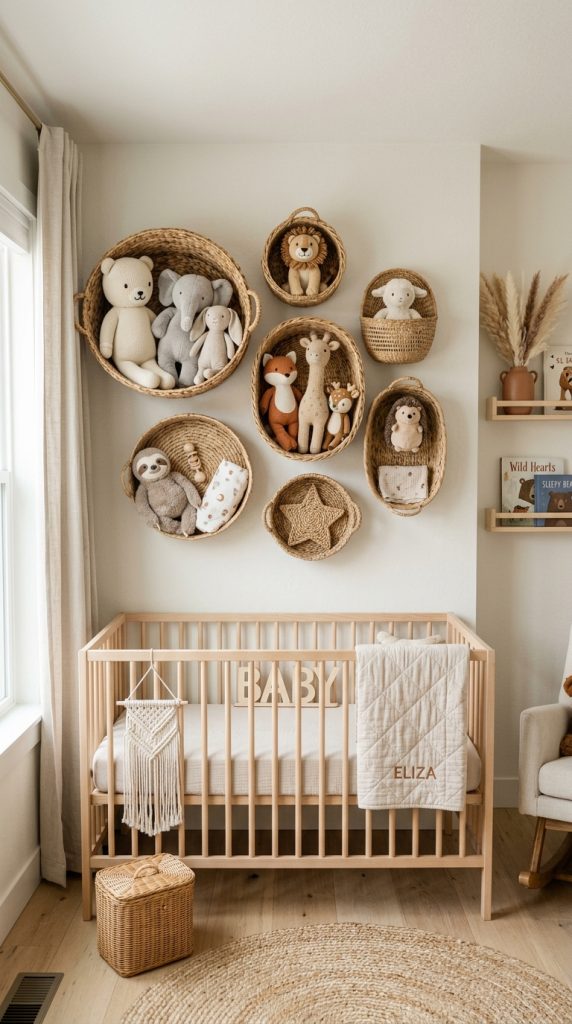
Wall-mounted baskets provide an innovative alternative to traditional shelving. The baskets create dimension while securely holding stuffed animals of different sizes. Because the toys remain visible, the display feels decorative rather than hidden. This solution works particularly well for rooms with limited floor space.
Select baskets with consistent colors or materials for a coordinated appearance. Mount them securely using appropriate hardware. Arrange baskets in symmetrical rows or creative patterns depending on the desired aesthetic. Group toys by theme or color for additional visual organization. This project offers a simple DIY method that combines storage, decoration, and accessibility.
Idea 5: Toy Zoo Storage System
Setup Method
A toy zoo uses vertical wooden frames and elastic cords to create a contained storage area. The flexible front allows children to easily add and remove stuffed animals while keeping them organized. This idea has become one of the most recognizable Pinterest ideas because it is practical and visually appealing.
Construct a rectangular frame using wood boards sized to fit the available wall area. Attach strong elastic cords vertically across the front opening. Paint or decorate the frame to complement existing room decor. Fill the enclosure with stuffed toys while maintaining enough space for easy access. The finished structure functions as both storage and decorative display.

Idea 6: Color-Coordinated Display Wall
How to Create
A color-organized display creates a polished and intentional appearance. Grouping toys according to color introduces visual harmony and helps transform collections into decorative arrangements. This technique is especially effective for large collections with varied styles and sizes.
Begin by sorting all plush toys into color categories. Install shelves or cubbies that provide enough room for each group. Arrange toys gradually from light shades to darker tones for a balanced presentation. Consistent spacing improves the overall aesthetic. This organization strategy supports modern design principles while making the collection easier to manage.

Idea 7: Under-Bed Storage Drawers
Execution Process
Under-bed storage utilizes often overlooked space while maintaining a tidy room appearance. Stuffed toys remain accessible yet hidden when not in use. This solution works particularly well in smaller bedrooms where floor space is limited.
Use rolling storage bins, custom drawers, or low-profile containers that fit beneath the bed frame. Label sections according to toy type, size, or usage frequency. Choose breathable storage materials when possible. Regularly review contents to remove unnecessary clutter. This easy project provides substantial storage capacity without affecting the room’s visual design.

Idea 8: Hanging Pocket Organizer
How to Make
A hanging pocket organizer offers vertical storage that requires minimal installation. Multiple compartments keep stuffed animals separated and easy to locate. The design supports efficient organization while preserving floor space.
Select a fabric organizer with reinforced pockets or create one using sturdy fabric materials. Mount it behind a door or along an unused wall section. Assign pockets based on toy categories or ownership when shared among siblings. Regular maintenance ensures the organizer remains neat and functional. This beginner friendly DIY tutorial is ideal for compact rooms.

Idea 9: Decorative Storage Bench
Step-by-Step Guide
Storage benches combine seating with concealed toy organization. They serve as functional furniture while reducing visible clutter. This dual-purpose design is particularly valuable in shared spaces and multipurpose rooms.
Choose a bench with internal storage compartments or modify an existing piece. Store stuffed animals inside while reserving the top surface for seating, reading, or decorative accessories. Add cushions that coordinate with the room’s aesthetic. This setup supports organization without sacrificing style and contributes to a clean overall appearance.

Idea 10: Themed Display Cubby Wall
How to Create
Cubby systems allow collections to be separated into individual display zones. The structure helps maintain order while encouraging creative presentation. Each cubby can represent a different theme, category, or character type, creating an engaging visual display.
Install modular cubby units and determine categories before arranging toys. Some sections may feature seasonal displays, while others showcase favorite plush animals. Decorative labels can improve organization further. Maintaining consistent spacing and limiting overcrowding preserves the aesthetic effect. This approach provides flexibility as collections grow over time.

Common Beginner Mistakes and How to Avoid Them
One common mistake is attempting to display every stuffed toy at once. Overcrowding reduces visual appeal and makes organization difficult. Rotating toys seasonally can help maintain a cleaner presentation. Another frequent issue involves choosing storage systems without measuring available space first. Accurate planning prevents installation problems and improves functionality.
Many beginners also underestimate the importance of accessibility. Storage solutions should allow toys to be removed and returned easily. Complicated arrangements often become disorganized quickly. Ignoring weight limits is another concern, especially when using wall-mounted storage. Always verify that shelves, baskets, and hooks are securely installed. Consistent maintenance and periodic decluttering help preserve long-term organization.
Practical Tips for Better Results
Successful projects begin with careful planning. Measure available space accurately and create a rough layout before purchasing materials. Group toys according to size, frequency of use, or color to simplify organization. Consistent categorization makes maintenance easier over time.
Use vertical space whenever possible to maximize storage capacity. Combining open displays with hidden storage often creates the best balance between decoration and functionality. Choose materials that complement existing room decor for a cohesive appearance. Regular cleaning and rearrangement help maintain an attractive display while preventing clutter from accumulating.
Styling, Presentation, or Organization Ideas
Thoughtful styling transforms stuffed toy storage into a decorative room feature. Coordinating colors between storage elements and room furnishings creates a more polished appearance. Neutral shelving paired with colorful toys often produces a balanced visual effect.
Layering different storage methods can improve both organization and presentation. For example, display favorite toys on shelves while storing extras in baskets or benches. Incorporating framed artwork, soft lighting, and complementary textiles can enhance the overall aesthetic. Maintaining open space between displays prevents visual overload and supports a clean, organized environment.
Budget or Time Planning
Many stuffed toy organization projects can be completed within a single weekend. Simple solutions such as hanging organizers and baskets typically require minimal installation and lower material costs. More advanced DIY projects involving shelves or custom storage systems may require additional planning and construction time.
Creating a budget before purchasing materials helps avoid unnecessary spending. Repurposing existing furniture, containers, or storage units can significantly reduce costs. Prioritize projects that address the greatest organizational needs first. Completing improvements in stages allows better cost control while gradually enhancing the room.
Creative Expansion and Advanced Inspiration
Once a basic organization system is established, additional creative ideas can expand the room’s functionality and visual appeal. Consider incorporating themed displays that change throughout the year. Seasonal arrangements keep the space fresh while highlighting different toys.
Advanced projects may include custom built-in shelving, integrated lighting, labeled display zones, or interactive storage features. Combining stuffed toy organization with reading corners, play stations, or study areas can create a more versatile environment. Exploring different Pinterest ideas and adapting them to available space encourages ongoing creativity while maintaining practical organization and attractive home decor.