10 Cute Book Nook Room Ideas
Creating a dedicated reading space is a wonderful way to bring comfort, warmth, and personality into any home. A cozy book nook serves as a personal sanctuary where literature lovers can escape daily distractions, unwind with a favorite novel, and enjoy quiet moments of reflection. This comprehensive guide explores ten creative ideas for designing beautiful, functional, and inviting reading spaces that fit seamlessly into various areas of your house. Readers will learn how to assess their available space, select appropriate furniture, integrate proper lighting, and arrange books in ways that optimize both storage and aesthetic appeal. Whether you possess an expansive spare room or a small, overlooked corner beneath a staircase, these actionable design strategies will help you transform ordinary spaces into enchanting reading areas. Understanding the principles of balance, texture, and light ensures that your new space remains highly practical while offering an inviting atmosphere. By focusing on smart layouts and thoughtful details, this tutorial provides the inspiration and practical guidance needed to execute a successful home improvement project that elevates your daily living experience.
The growing popularity of specialized reading corners reflects a broader shift toward mindful home design and intentional living environments. On social media and design platforms, people frequently share inspiration for small-space optimization, making the compact reading alcove one of the most trending ideas in modern interior decoration. This project carries substantial practical value because it maximizes underutilized square footage, such as recessed walls, closet spaces, or empty corners, turning them into highly functional zones. The DIY appeal is exceptionally high, allowing beginners to achieve impressive results without requiring advanced carpentry or construction skills. Minimalist style and balanced layouts ensure these spaces remain clutter-free while contributing positive visual interest to the wider room design. By choosing accessible materials and focusing on straightforward arrangements, anyone can create an appealing retreat regardless of their initial design experience. This accessibility makes the reading corner an ideal project for those wishing to personalize their environment on a modest budget while enhancing the overall comfort of their home.
Proper preparation and careful planning are essential components of a successful home decor project. Before purchasing any items, you must measure your selected area accurately, noting the height, width, and depth of the space, as well as the location of nearby electrical outlets for lighting. The primary materials required for this project include comfortable seating, functional shelving units, sturdy brackets, and versatile lighting fixtures like floor lamps or wall-mounted sconces. For tools, you will generally need a measuring tape, a level, a stud finder, a drill, and basic hand tools for assembling furniture or mounting shelves securely. Planning considerations should focus on ergonomics and traffic flow, ensuring that the seating does not block walkways and that books remain within easy physical reach. You must also evaluate natural light sources during different times of the day to determine where additional task lighting will be most effective. Gathering all materials beforehand and mapping out the layout on paper prevents common installation errors and streamlines the setup process.
Idea 1: The Classic Window Seat Sanctuary
How to Create
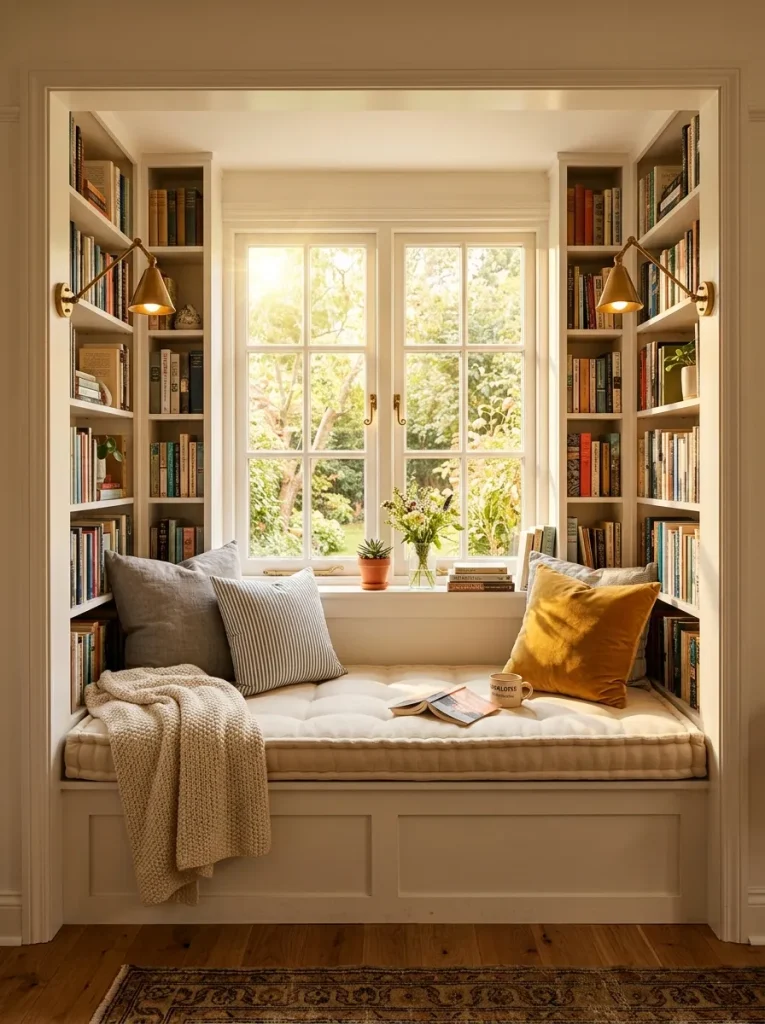
A window seat sanctuary maximizes natural light and provides a soothing view of the outdoors, making it an exceptional option for a reading area. This concept relies on building or positioning a low bench directly beneath a window sill, creating an integrated look that blends seamlessly with the architecture of the room. The design utilizes the inherent brightness of the window to reduce the need for artificial lighting during daylight hours, establishing a bright and uplifting atmosphere. Storage is a core component of this setup, with the space beneath the bench seat serving as an excellent location for built-in shelving, deep drawers, or open cubbies to house your book collection. By framing the window with narrow vertical bookshelves on either side, you create a balanced, symmetrical look that draws the eye inward and defines the area as a dedicated zone.
To build this setup, begin by selecting a sturdy wooden storage bench or constructing a custom base that matches the exact width of your window frame. Secure the bench framework to the wall studs using heavy-duty wood screws and a level to ensure complete stability and safety. Once the base is firmly anchored, measure the top surface and install a dense foam cushion covered in a durable, easily washable fabric that complements your room color scheme. Install vertical floating shelves or freestanding bookcases on the flanking walls, ensuring they are securely attached to prevent tipping. Finally, mount adjustable wall sconces on either side of the window frame to provide targeted illumination for evening reading sessions, ensuring the light fixtures are positioned at a height that prevents direct glare.
Idea 2: Hidden Closet Conversion Alcove
Execution Process
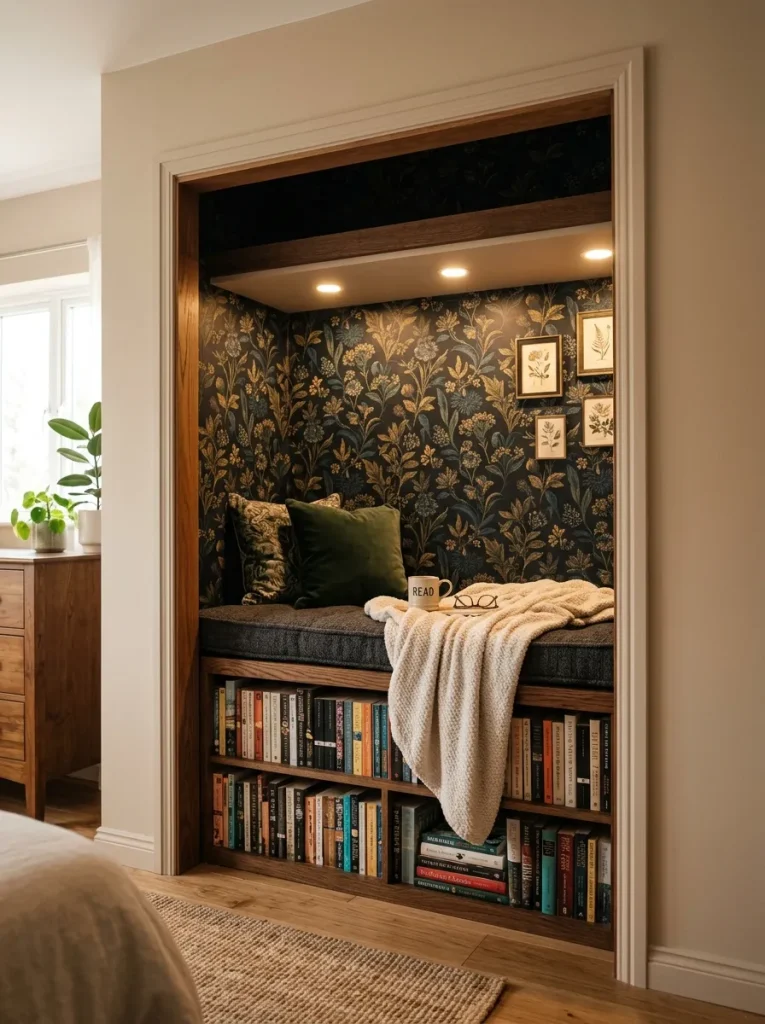
Converting an underutilized closet into a recessed reading alcove is an excellent way to save floor space while creating a cozy, secluded environment. This design concept involves removing standard closet doors to open up the architectural recess, turning a purely utilitarian storage zone into a focal design feature. The interior walls of the closet can be painted a contrasting color or lined with subtle wallpaper to create visual depth and separation from the main bedroom or living area. Because the space is enclosed on three sides, it naturally provides a sense of privacy and quiet insulation from the rest of the household. This configuration works exceptionally well in smaller bedrooms, home offices, or hallways where additional freestanding furniture would restrict movement.
The conversion process begins with the complete removal of the existing closet doors, hinges, and any prefabricated wire shelving tracks. Patch any holes in the drywall with joint compound, sand the surfaces smooth, and apply a fresh coat of high-quality interior paint or patterned wallpaper to the back and side walls. Measure the interior width precisely and install a custom-cut wooden bench across the span, supporting it with heavy-duty wood cleats screwed directly into the wall studs. Below the bench surface, install low shelves for book storage, leaving the upper area open for comfortable seating and wall movement. Fix battery-operated or hardwired LED puck lights to the ceiling of the closet recess to ensure the enclosed space receives ample, even illumination without generating excessive heat.
Idea 3: Minimalist Floating Shelf Corner
Step-by-Step Guide
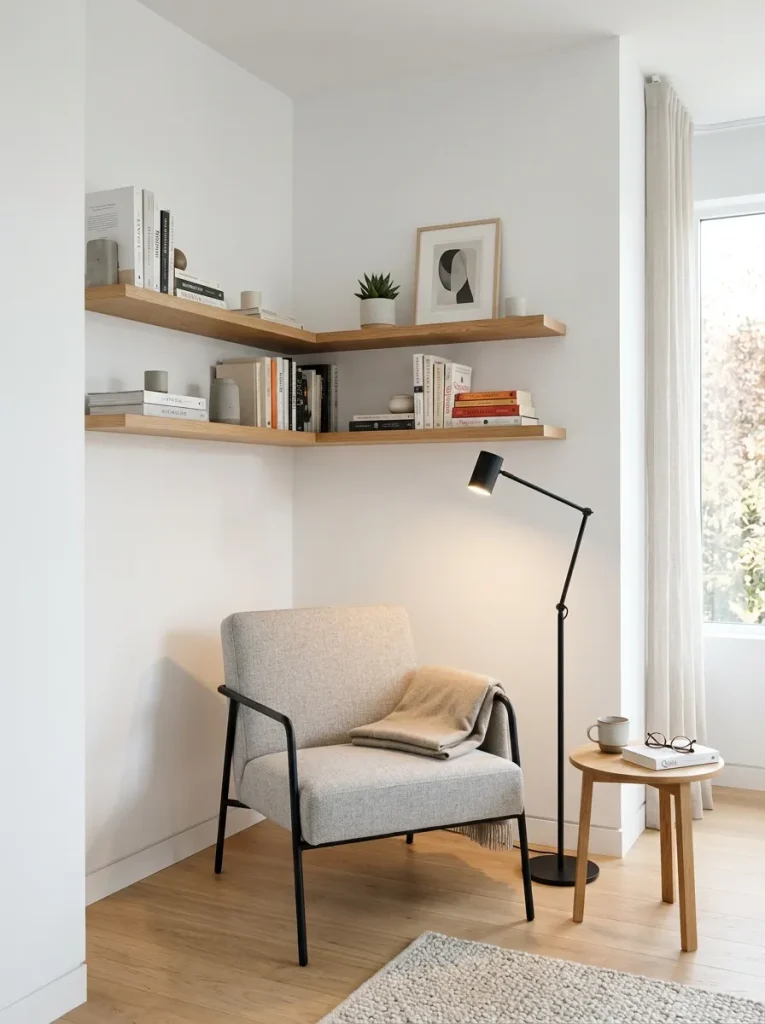
A minimalist floating shelf corner utilizes clean lines and open space to create an unobtrusive reading area that perfectly suits modern design sensibilities. This concept relies on staggered or symmetrical floating shelves mounted on intersecting walls, creating an airy display that makes books appear to hover unsupported. By eliminating bulky furniture bases, this approach maintains an open floor area, making small rooms feel substantially larger and less cluttered. The aesthetic focus centers on the structural beauty of the books themselves, turning your literary collection into a dynamic element of home decor. A sleek, low-profile accent chair placed directly beneath the shelves completes the functional arrangement without disrupting the minimalist style.
Start by selecting high-quality floating shelves equipped with internal metal mounting brackets capable of supporting significant weight. Use a stud finder to locate the structural framing behind the drywall, as books are heavy and require secure anchoring to prevent the shelves from sagging or pulling away over time. Mark your desired shelf heights on the wall using a pencil and a long spirit level to guarantee perfectly straight lines. Drill pilot holes into the studs, secure the metal brackets firmly using heavy-duty wall anchors, and slide the wooden shelf sleeves over the supports. Position a comfortable, slim-framed armchair directly underneath the lowest shelf, ensuring there is adequate head clearance when sitting down or standing up. Place a slender, adjustable matte-black floor lamp next to the chair to provide clear, direct task lighting.
Idea 4: Under the Stairs Retreat
Setup Method
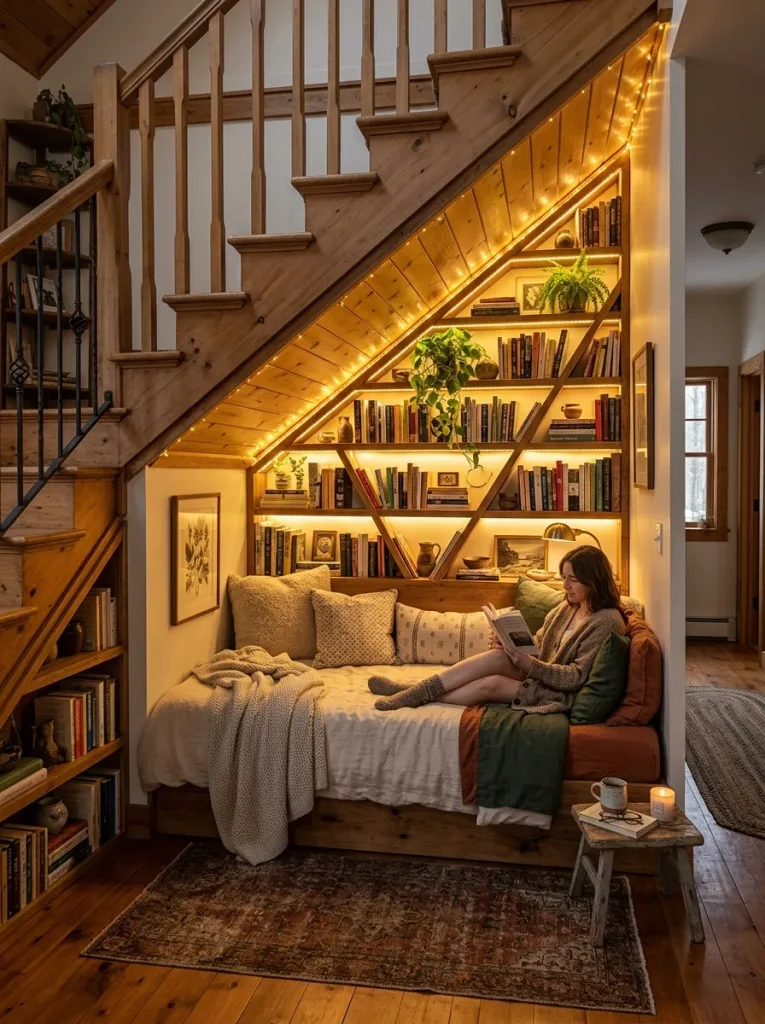
The irregular space beneath a staircase is often left empty or used for disorganized storage, making it the perfect candidate for a creative reading project. This idea utilizes the sloping ceiling line to create a unique, asymmetrical nook that feels naturally cozy and securely tucked away from household traffic. Because of the varying height constraints, this setup encourages low-profile seating arrangements, such as deep floor cushions, custom daybeds, or plush beanbag chairs. The unique geometry of the staircase underside allows for staggered, custom-built shelving that follows the angle of the stairs, maximizing every square inch of storage capacity. This transformation turns a structural necessity into an architectural highlight that adds immense character to your home.
Clear out the entire space beneath the stairs and carefully inspect the sloping ceiling for any exposed wiring or nails that need securing. Frame the back wall with custom triangular shelving units designed to match the specific incline of your staircase, utilizing durable plywood or pre-finished shelving boards. If the deep end of the space allows, construct a low platform bed frame and top it with a twin-sized mattress or a thick foam pad to create a comfortable lounging surface. For the lower sections where head clearance is restricted, install low-profile storage cubbies or rolling bins to hold additional books and magazines. Because under-stair areas generally lack natural window light, install multiple warm-toned LED strip lights along the shelving edges and mount a flexible reading lamp to the highest point of the sloping wall.
Idea 5: Bohemian Floor Cushion Oasis
How to Make
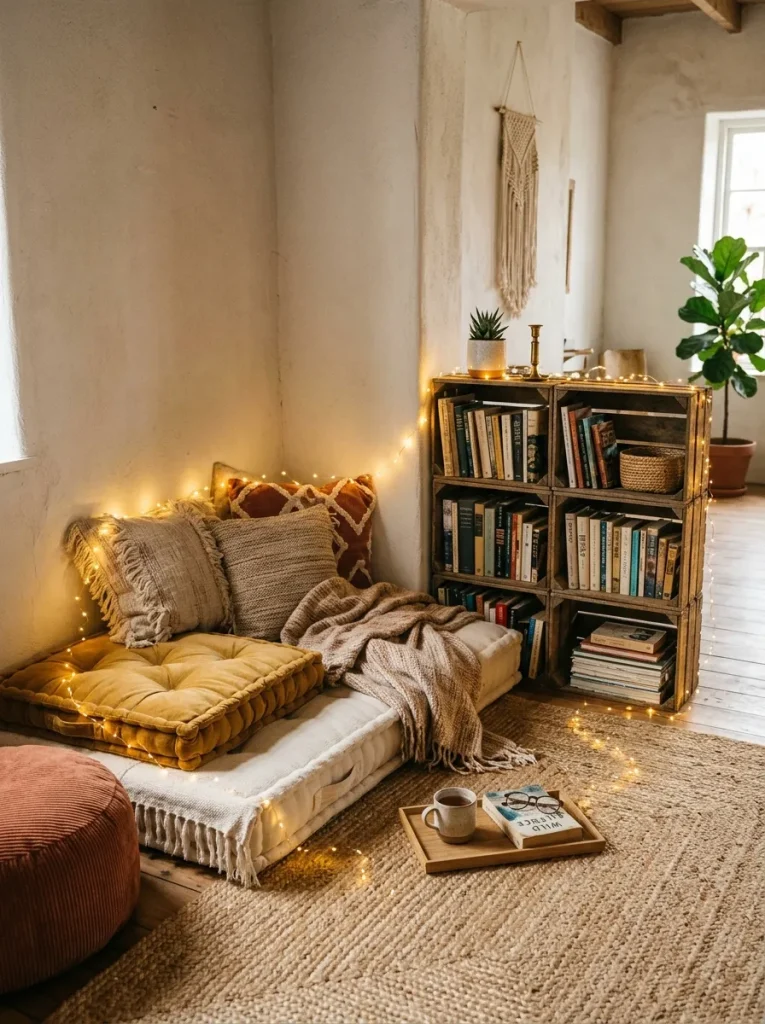
A bohemian floor cushion oasis offers a relaxed, informal approach to reading spaces, focusing on soft textures, layered textiles, and low-level seating. This concept replaces traditional structured chairs with an arrangement of oversized floor pillows, tufted poufs, and thick futons arranged directly on the ground. The design style promotes a casual, inviting atmosphere where readers can stretch out fully and change positions easily during long reading sessions. To ground the space and define its boundaries, a woven area rug serves as the foundation for the entire layout. Low-to-the-ground shelving, such as horizontal bookcases or rustic wooden crates stacked on their sides, keeps reading materials accessible from a seated or reclining position.
Begin by defining the perimeter of your oasis by laying down a textured, durable woven rug, such as a flat-weave cotton or natural jute design, in an empty corner of the room. Arrange two or three large, high-density foam floor cushions or a folded floor mattress in the corner, leaning them against the walls to provide supportive backrests. Stack modular wooden crates horizontally along one side of the rug, securing the crates to each other with wood screws to prevent shifting when filled with heavy books. Weave a strand of warm, insulated LED fairy lights through the crates or hang them safely along the wall to contribute a soft, ambient glow to the area. Finish the setup by placing a small, low-profile wooden tray or side table adjacent to the cushions to hold a beverage or a reading notebook securely.
Idea 6: The Antique Secretary Desk Corner
Execution Process
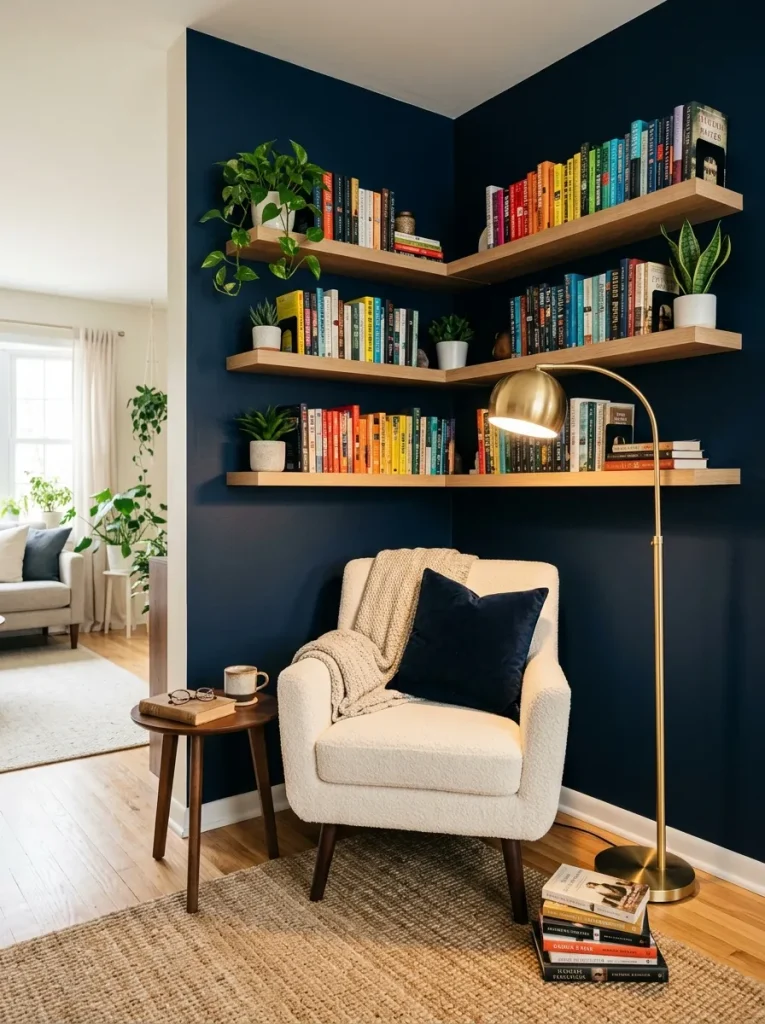
Integrating an antique secretary desk into a corner creates a multi-functional reading space that combines historical charm with practical organization. This design concept centers around a classic drop-front desk, which features a hinged writing surface that folds up to conceal internal compartments and small drawers when not in use. This style is exceptionally beneficial for individuals who appreciate traditional aesthetics and require a space that can transition smoothly between reading, journaling, and light paperwork. The upper section of a traditional secretary desk often includes built-in glass-front cabinetry, allowing you to display prized editions of books while protecting them from dust and ambient humidity.
Select a vintage or reproduction secretary desk made of sturdy hardwood that fits the dimensions of your designated wall or corner space. Position the desk near a source of natural light, ensuring that the drop-front lid can extend fully without impacting nearby furniture or blocking doorways. Clean and oil the drawer glides, and verify that the hinges supporting the folding desktop are secure and strong enough to handle regular physical pressure. Organize your books inside the upper glass cabinets, arranging them by size or subject matter for a balanced visual presentation. Place a comfortable, upholstered armchair with good lumbar support in front of the desk, ensuring it can be easily moved aside when opening or closing the main desk lid. Position a small, brass task lamp on one of the interior desk shelves to provide focused light on your pages.
Idea 7: High-Contrast Accent Wall Retreat
How to Create
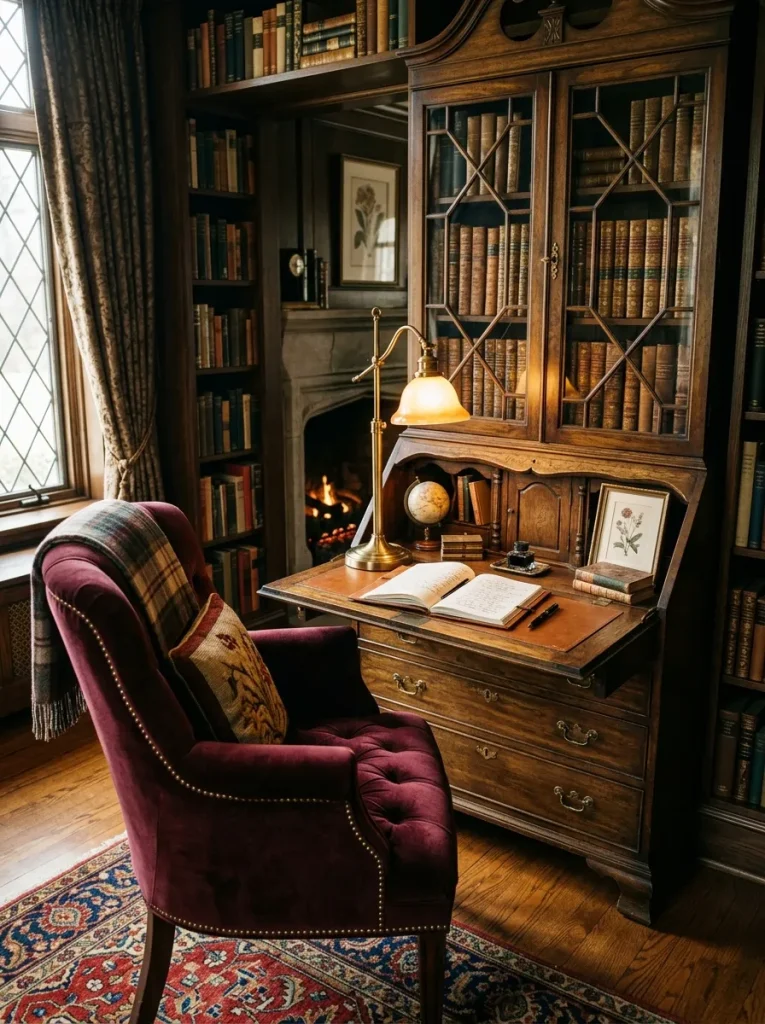
A high-contrast accent wall retreat uses bold paint choices to visually separate a reading corner from the rest of a large, multi-purpose room. This design idea relies on painting the two walls forming a corner in a deep, rich hue, such as navy blue, forest green, or charcoal gray, while the rest of the room remains a lighter shade. This stark color contrast creates a powerful optical illusion of depth, making the corner feel like a distinct, self-contained architectural space without adding physical walls. The dark backdrop makes light-colored wooden shelves, bright book spines, and cozy seating stand out vividly, creating an artistic display that serves as a major focal point in your home decor.
Select a corner of your living room or bedroom that receives steady daylight and wipe the walls down thoroughly to remove dust and debris. Apply painter’s tape carefully along the edges where the corner walls meet the ceiling and the adjacent walls to ensure crisp, clean paint lines. Apply two coats of a high-quality matte or eggshell finish paint in your chosen deep color, allowing ample drying time between applications. Once the paint is completely dry, carefully remove the tape and mount contrasting natural wood or white floating shelves directly onto the painted walls. Position a plush, light-toned armchair in the corner to create a striking contrast against the dark background. Install a sleek floor lamp with a brushed metallic finish next to the chair to provide a bright, clear light source that cuts through the deep tones of the wall.
Idea 8: Canopy and Curtain Hideaway
Setup Method
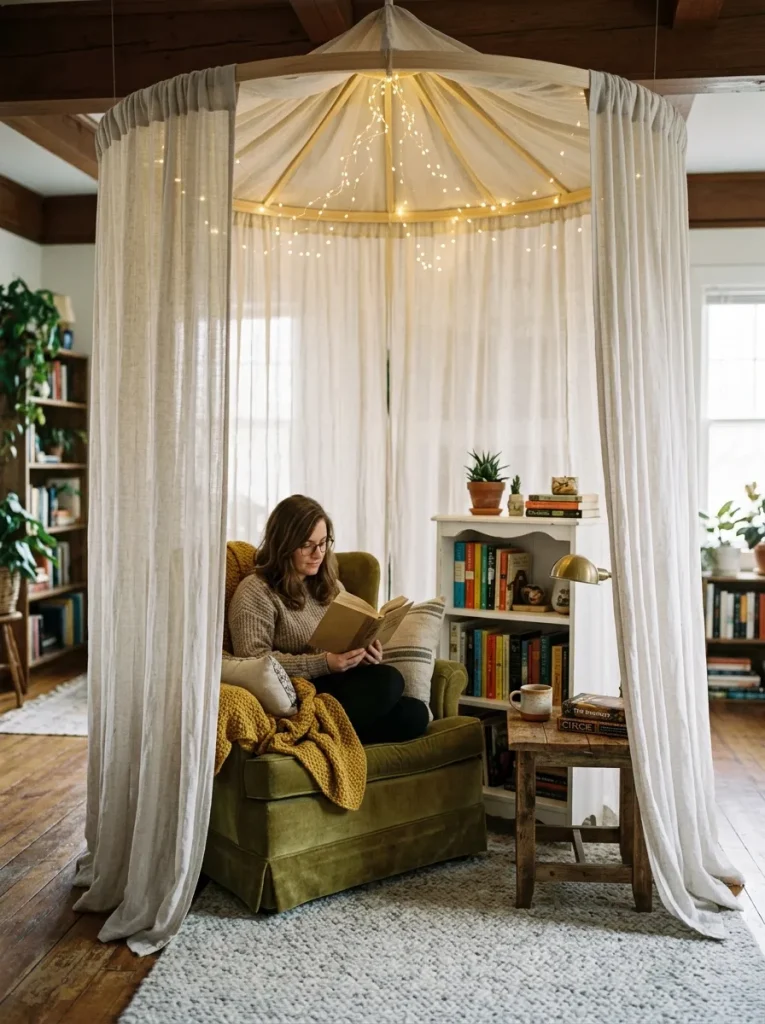
A canopy and curtain hideaway introduces soft drapery to create a whimsical, fabric-enclosed sanctuary that provides physical and visual privacy. This design concept involves hanging lightweight curtains or a circular fabric canopy from the ceiling over a comfortable seating arrangement, allowing the reader to close the fabric panels completely. The use of textiles dampens sound, softens harsh room lighting, and creates a sense of insulation, making it an excellent option for busy households or shared children’s bedrooms. This style can range from minimalist and modern to soft and romantic, depending entirely on the texture, color, and transparency of the fabrics selected for the project.
Locate a solid ceiling joist above your designated reading area using a stud finder, or use heavy-duty toggle bolts if mounting directly into drywall. Secure a circular canopy ring or a curved curtain track firmly to the ceiling using the appropriate screws and hardware anchors to ensure it can support the weight of the fabric. Hang lightweight, breathable drapes, such as linen or sheer cotton panels, from the track, ensuring the fabric clears the floor surface by roughly half an inch to prevent tripping. Inside the curtain perimeter, arrange a soft armchair, a small side table, and a low bookcase loaded with your favorite reading materials. Thread flexible, low-heat LED string lights through the interior top of the canopy framework to provide a gentle, diffuse glow that illuminates the space safely when the curtains are closed.
Idea 9: Double-Sided Bookcase Room Divider
Step-by-Step Guide
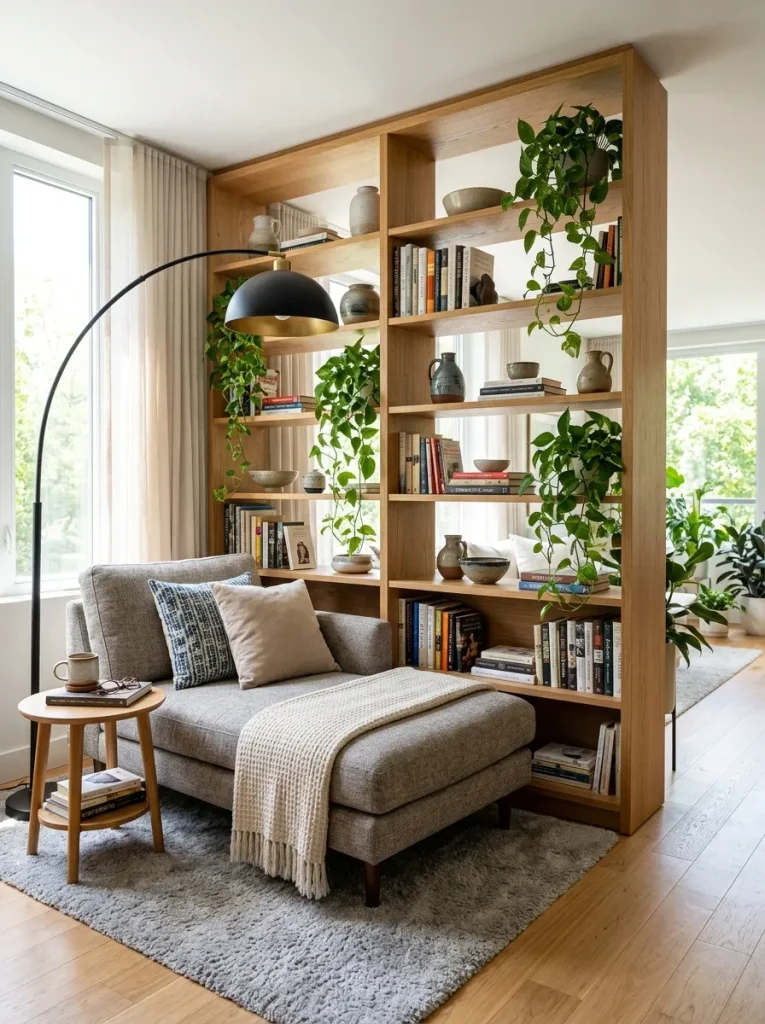
Using a double-sided bookcase as a room divider is a highly practical way to carve a dedicated reading nook out of a large, open-concept living space. This concept relies on positioning a tall, open-backed shelving unit perpendicular to a main wall, effectively acting as a partial partition that separates the room into distinct functional zones. Because the bookcase lacks a solid back panel, light passes through the shelves easily, ensuring that both the reading area and the main room remain bright and airy. This arrangement provides an immense amount of storage space for books and decorative items, which can be accessed from either side of the partition, maximizing utility.
Select a sturdy, open-backed bookcase unit that stands at least five feet tall to provide adequate visual separation without completely blocking room sightlines. Assemble the shelving unit precisely according to the manufacturer instructions, ensuring all internal locking mechanisms and support pins are fully tightened. Position the bookcase perpendicular to your main wall, and use a specialized furniture anchoring kit to secure the top of the unit firmly to a wall stud to eliminate any risk of tipping. On the newly created private side of the divider, place a comfortable lounger, a soft area rug, and a small end table. Organize your books on the shelves, mixing them with small indoor plants or pottery pieces to allow natural light to filter through the open gaps between items. Place a tall arc floor lamp over the chair to provide direct, focused illumination.
Idea 10: Industrial Pipe and Reclaimed Wood Alcove
How to Make
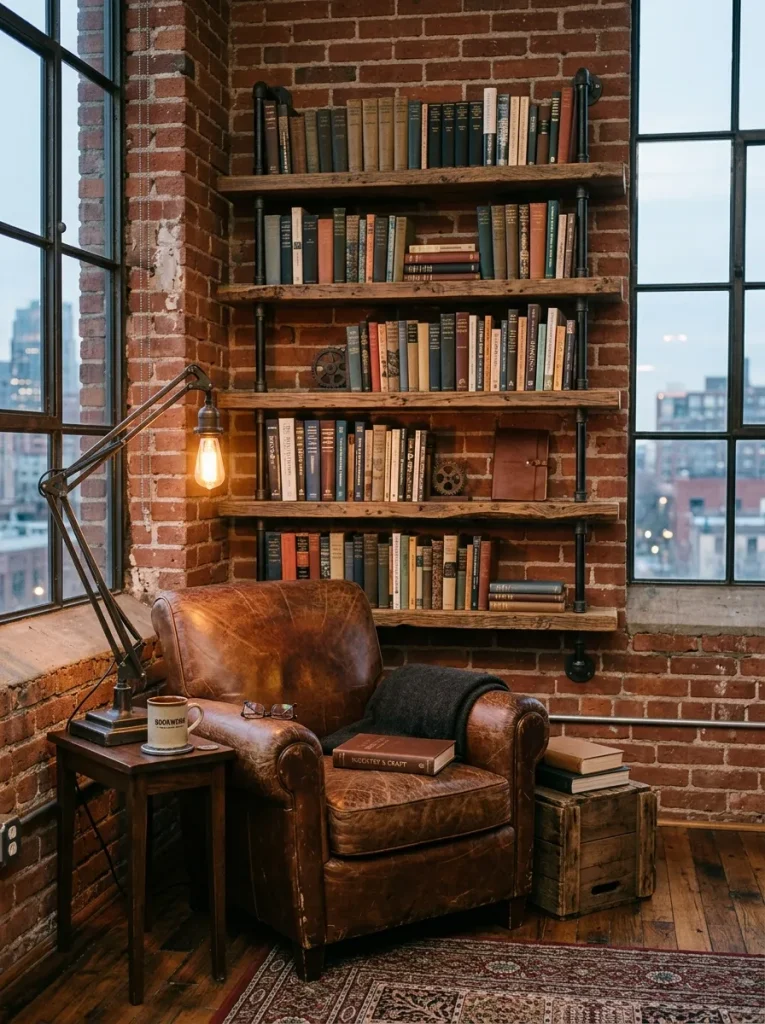
An industrial pipe and reclaimed wood alcove combines rugged structural elements with warm organic materials to create a stylish, contemporary reading space. This design concept utilizes black iron plumbing pipes and thick, heavy wooden planks to construct a custom wall-mounted shelving unit that exudes industrial charm. The contrast between the dark metal hardware and the textured wood grain provides a strong, masculine aesthetic that pairs beautifully with leather seating and minimalist decor. This style of shelving is incredibly robust and capable of holding large collections of heavy textbooks, encyclopedias, or hardcovers without bowing or shifting over time, making it as functional as it is visually striking.
Purchase pre-cut lengths of black iron pipe, along with matching floor flanges, elbows, and tees, from a local hardware supplier, and clean off any factory oil residue using a degreaser. Lay out your reclaimed wood planks, sand them down to eliminate splinters, and apply a clear, protective matte sealant to preserve the natural character of the wood grain. Assemble the pipe framework, screwing the pieces together tightly, and slide the pre-drilled wooden planks onto the pipe supports at your desired intervals. Hold the assembled unit against the wall, use a level to verify it is perfectly straight, and secure the floor flanges into the wall studs using heavy-duty lag screws. Position a distressed leather armchair or a modern metal-framed chair beneath the shelving structure. Complete the industrial look by adding a factory-style metal desk lamp equipped with an amber LED Edison bulb for warm, vintage-inspired task lighting.
Common Beginner Mistakes and How to Avoid Them
One of the most frequent errors made when setting up a reading corner is neglecting the importance of ergonomics and seating comfort. Beginners often select an accent chair based entirely on its visual appearance or color, only to discover that it causes back strain during extended periods of sitting. To avoid this issue, always test chairs in person before finalizing your purchase, paying close attention to seat depth, lumbar support, and the height of the armrests. Another prevalent mistake is failing to secure wall-mounted shelves into structural wall studs, which can lead to shelf sagging or catastrophic wall damage under the immense weight of a book collection. Always use a dependable stud finder during installation, and rely on heavy-duty toggle bolts or drywall anchors only when hitting a solid wooden stud is completely impossible. Additionally, many people overlook the necessity of dedicated task lighting, relying instead on ambient overhead room lights that cast frustrating shadows across the pages of a book. Ensure your setup includes an adjustable lamp positioned slightly behind or beside your shoulder to direct clear light precisely where it is needed most.
Practical Tips for Better Results
To achieve professional design results, pay close attention to the visual arrangement and balance of your books and decorative accessories. Instead of stacking every book vertically, vary your display by placing some volumes horizontally in neat stacks, which can also serve as unique bookends or elevated platforms for small decorative objects. Introduce natural elements like small potted houseplants, such as trailing pothos or hardy succulents, to soften the hard edges of the bookshelves and bring vibrant life to the corner. Pay careful attention to cord management, as multiple power cables from lamps and chargers can quickly make a small space look chaotic and disorganized. Use adhesive cable clips or fabric cord wraps to route wires neatly along the baseboards or behind furniture legs, keeping them completely hidden from plain sight. Furthermore, consider adding a small footstool or ottoman to your seating arrangement, as elevating your feet significantly enhances physical comfort and relaxation during long reading sessions. Finally, keep a soft, high-quality throw blanket draped over your chair to add a layer of inviting texture and warmth to the overall presentation.
Styling, Presentation, or Organization Ideas
Effective styling transforms a basic collection of shelves into a curated visual narrative that enhances the entire room design. Consider organizing your books by color to create a striking rainbow effect, or group them by genre and author if you prefer a more traditional, library-inspired approach to organization. If your collection contains worn or mismatched paperbacks that disrupt your desired aesthetic, try turning the books around so the paper pages face outward, creating a neutral, cohesive color palette across the shelves. Mix non-book items into the shelving layout, such as framed photographs, ceramic vases, or travel mementos, leaving empty space around certain objects to give the eyes a place to rest. When styling the seating area, choose textiles that introduce a pleasing mix of textures, such as a velvet pillow paired with a chunky knit blanket, to create depth and tactile comfort. A small side table is an absolute necessity; select a design with a lip or rim to prevent items from accidentally sliding off, ensuring it sits at a height that allows you to set down a cup or a pair of glasses without leaning forward uncomfortably.
Budget or Time Planning
Executing a reading corner project efficiently requires a clear understanding of your financial budget and time commitments before purchasing any materials. A basic reading corner can easily be completed over a single weekend if you plan your tasks sequentially and gather all necessary tools in advance. Allocate the first day to cleaning the space, painting or wallpapering, and mounting any heavy wall shelves or light fixtures to allow adequate drying and settling time. Use the second day for assembling prefabricated furniture units, organizing your book collection on the shelves, and fine-tuning the decorative details and lighting placements. If you are operating on a tight budget, focus your funds on the primary seating unit, as physical comfort should never be compromised for cost savings. Save money on shelving by repurposing sturdy wooden shipping crates, visiting local thrift stores for vintage end tables, or painting existing furniture to match your new design scheme. Taking a deliberate, step-by-step approach ensures you create a beautiful, high-quality space without incurring unnecessary expenses or experiencing project fatigue.
Creative Expansion and Advanced Inspiration
Once your initial reading corner is complete, you can explore advanced variations and creative expansions to elevate the space even further. For a highly sophisticated upgrade, consider installing custom architectural wall molding or beadboard paneling behind your shelving units to give the entire corner a premium, built-in library appearance. If you possess a tech-forward home, integrate smart LED bulbs into your lighting fixtures, allowing you to adjust the brightness and color temperature using voice commands or a smartphone application to match different times of day. Music enthusiasts can expand the space by adding a compact, high-quality record player setup on a low shelf, creating an immersive sensory environment that combines literature with relaxing audio. For homes with children or teenagers, you can scale these concepts down to create a specialized youth literacy corner featuring lower display ledges, interactive wall art, and whimsical themed decor that fosters a lifelong love for reading. Exploring these advanced modifications allows your reading sanctuary to evolve alongside your changing lifestyle needs, ensuring it remains a cherished and heavily utilized feature of your home for many years to come.