10 Snake Plant Decor Living Rooms Ideas
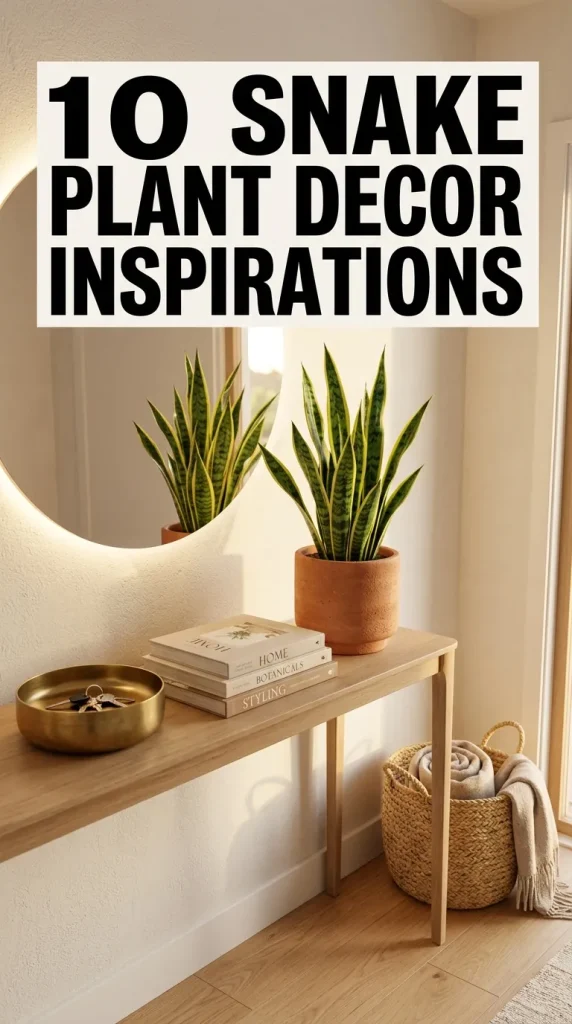
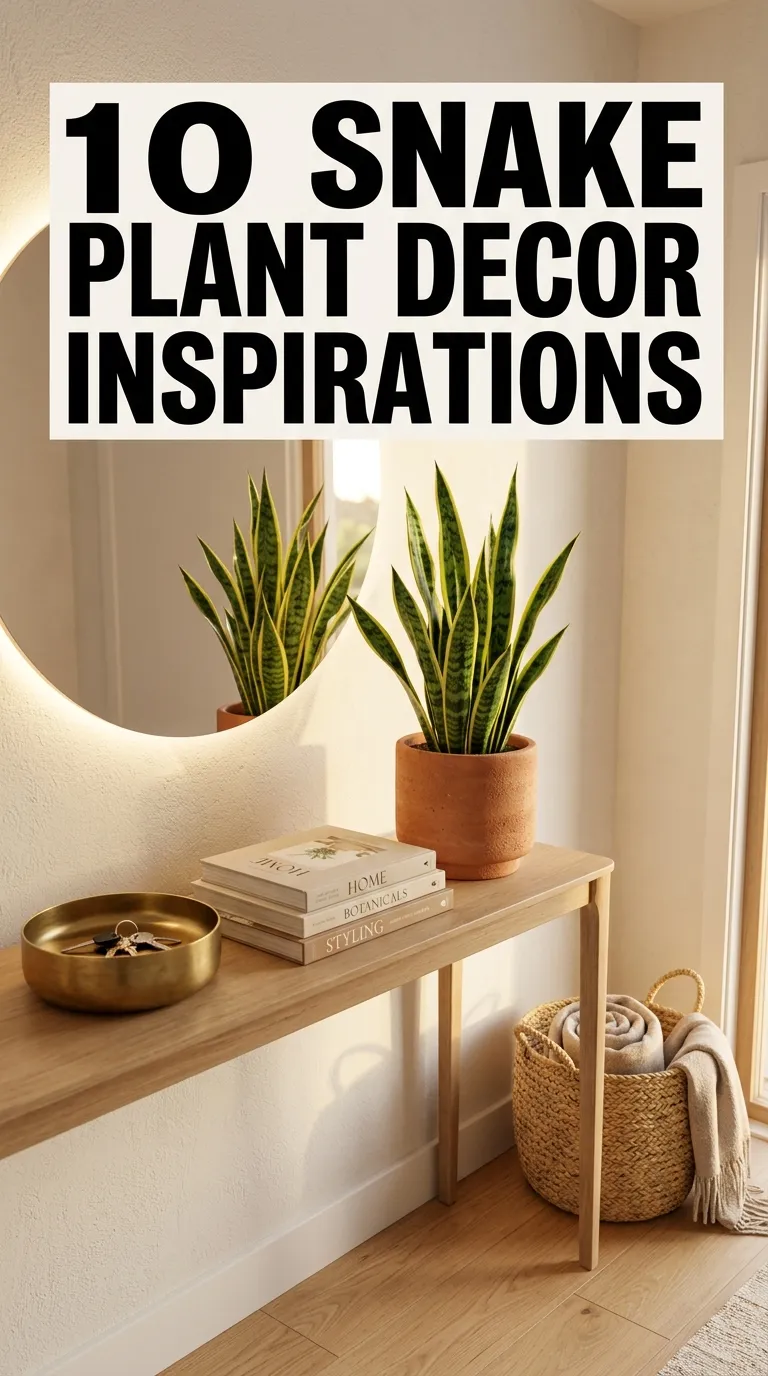
Integrating botanical accents into residential communal areas serves as an effective strategy for enhancing interior air quality, introducing organic textures, and establishing a tranquil living atmosphere. Among indoor tropical foliage varieties, Sansevieria trifasciata, commonly known as the snake plant, stands out as an exceptionally adaptable architectural plant ideal for modern home decor configurations. This comprehensive DIY layout tutorial delivers ten distinct, highly practical design ideas to help homeowners elevate their living room arrangements through intentional botanical placement. Readers will learn the essential principles of spatial orientation, container selection, lighting alignment, and structural height management to build visually balanced botanical displays. Implementing a well-organized creative project improves overall living room organization, masks common architectural flaws, fills empty corner voids, and introduces a vibrant green element that complements various furniture styles. Each featured concept provides reliable step-by-step guidance on choosing compatible plant varieties, selecting stable soil mediums, managing watering schedules, and pairing leaf structures with decorative pots. By controlling the arrangement and placement details yourself, you gain complete authority over the scale, color balance, and spatial flow of your indoor garden, turning simple houseplants into an artfully curated design feature.
Why Architectural Snake Plant Displays Define Modern Interior Design Trends
The prominent role of Sansevieria arrangements within contemporary Pinterest ideas is driven by their exceptional combination of practical household value, low-maintenance hardiness, and timeless design relevance. Modern interior styling has shifted away from overly complex, high-maintenance indoor gardens, moving instead toward a minimalist style that values clean structural lines and resilient foliage. These botanical design concepts carry massive visual inspiration because they allow individuals to execute an easy project using accessible materials rather than purchasing expensive decorative sculptures. From an architectural perspective, the upright, sword-like leaves of snake plants create an immediate sense of height, structural permanence, and natural color contrast against neutral walls. This specific type of living decoration serves as an exceptionally accessible entry point for beginners, breaking down basic repotting, group arrangement, and lighting placement into clear, manageable steps. These trending ideas demonstrate that thoughtful planning can turn a simple pot into a highly curated statement piece, offering budget ideas that produce premium, lasting results across changing seasonal themes.
Technical Botanical Sourcing and Potting Site Preparation
Achieving a healthy, long-lasting plant display requires systematic material preparation and a well-organized workspace before arranging pots or handling potting soils. The primary supplies for these living room transformations include healthy Sansevieria specimens, porous ceramic or terra cotta planters, fast-draining succulent soil mixes, coarse perlite, and decorative river pebbles. Essential tools for these installations include heavy-duty gardening gloves, a hand trowel, a soil scoop, a long-spout watering can, and a soft microfiber cloth for leaf cleaning. To prepare the workspace safely, clear a flat surface and cover it completely with a durable plastic tarp to catch stray soil particles or water spills. Thoroughly inspect all plant roots to ensure they are free of rot, and verify that every chosen planter features adequate drainage holes at the base. Proper planning involves evaluating your living room’s natural light levels and mapping out floor space to ensure the upcoming plant configurations sit securely without obstructing daily household foot traffic.
Idea 1: Architectural Corner Pillar in Elevated Stoneware
Step-by-Step Guide
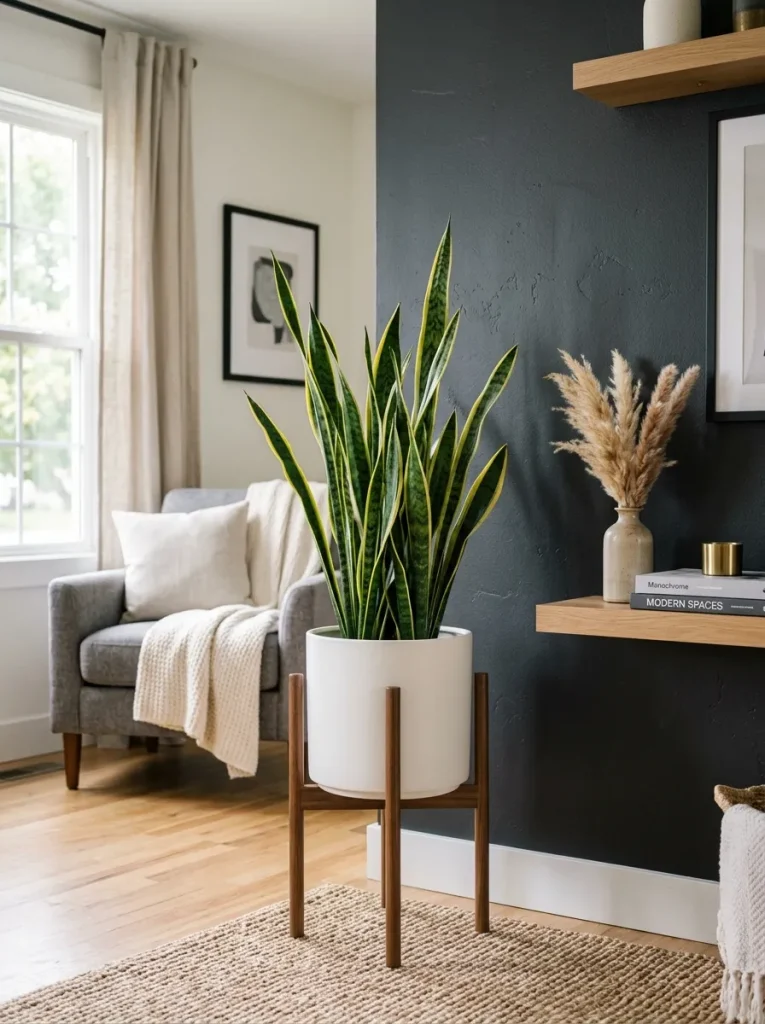
The architectural corner pillar layout establishes a sophisticated, space-saving focal point by utilizing an unused living room corner to display a tall, variegated Sansevieria Laurentii. This concept relies on placing a mature snake plant inside a heavy, matte-white cylindrical ceramic pot elevated on a mid-century wooden tripod stand. The vertical leaf structure extends upward into empty corner voids, drawing the eye toward the ceiling and making low-profile living rooms feel taller and more spacious. The rich yellow leaf borders provide a bright color contrast against dark accent walls, while the clean wooden stand coordinates seamlessly with hardwood floors and natural timber furniture.
The execution process begins by selecting a healthy, three-foot-tall Sansevieria Laurentii specimen with firm, upright leaves showing bright yellow margin striping. Prepare a twelve-inch cylindrical stoneware planter by lining the bottom floor with a one-inch layer of coarse lava rock to promote rapid drainage. Fill the planter halfway with a lightweight succulent potting mix composed of equal parts peat moss, coarse sand, and perlite. Gently remove the snake plant from its original nursery nursery container, loosening the dense root ball slightly before centering it inside the stoneware pot. Fill the remaining space with soil, tamping it down firmly around the root crown, and set the finished planter into a solid walnut tripod stand positioned securely in your chosen corner.
Idea 2: Minimalist Triple-Tiered Pedestal Cluster
How to Create
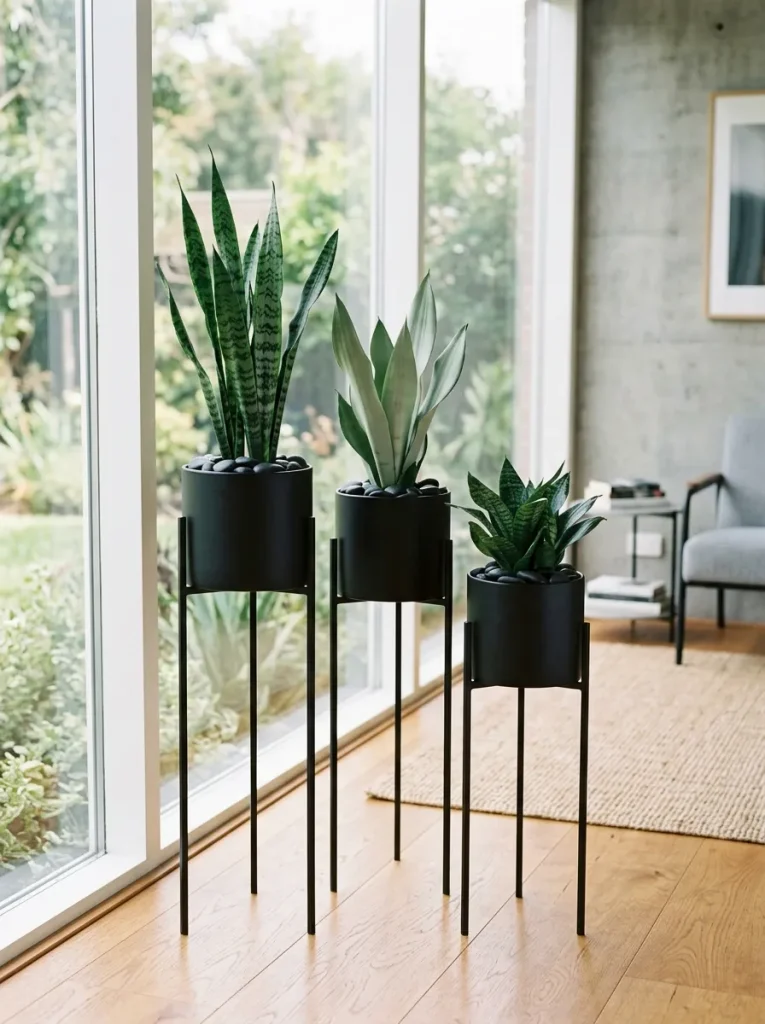
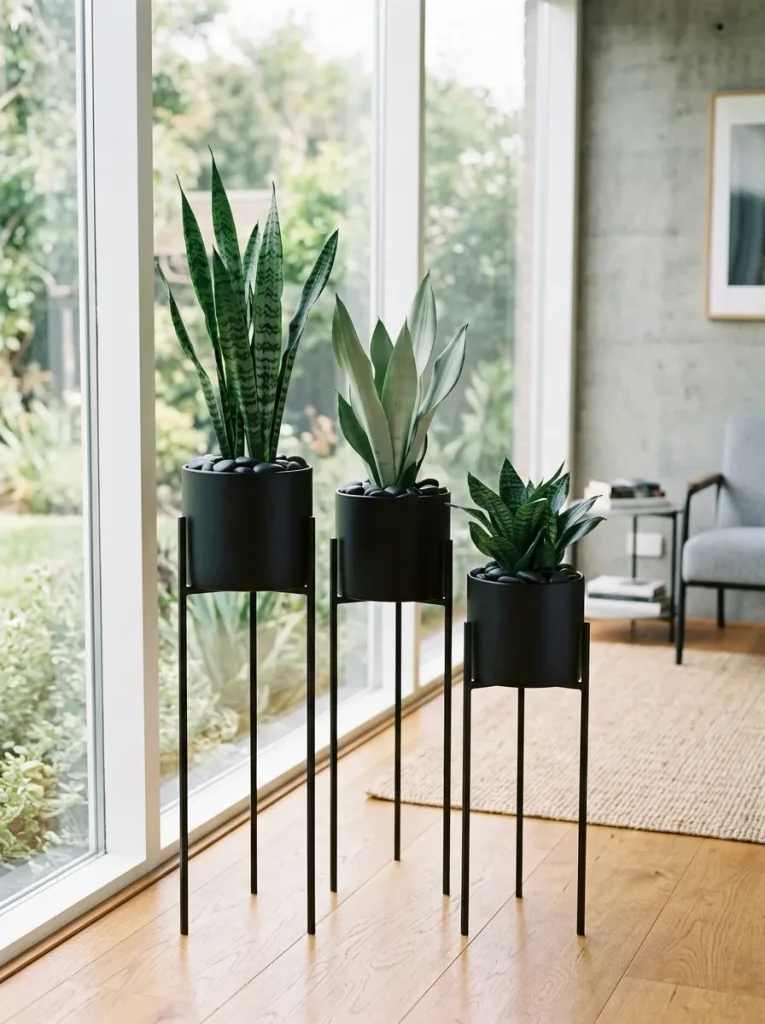
The minimalist triple-tiered pedestal cluster introduces a dynamic geometric arrangement to open living room walls, grouping three different Sansevieria varieties at varying height levels. This design features three slender matte-black metal pedestals measuring twelve, twenty-four, and thirty-six inches tall, arranged in a tight triangular formation near a window frame. Each pedestal supports a matching black ceramic planter holding a distinct snake plant cultivar, such as the tall Zeylanica, the wide Moonshine, and the compact Birds Nest. The varied leaf textures and silver-green color values create a rich botanical sculpture that adds physical depth and elegance to modern seating areas.
To build this tiered botanical cluster, position your three metal pedestals in a tight triangular grouping alongside an interior wall that receives indirect sunlight. Select three matching ten-inch ceramic pots fitted with built-in drainage trays, ensuring the bottom bases fit securely on top of the metal pedestal plates. Pot a dark green striped Zeylanica variety into the tallest planter to serve as the vertical anchor of the group. Fill the mid-sized planter with a pale, silver-green Moonshine cultivar, and place a short, rosette-shaped Hahnii variety inside the lowest planter. Top the soil surface of all three containers with a clean, uniform layer of polished black river stones to create a sleek, cohesive finish across the entire arrangement.
Idea 3: The Low-Profile Credenza Trough Divider
Execution Process
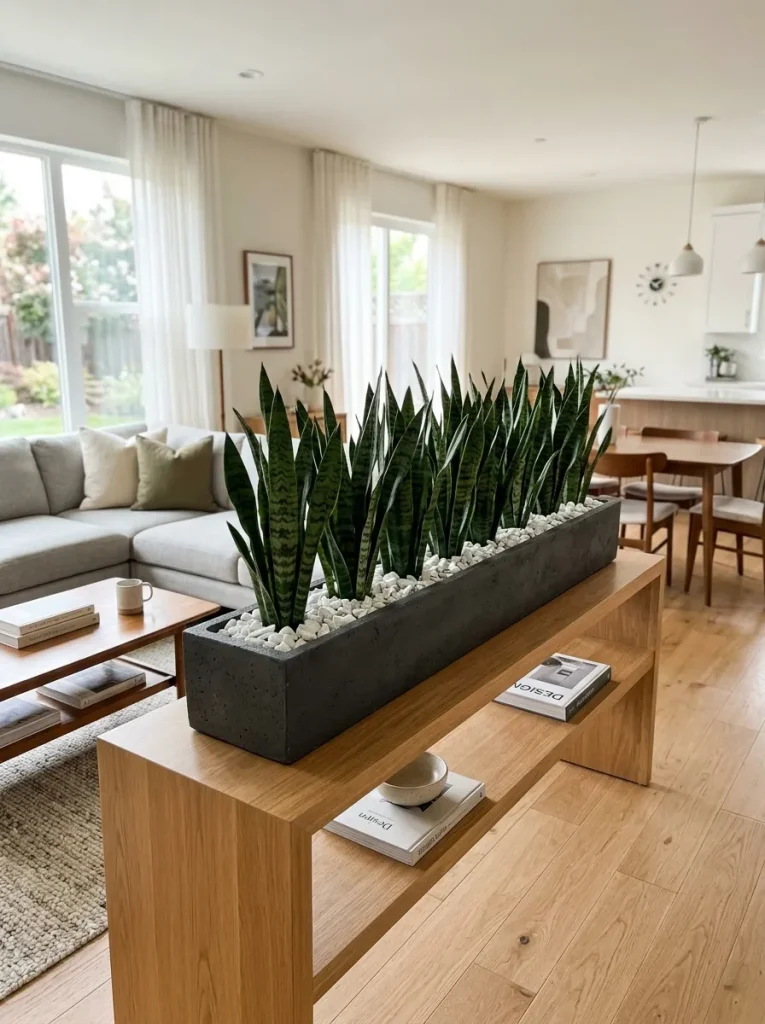
The low-profile credenza trough divider offers a practical, organized botanical solution designed to separate open-concept living room zones without blocking sightlines or natural room light. This design uses a long, narrow rectangular planter trough crafted from dark charcoal concrete or fiber-cement material, positioned along the top surface of a media console or sofa table. The trough is densely planted with a uniform row of medium-height Sansevieria trifasciata, creating a natural green privacy screen between living and dining areas. The clean, straight leaf blades establish an architectural boundary that looks intentional, neat, and visually restful.
The installation method starts by measuring the top surface dimensions of your console table to select a trough planter that leaves at least two inches of open border on all sides. Line the interior bottom of the long fiber-cement trough with a sheet of fine mesh screen to prevent soil loss through the drainage holes. Pour a two-inch layer of porous potting mix along the bottom, creating a level planting bed for multiple individual snake plant divisions. Arrange five to seven equal-sized Sansevieria plants in a straight, continuous line inside the trough, ensuring their root crowns sit at a uniform height. Fill around the roots with fast-draining cactus soil, press the medium firm, and top the display with white marble chips to complete the clean modern look.
Idea 4: Industrial Concrete Barrel on Raw Iron Hardware
Setup Method
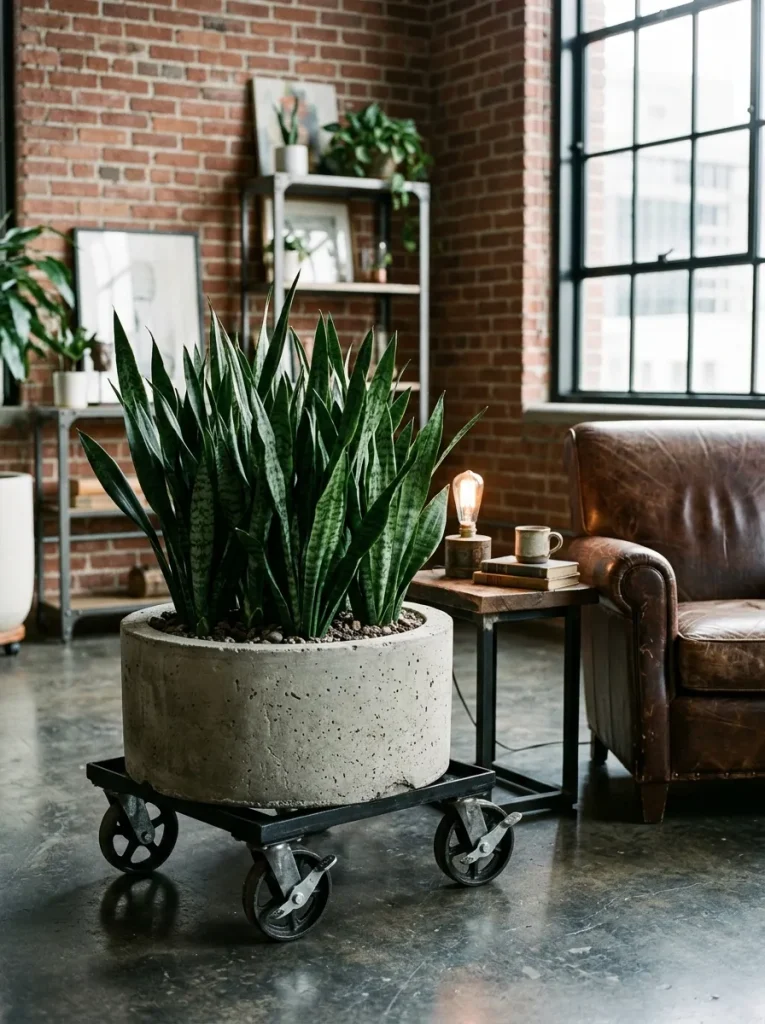
The industrial concrete barrel configuration combines rugged masonry textures with structural green foliage to build a strong, modern focal point next to seating areas or fireplaces. This concept features a thick-walled, round concrete planter sitting directly on a heavy-duty black iron rolling plant dolly fitted with locking casters. The raw grey stone surface of the container brings a grounded, industrial feel to the living room that contrasts beautifully with soft sofa fabrics and woven area rugs. Planting a dense, full cluster of dark green Sansevieria Zeylanica inside the barrel creates a robust botanical accent that handles ambient indoor conditions with ease.
The setup method starts by placing a industrial-grade metal caster dolly on a flat work floor, locking the wheels to prevent movement during assembly. Set a heavy, sixteen-inch round concrete barrel planter centered on top of the dolly plate, verifying that the central drainage hole aligns clearly. Cover the bottom hole with a terracotta pot shard, then add a three-inch foundation layer of coarse expanded clay pebbles for superior moisture management. Mix coarse builder’s sand into a standard indoor potting soil, filling the barrel two-thirds full before inserting a large, multi-stemmed Zeylanica specimen. Pack the soil medium firmly around the base of the plant, water lightly, and unlock the casters to roll the heavy arrangement effortlessly into its designated living room spot.
Idea 5: Geometric Wall-Mounted Pocket Planters
How to Make
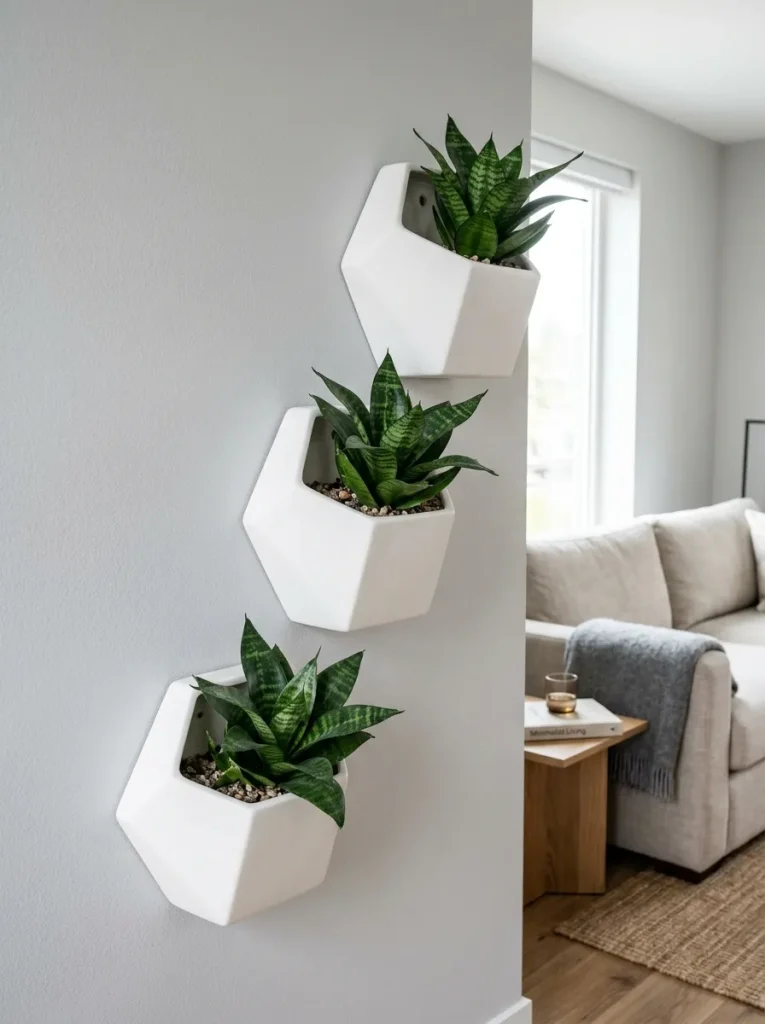
The geometric wall-mounted pocket planter system transforms vertical living room walls into an active art display by floating small Sansevieria varieties directly on the drywall. This design uses a series of three hexagonal ceramic wall pockets finished in a crisp matte-white coat, mounted in a diagonal row near an entryway or gallery wall. Each ceramic pocket houses a compact, dwarf snake plant variety, such as Sansevieria Hahnii or Golden Birds Nest, whose stiff leaves fan outward gracefully from the wall surface. This space-saving creative project is ideal for small apartments, adding a vibrant green accent without taking up valuable floor space.
The creation process begins by selecting a clear section of living room wall that receives bright, indirect ambient light throughout the afternoon. Use a stud finder, a laser level, and a pencil to mark three precise mounting points arranged in an ascending diagonal line spaced ten inches apart. Install heavy-duty drywall anchors and steel screws at the marked points, hanging the ceramic hexagonal wall pockets securely against the wall surface. Plant individual dwarf Sansevieria Hahnii specimens inside small plastic liner pots filled with a lightweight, perlite-heavy soil mix. Insert the potted liner containers directly inside the mounted ceramic wall pockets, ensuring the outer edges sit flush and hidden from view.
Idea 6: The Rustic Woven Seagrass Floor Basket
Step-by-Step Guide
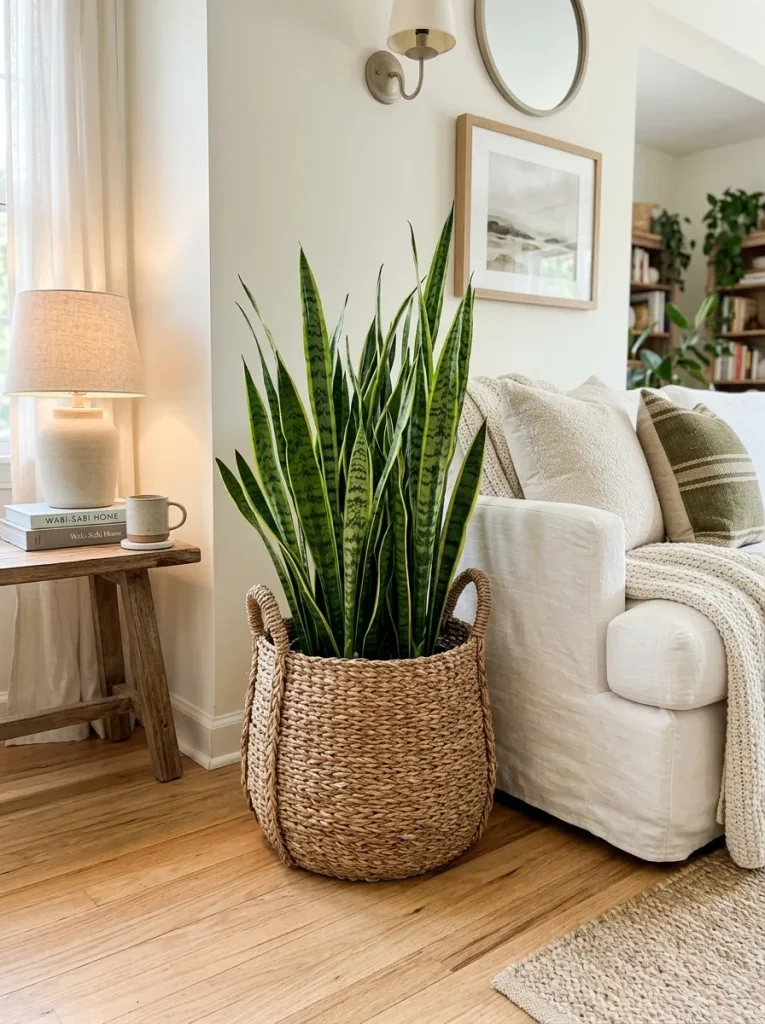
The rustic woven seagrass floor basket design introduces a soft, organic texture to living room arrangements, balancing the sharp, linear leaf blades of snake plants with natural woven fibers. This concept places a tall, multi-leaf Sansevieria inside a sturdy, double-woven jute or seagrass basket fitted with a waterproof interior plastic liner tray. The warm tan and brown tones of the natural basket fibers bring an inviting, cozy feel to the room that pairs beautifully with linen drapes and leather armchairs. This approach is exceptionally practical for fast home decor updates, as the decorative basket conceals basic plastic nursery pots without requiring immediate, messy repotting.
To execute this project step by step, source a heavy-duty, tightly woven seagrass basket measuring at least fourteen inches in diameter and depth. Place a thick, heavy-duty clear plastic saucer directly into the bottom interior floor of the basket to catch any excess irrigation runoff. Select a healthy, well-established Sansevieria in a standard twelve-inch plastic nursery pot, ensuring the soil surface sits two inches below the basket rim. Lower the potted plant directly into the basket, centering it on top of the internal plastic saucer to guarantee stability. Fill the empty air gap between the plastic nursery pot and the woven basket walls with natural preserved moss to conceal the plastic rim completely.
Idea 7: Terracotta Cylinder Grouping in Organic Sand Tones
Setup Method
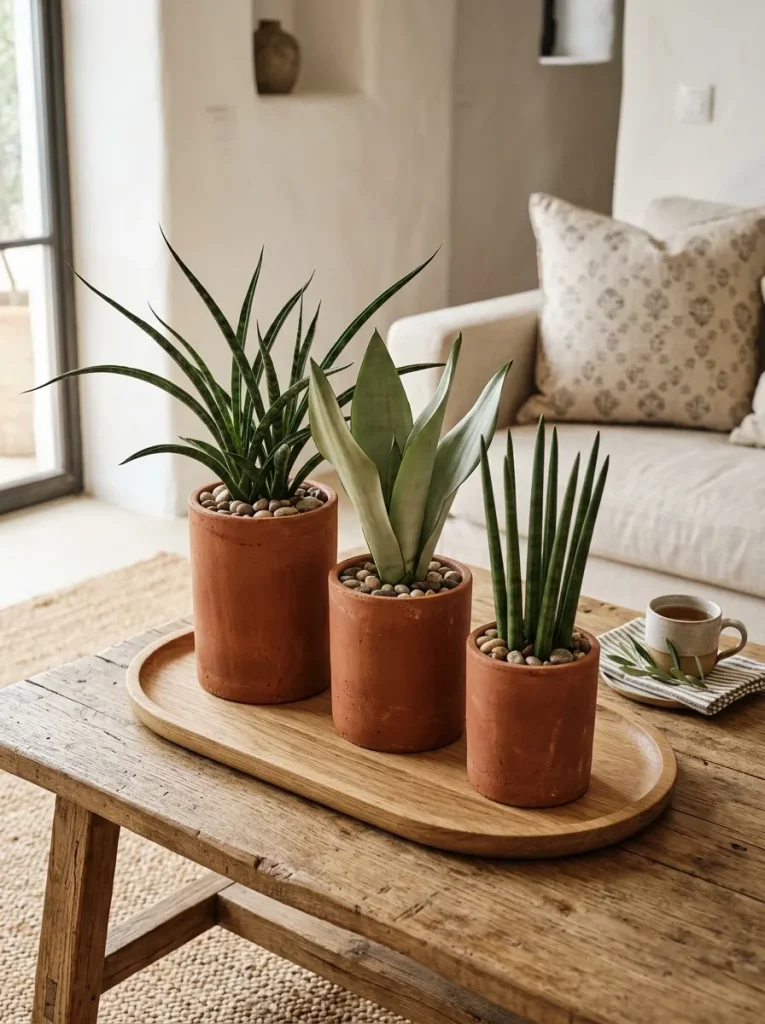
The terracotta cylinder grouping brings a warm, Mediterranean-inspired color palette to living room display tables, using raw, unglazed clay pots to hold distinct snake plant shapes. This design arranges three varying sizes of straight-sided terracotta cylinders on a large wooden tray, featuring shades of natural ochre, warm rust, and muted beige. The porous nature of raw terracotta allows air and moisture to pass through the container walls naturally, creating an ideal, healthy root environment for drought-tolerant Sansevieria varieties. The contrasting green leaves and warm clay tones generate an inviting aesthetic that grounds wooden coffee tables or sideboards.
The setup method starts by selecting three unglazed terracotta cylinder pots measuring six, eight, and ten inches in diameter, each featuring a matching drainage saucer. Soak the raw terracotta pots in clean water for fifteen minutes prior to planting to prevent the porous clay from pulling moisture away from the fresh soil. Fill each pot with a high-drainage cactus potting mix enriched with coarse pumice and crushed granite chips. Plant a tall Sansevieria Fernwood in the ten-inch cylinder, a wide Moonshine specimen in the eight-inch container, and a small Cylindrica rosette in the six-inch pot. Arrange the three planted terracotta cylinders together on a wide, low-profile oval oak tray, placing the completed display in the center of your coffee table.
Idea 8: The Floating Timber Wall Shelf Display
Execution Process
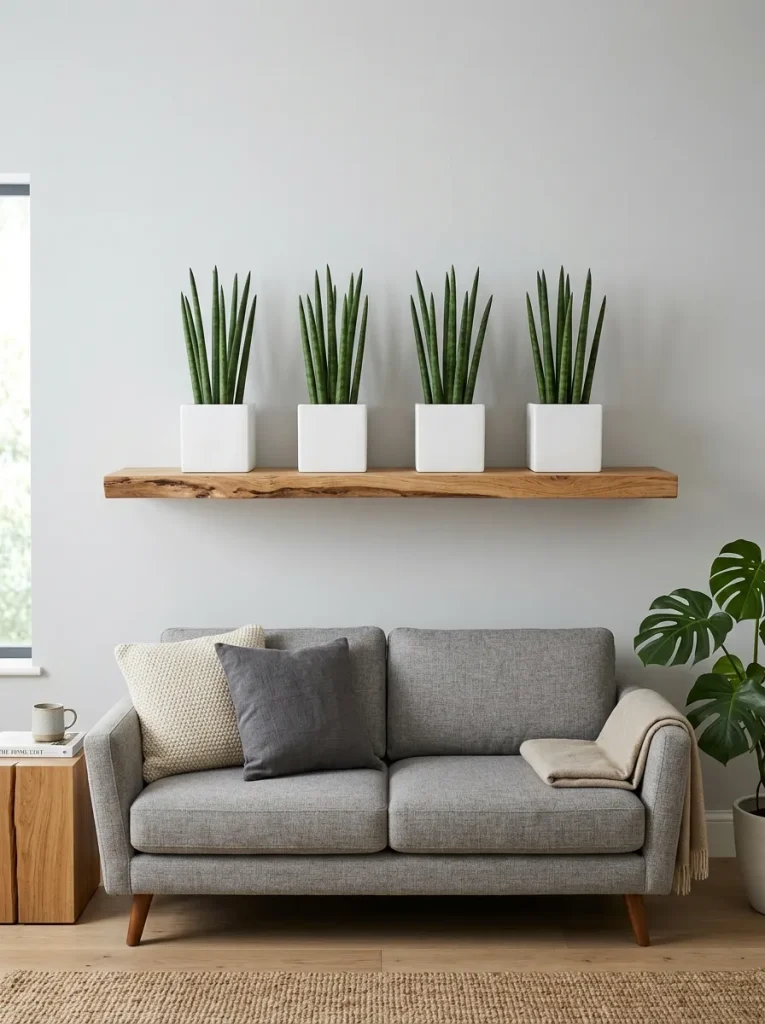
The floating timber wall shelf display provides a clean, organized botanical presentation that elevates small snake plants onto solid wood ledges mounted above living room sofas or media units. This concept features a thick, live-edge oak or walnut floating shelf secured with hidden steel brackets, supporting a row of small, uniform Sansevieria varieties. The dark, sword-like foliage provides a striking linear contrast against light-colored walls, turning a plain horizontal shelf into a vibrant architectural feature. This low-maintenance setup is ideal for households with curious pets, keeping delicate foliage elevated safely out of reach while enhancing room decor.
The execution process begins by using an electronic stud finder to locate two solid wood studs on your living room wall above the sofa. Mount a heavy-duty concealed steel shelf bracket to the wall studs using three-inch lag screws, verifying that the support rod sits perfectly level. Slide a pre-drilled, two-inch-thick live-edge oak floating shelf over the bracket rods, pushing it flat against the drywall until locked in place. Select four small, four-inch white ceramic cube pots fitted with internal drainage saucers and fill them with a light succulent soil. Plant small Sansevieria Cylindrica spear varieties inside each white cube pot, pressing the soil firm around the upright green spears. Space the four planted ceramic cubes evenly across the length of the floating wooden shelf to create a clean, balanced botanical display.
Idea 9: Mid-Century Brass Drum Planter Focal Point
How to Make
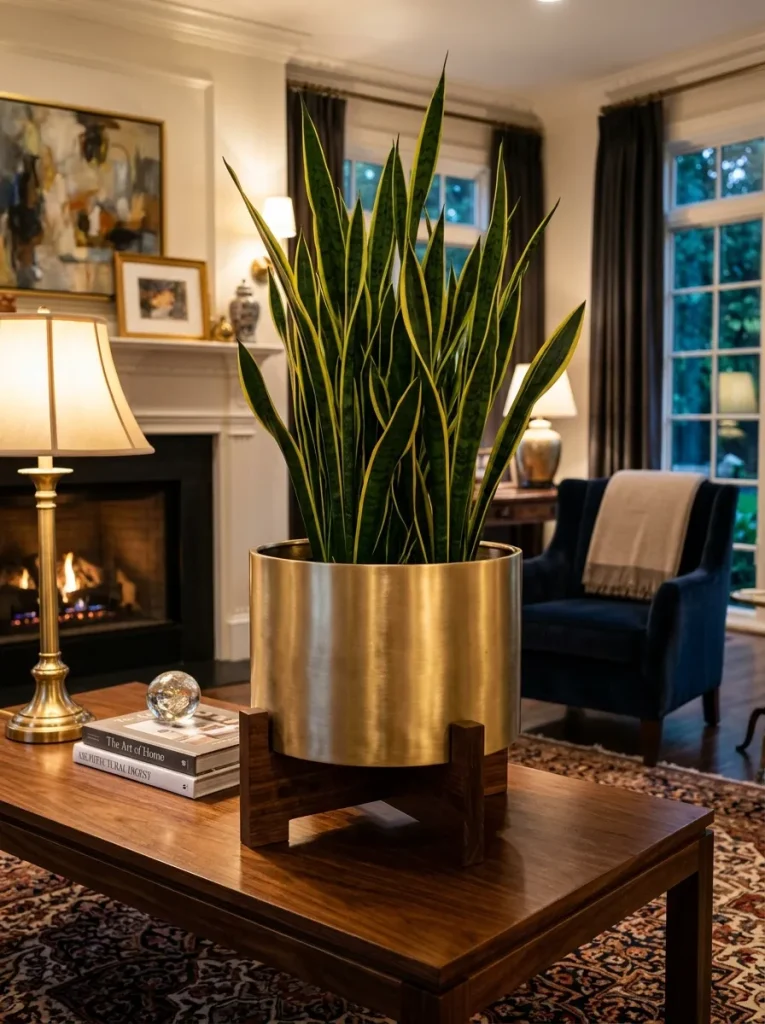
The mid-century brass drum planter design adds a touch of warm metallic shine and luxury to living room spaces, housing a tall, dramatic Sansevieria specimen in a polished brass vessel. This concept uses a wide, drum-shaped metal planter with a warm brushed brass or antique gold finish, resting on a low, cross-braced dark wooden base. The reflective metallic surface catches warm ambient lamplight in the evening, casting a soft glow that highlights the deep green patterns of the leaves. This striking arrangement acts as a primary sculptural element, bringing a refined, high-end feel to formal seating areas.
To bring this metallic centerpiece to life, select a sixteen-inch wide brushed brass drum planter fitted with a solid interior lining to prevent metal corrosion from wet soil. Line the interior base of the brass drum with a heavy plastic saucer, setting a large, pre-potted fourteen-inch Sansevieria Laurentii directly inside the saucer. Ensure the top edge of the nursery pot sits one inch below the rim of the brass drum for a clean visual presentation. Fill the open space surrounding the inner pot with dark preserved sheet moss or decorative black river pebbles to hide the plastic container. Place the brass drum onto a short, dark-stained hardwood cross base, positioning the complete assembly next to a main living room armchair or media cabinet.
Idea 10: The Biophilic Room-Dividing Planter Screen
Step-by-Step Guide
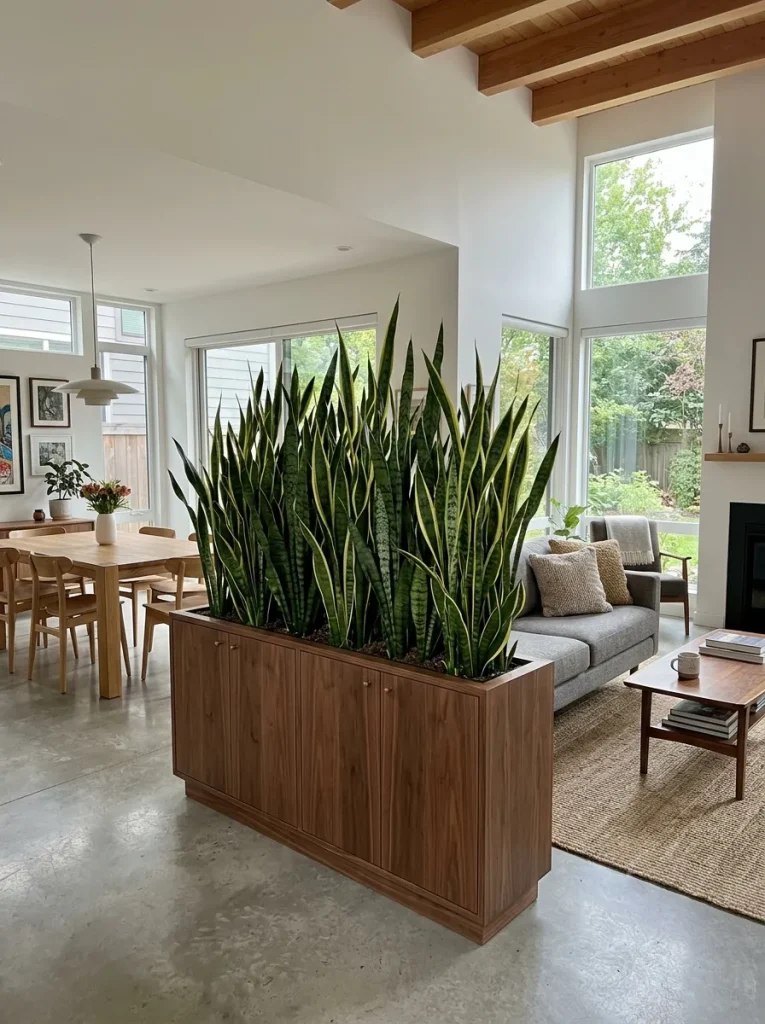
The biophilic room-dividing planter screen provides an impressive, functional living barrier designed to partition large open-concept living rooms into distinct, cozy functional zones. This style uses a custom-built, waist-high wooden cabinet planter that stretches four feet in length, filled with a dense, continuous wall of tall Sansevieria varieties. The thick, vertical green leaves create a partial visual screen that filters sightlines while allowing natural sunlight to pass freely across the room. This sturdy installation is highly practical for multi-use living spaces, providing a natural acoustic dampener that absorbs room echoes while elevating home organization.
The setup method starts by constructing or purchasing a waist-high rectangular wooden cabinet planter measuring forty-eight inches long, twelve inches wide, and thirty inches tall. Line the internal wooden trough completely with a heavy, twenty-mil thick EPDM pond liner, securing the edges along the upper rim with stainless steel staples. Fill the lined trough with a six-inch base layer of lightweight perlite and expanded clay granules to establish a large drainage reservoir. Add a rich, fast-draining potting mixture over the drainage layer, filling the trough to within three inches of the top rim. Plant a dense, alternating row of tall Sansevieria Laurentii and Zeylanica plants across the entire length of the trough, packing the soil firmly around the roots to keep the tall leaves standing perfectly upright.
Common Beginner Mistakes and How to Avoid Them
When managing indoor Sansevieria arrangements, identifying and preventing common plant care and placement errors ensures a vibrant, long-lasting botanical display that thrives for years. The most frequent and damaging mistake is overwatering, which quickly leads to root rot, mushy leaf bases, and foul odors inside decorative planters. Snake plants are drought-tolerant succulents that store water in their thick leaves; always allow the soil medium to dry out completely between waterings, reducing water frequency significantly during winter months. Another common pitfall is planting Sansevieria directly into decorative containers that lack functional drainage holes without adding a proper gravel drainage layer or inner plastic liner. Standing water trapped at the bottom of a sealed pot suffocates plant roots, causing the upright leaves to turn yellow, flop over, and die. Always use pots with bottom drainage holes, or keep the plant inside a standard plastic nursery pot placed over a saucer inside the decorative container. Finally, placing snake plants in complete, dark corners without any ambient light source will stunt growth and cause leaf color patterns to fade over time; ensure your displays receive at least low-to-moderate indirect light.
Practical Botanical Care Solutions for Common Challenges
| Plant Care Challenge | Recommended Practical Solution | Expected Botanical Outcome |
|---|---|---|
| Leaves leaning or falling over | Stake the tall leaves temporarily with slender bamboo rods and move the pot to a location with brighter indirect sunlight | Leaves regain internal cell pressure and stand completely upright without artificial support |
| Wrinkled, puckered leaf surfaces | Give the plant a thorough, deep watering until liquid drains freely from the base of the container | Leaves absorb moisture, plump up, and return to a smooth, firm surface texture within forty-eight hours |
| Yellowing or mushy leaf bases | Unpot the plant immediately, trim away soft rotten roots with sterile shears, and repot in fresh, dry cactus soil | Stops the spread of fungal root rot and allows healthy rhizomes to produce new, vigorous leaf shoots |
| Dust buildup on broad leaf blades | Wipe the leaf surfaces gently with a damp microfiber cloth moistened with warm water and a drop of mild soap | Restores natural leaf shine, clears stomata pores, and improves the plant’s ability to photosynthesize light |
Styling, Presentation, and Lighting Organization Ideas
Presenting your finished Sansevieria displays beautifully involves styling surrounding furniture and aligning artificial light sources to complement your new botanical features. Install low-profile, directional LED uplights on the floor behind large floor planters, casting dramatic leaf shadows upward onto blank living room walls during the evening. Coordinate the material finishes of your plant pots with existing room accents, matching matte-black planters with black metal window frames or brass pots with warm lighting hardware. Group small potted Sansevieria cultivars alongside hardbound books, natural wood bowls, and ceramic art pieces on coffee tables to create a balanced, textured vignette. Maintain clean pathways around large floor planters, ensuring tall leaf tips do not catch on clothing or interfere with daily walking routes through the living room. Keeping your plant displays clean, dust-free, and well-lit ensures your custom botanical creation remains a striking visual focus within your home interior.
Strategic Project Budget and Time Planning
| Project Management Phase | Key Action Items & Milestone Tasks | Estimated Time Investment | Allocated Budget Requirements |
|---|---|---|---|
| Phase 1: Botanical Sourcing | Select healthy Sansevieria plants, buy decorative planters with drainage, and purchase cactus soil mix | 1 hour total planning time | Moderate cost depending on plant size and planter materials |
| Phase 2: Site Preparation | Clear the assembly floor, lay down a protective plastic tarp, and line planter bases with drainage rocks | 30 minutes active prep work | Low cost for basic drainage pebbles and plastic floor tarps |
| Phase 3: Active Potting | Mix soil mediums, pot plants securely into decorative containers, and top with river stones or moss | 1 hour active assembly | Economical investment for quality potting soils and surface toppings |
| Phase 4: Placement & Styling | Position planters in living room locations, wipe leaf dust, and adjust directional accent lighting | 30 minutes detail finishing | Minimal cost for microfiber wipes and directional floor lights |
Creative Expansion and Advanced Botanical Design Inspiration
Once you feel completely comfortable with basic Sansevieria repotting, group styling, and lighting alignment techniques, you can take your interior gardening skills further by exploring advanced botanical projects. Consider building a custom integrated LED plant light system hidden beneath floating shelves, allowing you to grow dense snake plant displays in windowless living room nooks. Experiment with advanced propagation techniques, cutting mature Sansevieria leaves into three-inch horizontal sections and rooting them in water or coarse sand to generate dozens of new starter plants for future projects. You can also upgrade standard wooden planter boxes by applying custom geometric wood molding trims or hand-stenciling subtle bohemian patterns onto plain terracotta pots before planting. For an impressive modern touch, explore creating a large-scale indoor living wall frame fitted with automated drip irrigation channels, housing dozens of small Sansevieria cultivars in a vertical green tapestry. These creative adjustments turn simple houseplant care into an engaging interior design hobby, producing a beautiful, air-purifying environment that adapts effortlessly to your home over time.