Enhancing the window treatments in your home is a powerful way to elevate interior design, control natural lighting, and introduce rich textures into your living spaces. Standard, mass-produced drapes often fail to capture the unique personality of a room, whereas customized curtains act as a central aesthetic anchor that unifies furniture, wall colors, and flooring. This comprehensive guide explores ten highly creative ideas for transforming ordinary fabrics and unconventional materials into stunning, functional, and visually balanced window displays. Readers will learn how to analyze textile weights, execute precise measuring techniques, select appropriate hanging hardware, and drape fabrics to optimize light filtration and privacy. Whether your goal is to refresh a small kitchen window or design dramatic, floor-to-ceiling panels for an expansive living room, these actionable design strategies offer high-quality alternatives to expensive custom drapery services. Understanding the core principles of fabric drop, hem structural integrity, and color theory guarantees that your completed installation remains physically secure and visually striking. By focusing on reliable construction processes and clear visual styles, this tutorial provides the precise guidance needed to execute a successful home improvement project that instantly upgrades your interior living environment.
The growing demand for personalized home styling options highlights a significant shift toward conscious interior design, creative textile reuse, and customized room layouts. On major online design boards and social media platforms, homeowners actively seek out functional Pinterest ideas that balance visual appeal with practical utility, making custom window treatments one of the most trending ideas in modern home decor. This project type delivers immediate practical value because it allows you to control the exact level of light filtration, thermal insulation, and visual privacy in your rooms without the high cost of custom manufacturing. The strong DIY appeal stems from the widespread availability of innovative, heavy-duty fabrics, rustic hardware, and no-sew bonding materials that simplify domestic production. Beginner friendly assembly methods ensure that individuals with minimal sewing or crafting experience can still achieve a professional, polished finish on their first attempt. By utilizing standard household tools and straightforward installation processes, anyone can upgrade their window aesthetic to reflect a clean modern design or a sleek minimalist style. This high accessibility allows residents to personalize their environment on a modest budget.
Thorough material selection and careful structural planning are critical requirements for achieving an enduring, professionally styled finish on any customized drapery project. Before initiating your creative project, you must measure your window frames accurately, documenting the total height from the curtain rod to the floor, the frame width, and the required structural clearance on both sides of the window. The primary materials required will vary based on your selected aesthetic, but generally include linen utility fabrics, heavy-duty cotton duck canvas, lightweight drop cloths, natural leather straps, copper piping, and double-sided fusible bonding tape. Essential tools for these upgrades include a reliable sewing machine or iron-on bonding tools, a rotary cutter with a self-healing mat, heavy-duty fabric shears, a spirit level, a measuring tape, and a cordless drill with drywall anchors. Planning considerations must prioritize structural integrity, ensuring that all curtain rods are anchored securely to wall studs to prevent sagging under the heavy weight of the draped fabric. Gathering all your materials and clearing a wide, flat work surface beforehand prevents cutting alignment errors and ensures a smooth assembly process.
Idea 1: Industrial Copper Pipe and Raw Linen Drapes
Step-by-Step Guide
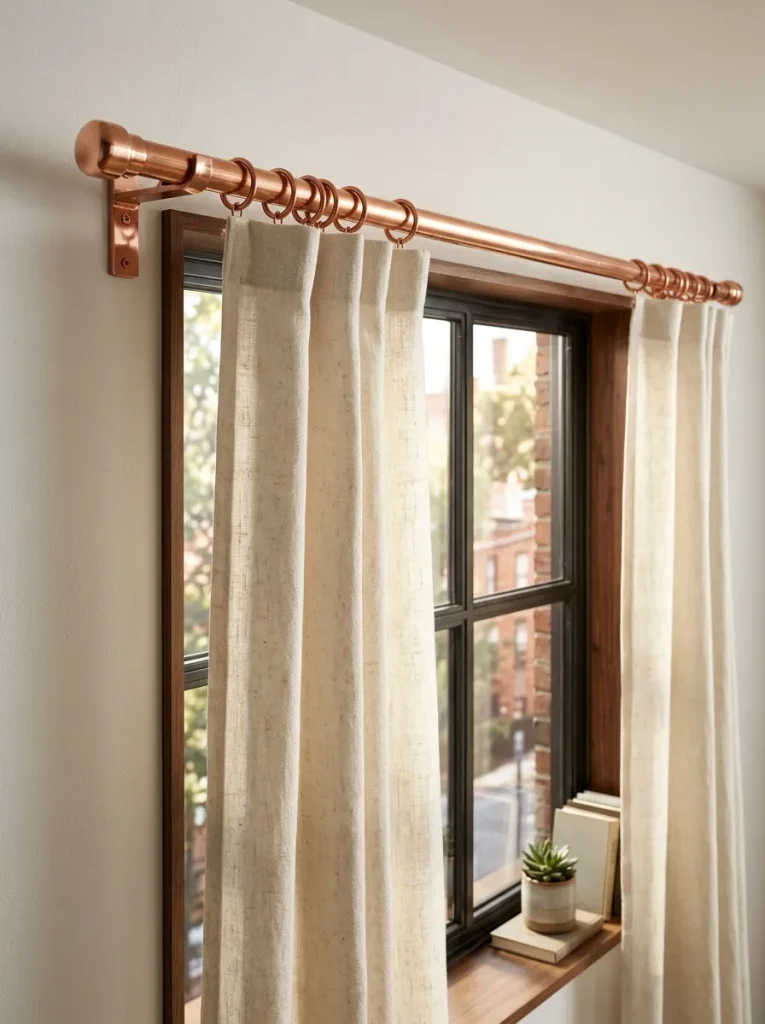
The industrial copper pipe and raw linen draping system combines sleek metallic hardware with heavily textured organic textiles to create a striking contemporary window display. This design concept relies on utilizing rigid, polished copper plumbing pipes in place of standard commercial curtain rods, establishing a beautiful warm metallic accent that pairs naturally with neutral linen fabric. The visual presentation focuses on the contrast between the industrial, structured metal and the soft, organic drape of unbleached flax or linen panels, which diffuse natural sunlight into a soft, warm glow. Because the copper pipe is highly durable and structurally stable, it easily supports the heavy weight of full-length drapery panels without bowing or sagging over long spans. This specific technique is exceptionally effective for adding a refined, modern design element to living rooms, dining spaces, or bedrooms that feature minimalist style furnishings.
To execute this clean hardware installation, begin by purchasing a length of half-inch rigid copper pipe from a local hardware supplier, cutting it to extend six inches beyond each side of your window frame. Polish the metal surface thoroughly using fine-grit steel wool to remove any manufacturing stamps, oil residues, or dull tarnish, and apply a thin coat of clear protective lacquer to prevent oxidation. Secure two matching copper plumbing split-ring hangers or copper tee-fittings directly into your wall studs using heavy-duty drywall screws and a level to ensure a perfectly straight rod placement. Thread your raw linen panels directly onto the polished copper rod using wide, pre-sewn fabric rod pockets or minimalist metallic drapery clips. Slide the completed pipe assembly into the mounted wall brackets, securing the pipe ends with copper cap fittings to act as sleek, modern finials.