Glass canning jars remain one of the most versatile and durable decorative staples in modern event planning and residential styling. Transforming classic glass canning containers into refined table displays allows homeowners, hosts, and event stylists to achieve an elevated aesthetic without significant financial expense. This detailed long-form guide presents ten distinct, professional centerpiece concepts centered on the adaptability of standard glass jars. Readers will learn the exact structural principles, finishing treatments, and spatial proportions required to convert basic utility containers into sophisticated focal points for dining rooms, weddings, and seasonal tablescapes. Each project balances texture, light transmission, and botanical mass, proving that careful composition elevates simple glass vessels into gallery-worthy decor. By mastering basic techniques such as mineral paint distressing, exterior cord wrapping, optical liquid layering, and mechanical hanging, anyone can craft enduring decorative arrangements. Whether styling an intimate family meal or manufacturing dozens of matching units for large receptions, these instructions provide reliable, repeatable techniques. The following sections explore essential tool preparations, step-by-step assembly guides, styling strategies, and preventative measures designed to deliver cohesive results across any interior setting.
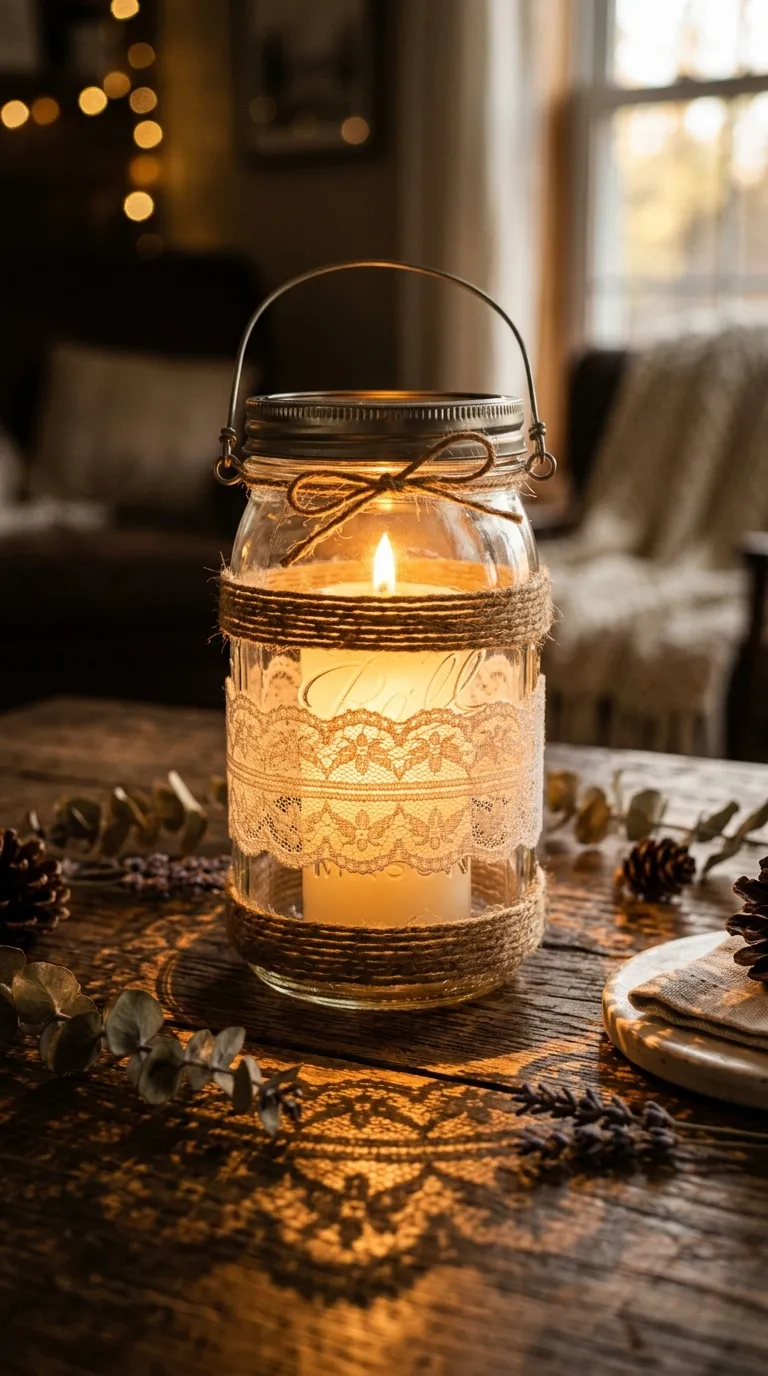
Why This Idea Is Trending or Useful
The enduring popularity of glass jar centerpieces across modern design boards stems from their modular design, structural durability, and historical familiarity. Contemporary interior design emphasizes authentic textures, honest materials, and functional simplicity, moving away from overly ornate or mass-produced commercial decor. Mason jars provide a durable, heat-resistant glass foundation that accommodates water, dry fillers, hot wax, and electrical wiring with equal reliability. For beginners, they offer a low-stakes platform for learning foundational floral arranging, glass painting, and surface embellishment without expensive specialty containers. Their standardized dimensions—typically available in regular or wide-mouth configurations across pint, quart, and half-gallon sizes—make planning symmetrical arrangements straightforward. Furthermore, the aesthetic flexibility of glass allows these vessels to pivot easily between modern minimalist style, industrial urban looks, and classic farmhouse arrangements through simple external treatments. Their balance of accessibility, functional utility, and visual charm ensures these versatile glass jars remain a reliable design choice for budget-conscious hosts and thoughtful decorators.
Materials and Preparation
Flawless execution of glass vessel projects requires deliberate preparation and the right foundational equipment. Begin by assembling a reliable toolkit: high-clarity hot glue guns with multi-temperature glue sticks, heavy-duty wire cutters, floral shears, 120-grit sanding blocks, measuring tape, and lint-free microfiber rags. Source regular-mouth or wide-mouth glass jars in 16-ounce (pint) or 32-ounce (quart) capacities, ensuring all glass surfaces are free of chips, manufacturing fissures, or uneven base rims. Clean every jar thoroughly using a fifty-fifty mixture of warm water and isopropyl alcohol to remove machine oils, airborne dust, and adhesive residues left by retail labels. Removing surface oils ensures paints, primers, and adhesives bond securely to the non-porous glass. Prepare a flat, well-ventilated work table protected with silicone mats or heavy kraft paper. Group your assembly materials into dedicated categories: structural glass jars, liquid or mineral fillers, binding twines, fresh or artificial botanicals, and battery-operated lighting units. Taking time to organize your materials ensures smooth, consistent results across every finished centerpiece.